
- Stone12
- Reports2
-cushion-green-tourmaline-36.9500-cts-k28901-1.jpg?d=200x200&v=20260729231547)
-cushion-green-tourmaline-36.9500-cts-k28901-lifestyleimage-1.jpg?d=200x200&v=20260730021725)
-cushion-green-tourmaline-36.9500-cts-k28901-lifestyleimage-2.jpg?d=200x200&v=20260730021726)
-cushion-green-tourmaline-36.9500-cts-k28901-lifestyleimage-3.jpg?d=200x200&v=20260730021726)

-cushion-green-tourmaline-36.9500-cts-k28901-1.jpg?d=750x750&s=ngc&v=20260729231547)
-cushion-green-tourmaline-36.9500-cts-k28901-lifestyleimage-1.jpg?d=750x750&s=ngc&v=20260730021725)
-cushion-green-tourmaline-36.9500-cts-k28901-lifestyleimage-2.jpg?d=750x750&s=ngc&v=20260730021726)
-cushion-green-tourmaline-36.9500-cts-k28901-lifestyleimage-3.jpg?d=750x750&s=ngc&v=20260730021726)


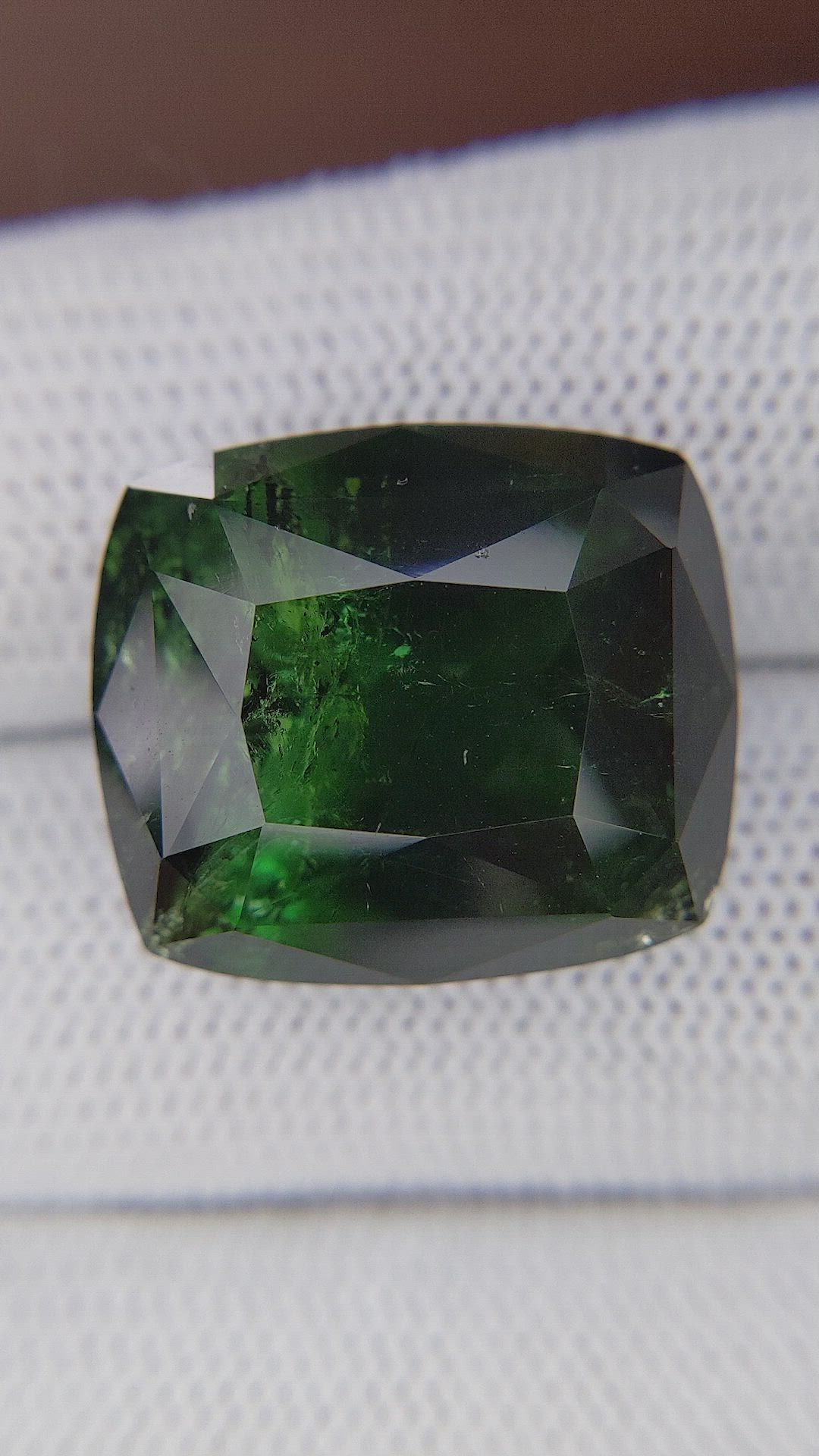
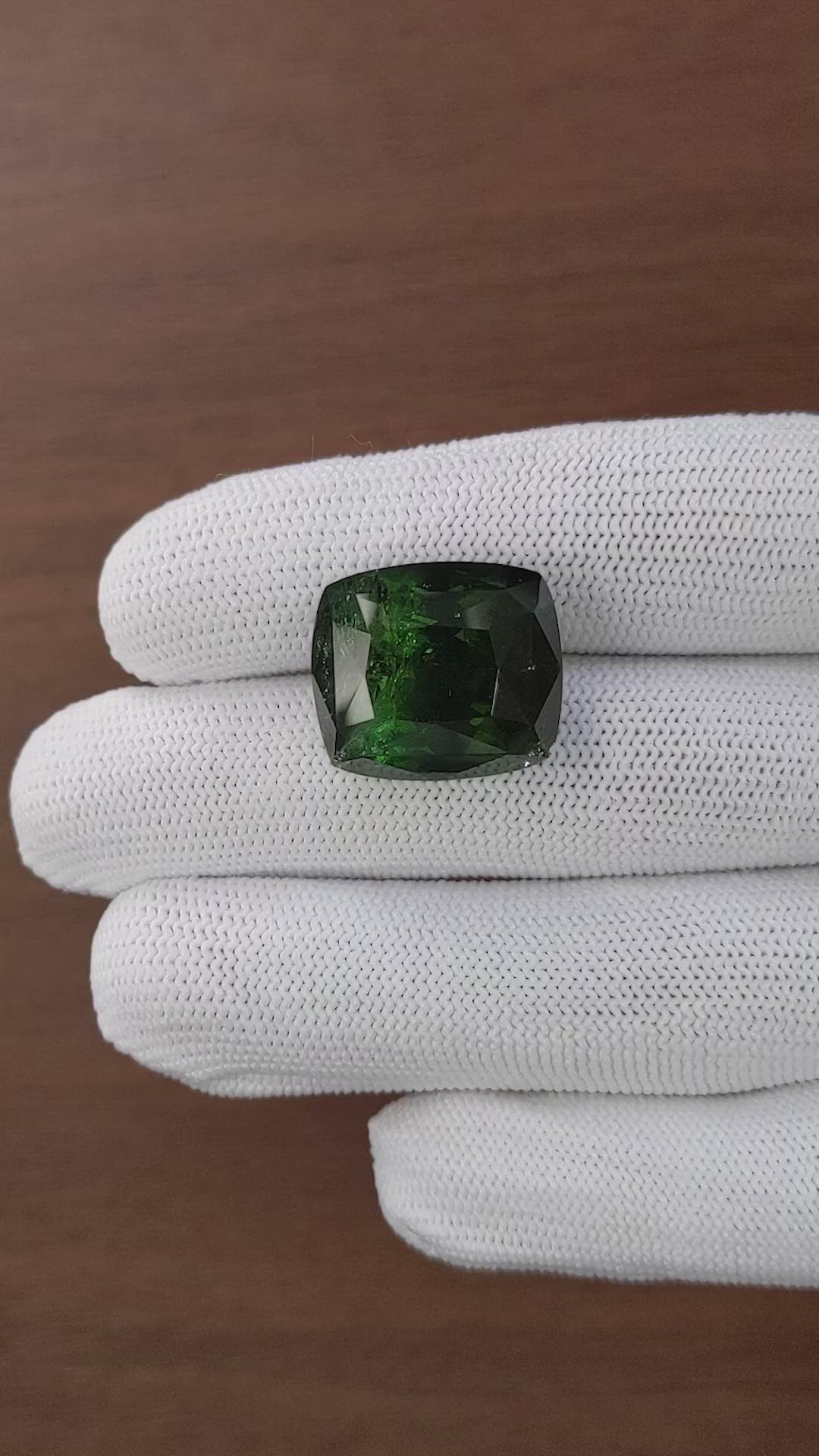
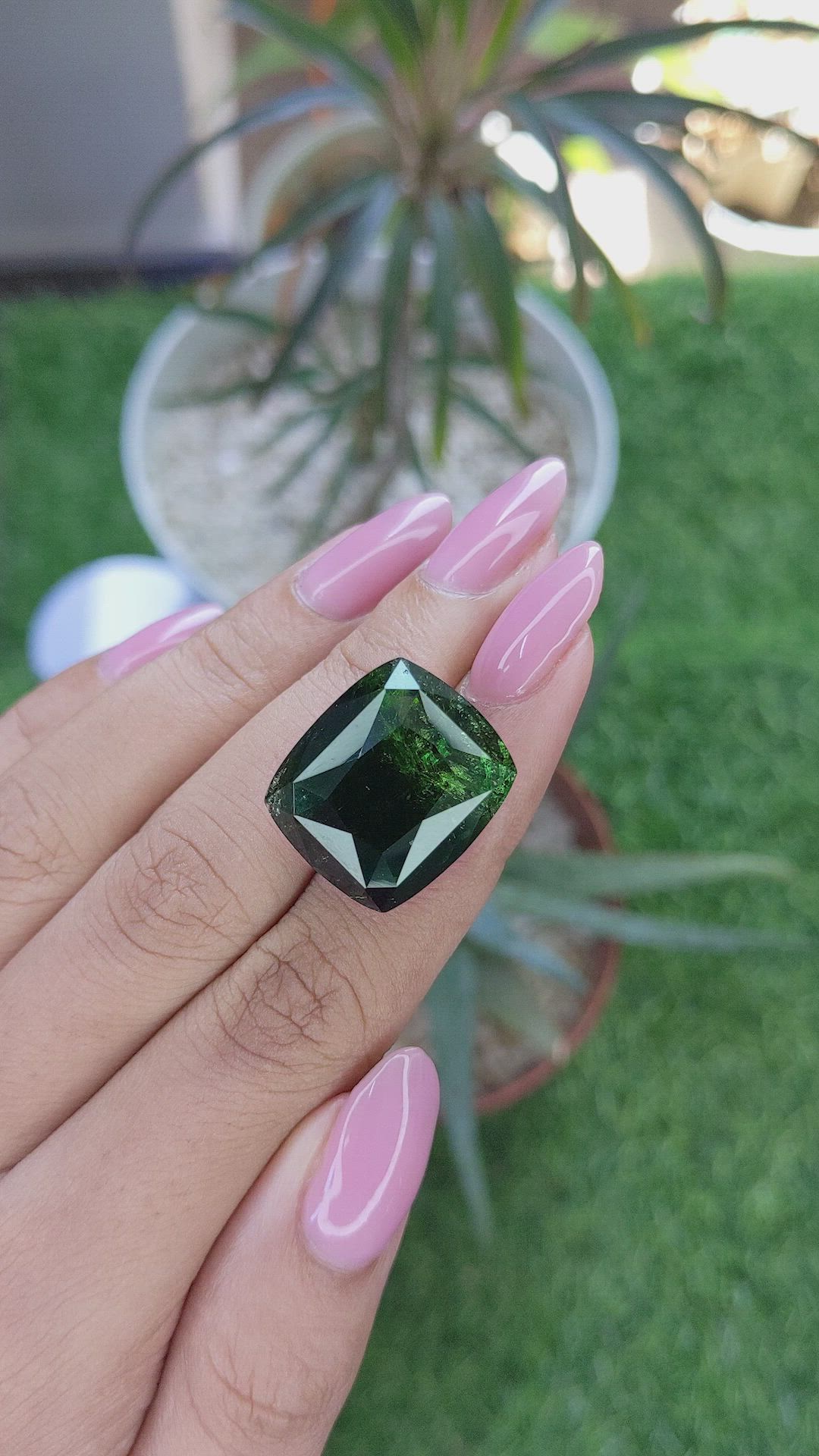
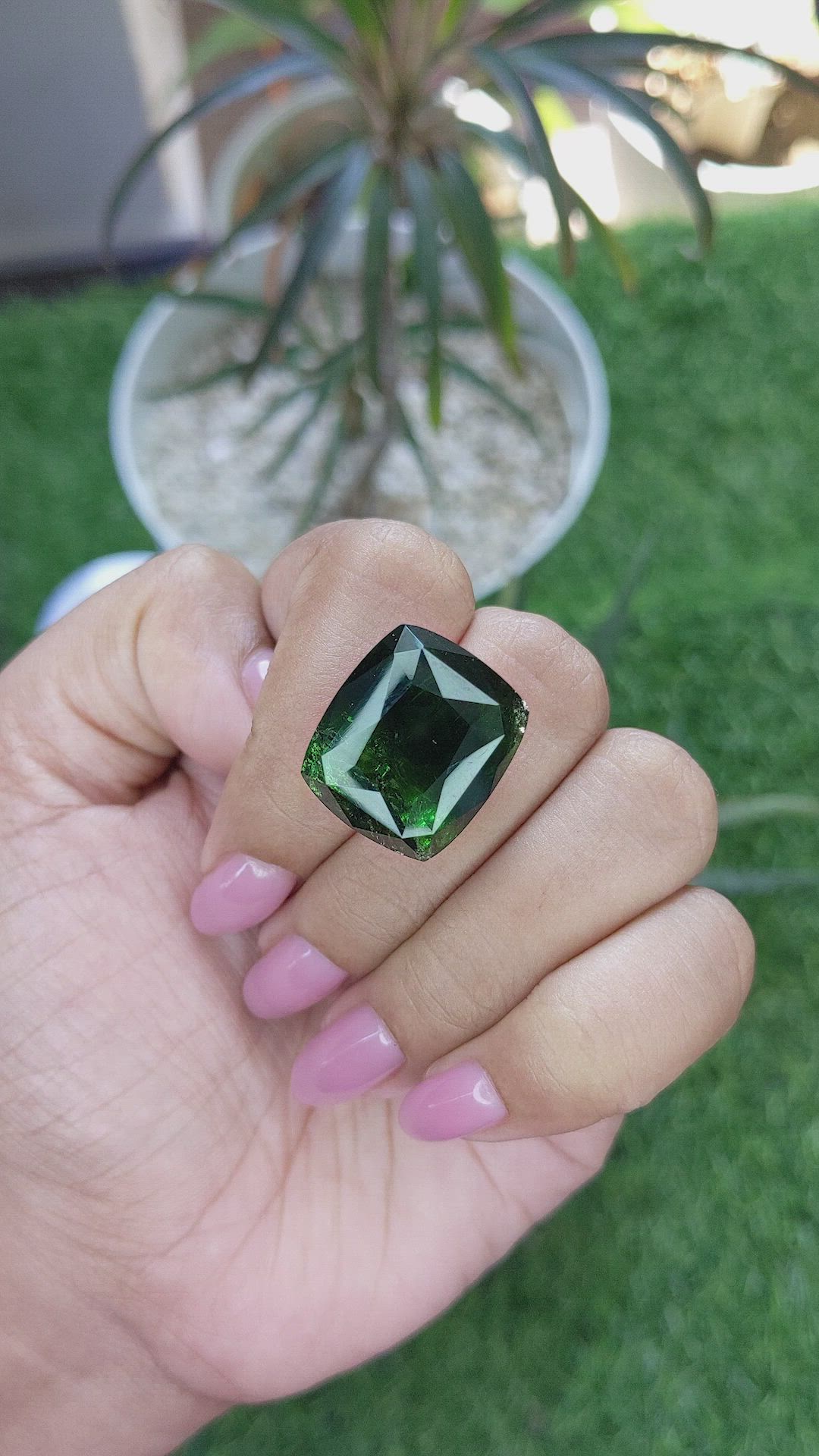
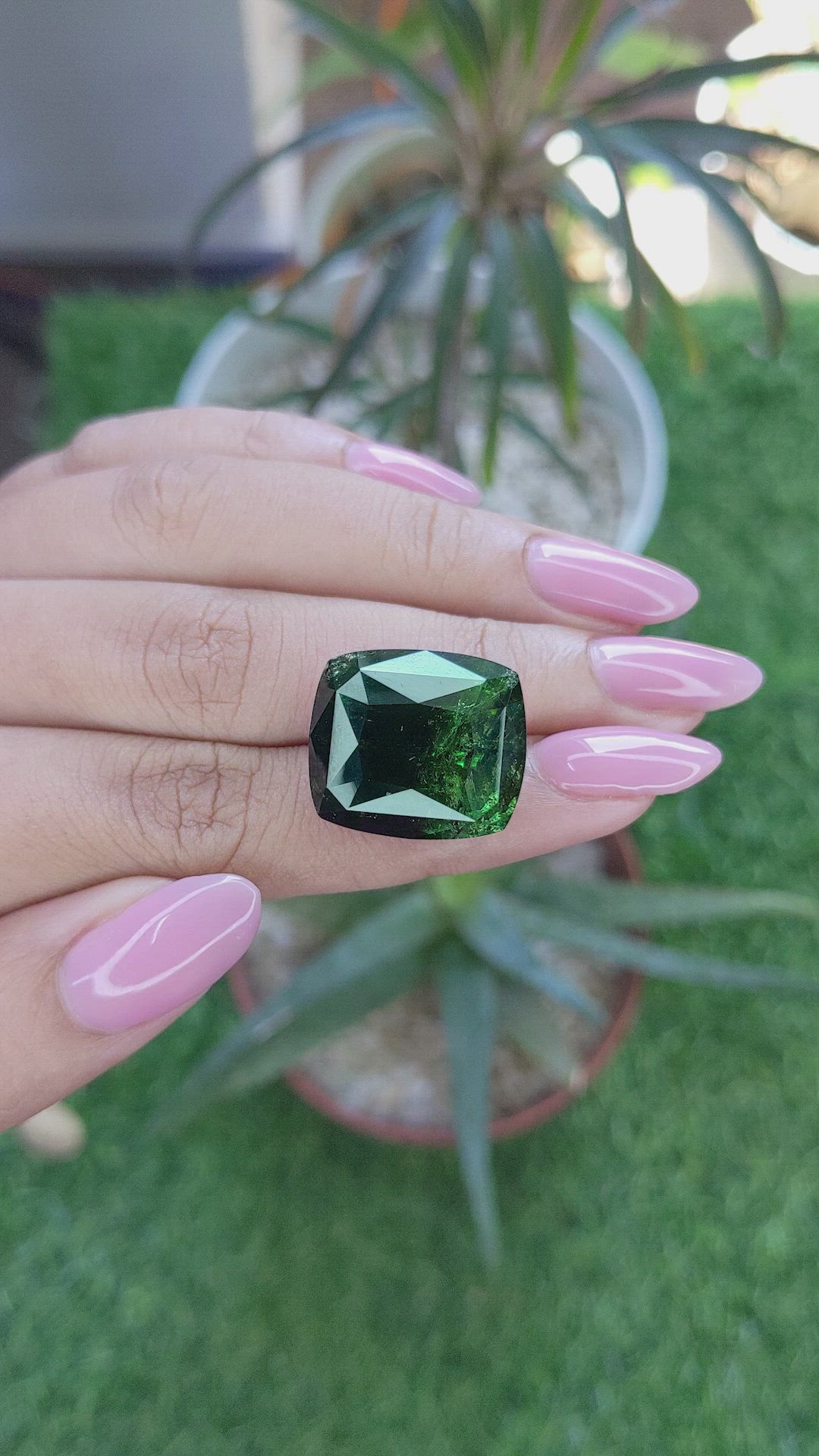
36.95 Ct. Green Tourmaline from Ceylon (Sri Lanka)
This loose stone ships by Oct 23
Item ID: | K28901 |
|---|---|
Dimensions (MM): help | Length: 19.49 Width: 18.97 Height: 13.8 |
Weight: | 36.95 Ct. |
Color: help | Green |
Color intensity: help | Dark |
Clarity: help | Included |
Shape: help | Cushion |
Cut: | Mixed Brilliant Cut |
Cutting style: | Faceted |
Enhancements: help | No Enhancement |
Origin: help | Ceylon (Sri Lanka) |
Per carat price: help | $100 |
This transparent green tourmaline presents as a substantial single specimen weighing 36.95 carats, cut to a classic cushion outline with overall dimensions of 19.49 x 18.97 x 13.80 mm. The cutter employed a mixed brilliant faceting scheme, integrating a brilliant style crown with a pavilion featuring a combination of step and modified brilliant facets, to balance face up depth with internal scintillation. Clarity is graded as included when viewed at eye level, which is consistent with natural tourmaline material of this size, and the stone displays a dark color intensity that enhances saturation without appearing opaque. Polish has been executed to an excellent standard, yielding crisp facet junctions and high mirror like reflection on the larger tables. There has been no enhancement applied to this gem, and provenance is recorded as Ceylon Sri Lanka, a historic source with deep artisanal traditions in cutting and trading colored stones, presented by The Natural Gemstone Company.
From a faceting and optical perspective, the mixed brilliant approach was chosen to harness the green tone while mitigating excessive windowing that can occur in large tourmaline blanks. The crown arrangement uses a small to medium table paired with elongated crown facets that refract incoming light across the pavilion facets, creating a controlled play of dark and bright zones typical of deeply saturated tourmalines. The pavilion shows a calculated interplay between step facets around the girdle and modified brilliant facets toward the culet, designed to return light in a manner that emphasizes the gem central plane without producing a dominant window. The cutter also paid attention to pavilion depth and crown height ratios, yielding a stable face up appearance in multiple orientations, and the faceting geometry complements the strong pleochroism inherent to tourmaline, allowing the stone to present deep forest green when viewed along one optic axis and slightly lighter green tones on another axis.
Technically, tourmaline belongs to a complex borosilicate family with typical refractive indices in the range of 1.624 to 1.644 and birefringence that can produce notable pleochroic effects in colored material, attributes that informed both the selection of rough and the final faceting strategy. The material specific gravity around 3.06 and a Mohs hardness between 7.0 and 7.5 give enough durability for ring use, particularly when the girdle thickness and facet ending points are structured to protect against knocks. The included clarity grade suggests internal features are present, likely a mix of needle like crystals, healed fractures and fluid inclusions that are common to Sri Lankan tourmalines, and these inclusions contribute to the gem story without significantly diminishing polish or overall integrity. The excellent polish achieved on each facet enhances light return and reduces surface reflections that would otherwise mask internal features, and the cutter avoided overly thin girdles and acute pavilion facets which can compromise durability in large stones.
Linking craftsmanship to heritage, Sri Lanka has a centuries long relationship with colored gemstones that stretches from ancient royal regalia to contemporary artisanal markets, and this piece echoes that lineage through both origin and the traditional cutting ethos it embodies. Historically, richly colored green stones from Ceylon were used in ceremonial rings and amulets, prized for their depth of color and presence when set in heavier metal settings, and their durability made them suitable for daily wear by the elite. This tourmaline, with its substantial carat weight and cushion format, is well suited to designs that recall those traditional uses, such as signet style rings, pendant centers in closed back settings to emphasize color saturation, or bespoke pieces that pair the stone with warm yellow metals to accentuate green saturation or with cool white metals to produce a refined contrast. The Natural Gemstone Company offers this gem with full disclosure regarding its natural state and origin, and we recommend settings that protect the pavilion and corners while allowing the mixed brilliant faceting to communicate depth and life when the jewelry is worn.


