
- Stone6
- Reports2

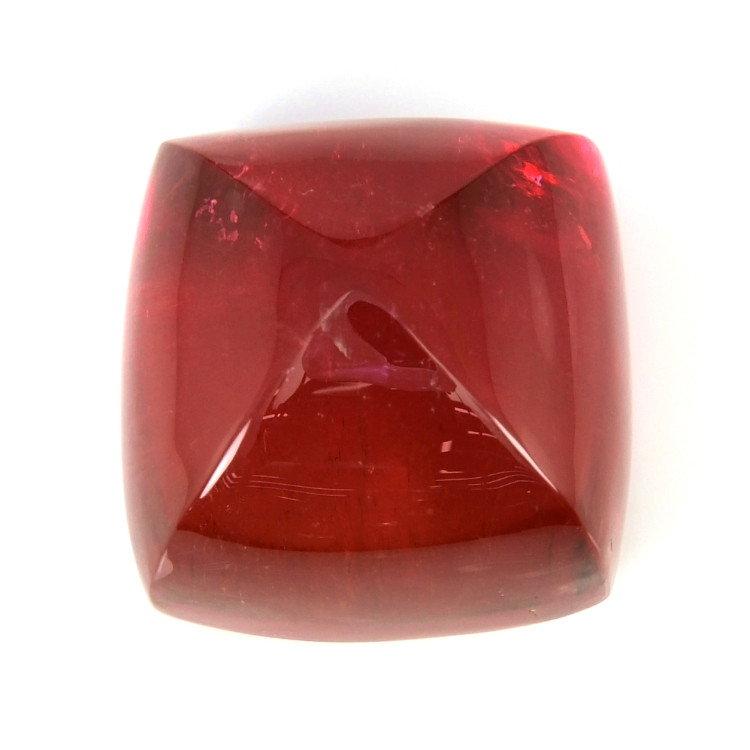


39.01 Ct. Cabochon Tourmaline from Africa
This loose stone ships by Apr 20
Item ID: | K16892 |
|---|---|
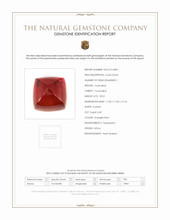
Dimensions (MM): help | Length: 17.2 Width: 17.2 Height: 13.1 |
Weight: | 39.01 Ct. |
Color: help | Orangish Red |
Color intensity: help | Intense |
Clarity: help | Slightly Included |
Shape: help | Cushion |
Cut: | Sugar Loaf |
Cutting style: | Cabochon |
Enhancements: help | Heat Treated |
Origin: help | Africa |
Per carat price: help | $102 |
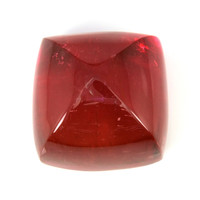
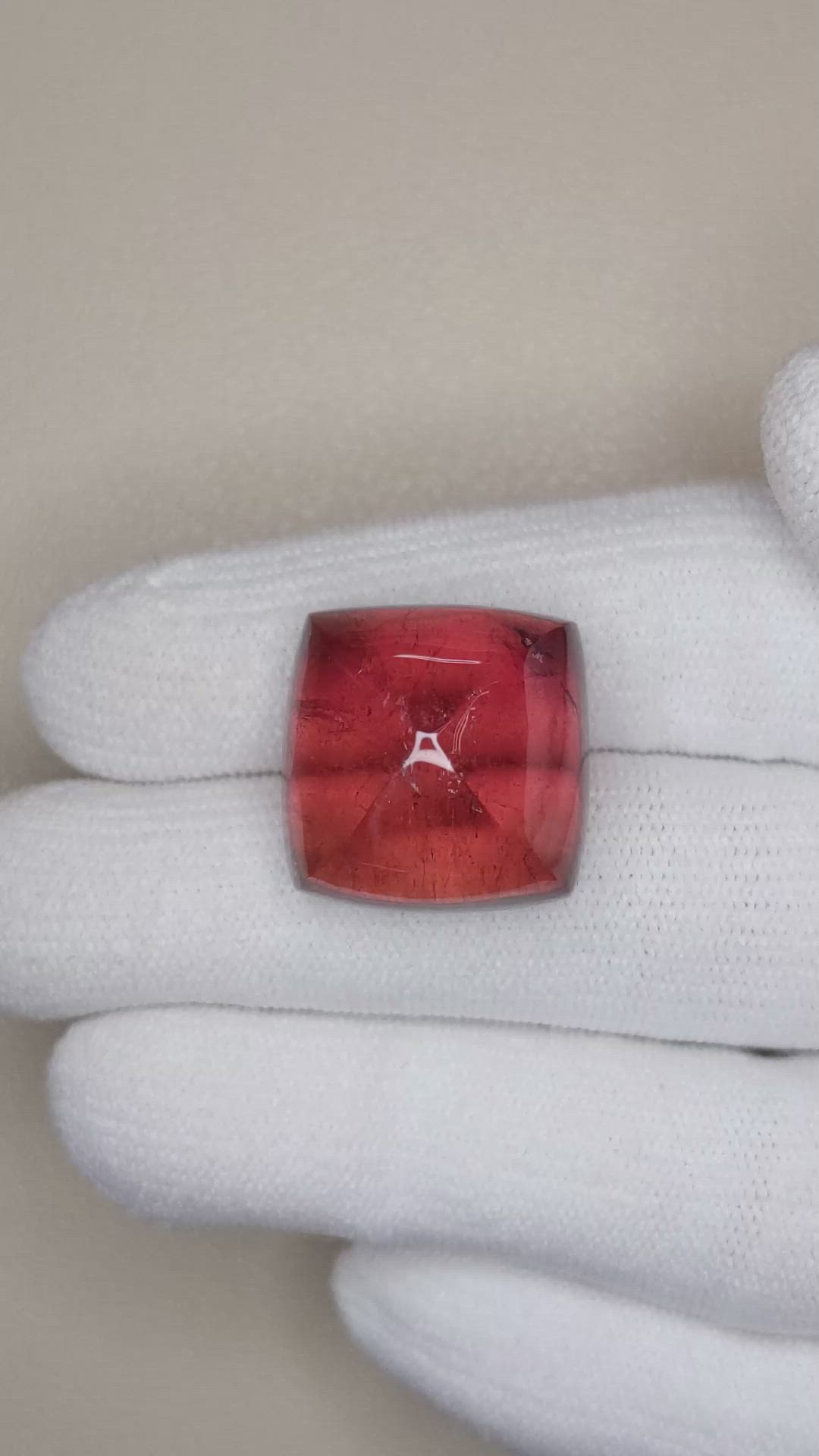
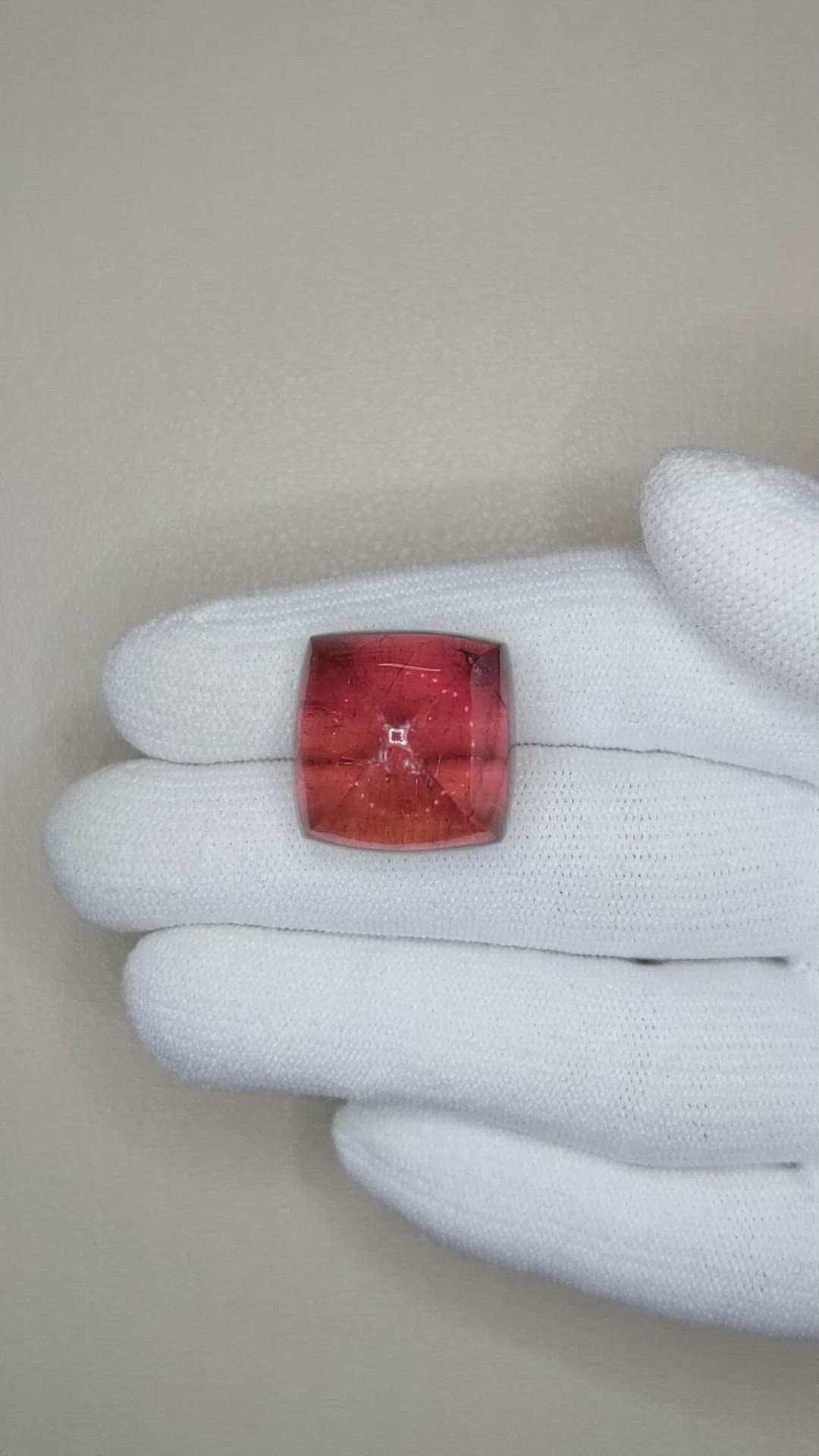
This transparent orangish red tourmaline weighs 39.01 carats and presents as a cushion shape with dimensions of 17.20 x 17.20 x 13.10 mm, a substantial presence that balances visual impact with wearable proportions. The gem is fashioned in a sugar loaf cut, a form that emphasizes a rounded crown and broad facets, and it carries an intense color intensity that reads as a saturated and evenly distributed orangish red. Clarity is graded as slightly included, evaluated at eye level, which indicates the presence of minor inclusions that do not significantly detract from the gem's overall transparency or visual appeal. The polish is excellent, producing clean facet junctions and a smooth surface that enhances light transmission. The gem has undergone heat treatment, a common and stable enhancement applied to refine color, and its documented origin is Africa, a region known for producing tourmalines with strong saturation and compelling coloration.
The sugar loaf cut produces a distinctive optical personality when compared to more conventional pavilion oriented cuts. Instead of the fine scinter and pinpoint flashes associated with modern brilliant cuts, this form yields broader, more luminous flashes and a pronounced inner glow. Light entering the gem diffuses across larger facet planes and across the rounded crown, accentuating the depth of the orangish red hue rather than breaking it into numerous small flashes. This effect suits stones that possess strong saturated color, because the cutting style emphasizes tone and chroma, rather than maximizing scintillation. The excellent polish enhances this quality by reducing surface light leakage and preserving the clarity windows through which the stone exhibits its internal color dynamics. In practical terms this means the viewer perceives a rich, velvety color field with occasional broad flashes, a character that reads as elegant and refined in settings that expose the gem to ambient light.
Compared to other gemstones in the same category, the reflective and optical behavior of this tourmaline is distinct in several ways. Tourmaline typically shows vitreous luster with good light return, and this specimen is consistent with that general characteristic. Because of its sugar loaf cut and intense chroma, the stone displays softer, broader reflections than a similarly sized brilliant cut sapphire or spinel, which tend to show crisper, more energetic flashes due to their faceting styles and, in some cases, higher refractive indices. When placed alongside ruby, this tourmaline will not match ruby for the same type of concentrated sparkle and fire, but it will present a different visual appeal, offering depth of color and warm, enveloping reflections rather than sharp scintillation. Against other tourmalines with step or mixed cutting, this gem will appear less lively in terms of sparkle but stronger in terms of color saturation and the perception of volume. Compared to paraiba varieties, which can produce an almost neon luminosity due to trace copper elements, this orangish red stone exhibits a more classic gemstone presence, with light behaviors that prioritize hue and tonal layering over electric brilliance. The slight inclusions characteristic of its clarity grade can play a complementary role by scattering light within the stone, contributing to a soft inner sheen rather than detracting from the overall appearance.
From a practical and provenance perspective, this tourmaline offers attributes that make it suitable for both bespoke jewelry and collection display. The 39.01 carat weight and balanced proportions allow it to be set as a central stone in a substantial ring, a pendant, or a decorative brooch, where its sugar loaf silhouette can be viewed in the round and appreciated for its color depth. Heat treatment, disclosed and stable, improves the color uniformity without compromising structural integrity. The slight inclusions noted at eye level should be considered in the choice of setting and light environment, as they may be less apparent under diffused lighting or when the stone is viewed in face up orientation. The African origin provides a reliable geological context and aligns with the known quality standards of material from that source. The Natural Gemstone Company stands behind the described attributes and encourages consideration of cut style and setting design when evaluating how this tourmaline will perform in real world wear. Our description aims to present the stone in technical and visual terms to assist in an informed selection, focusing on optical character, physical metrics, and treatment disclosure.


