
- Stone14
- Reports3
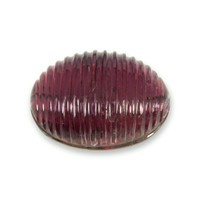
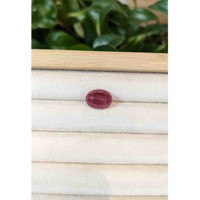
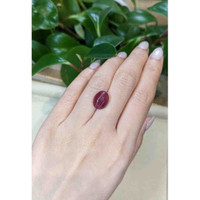
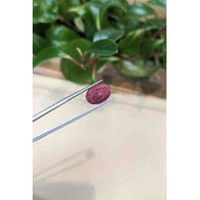
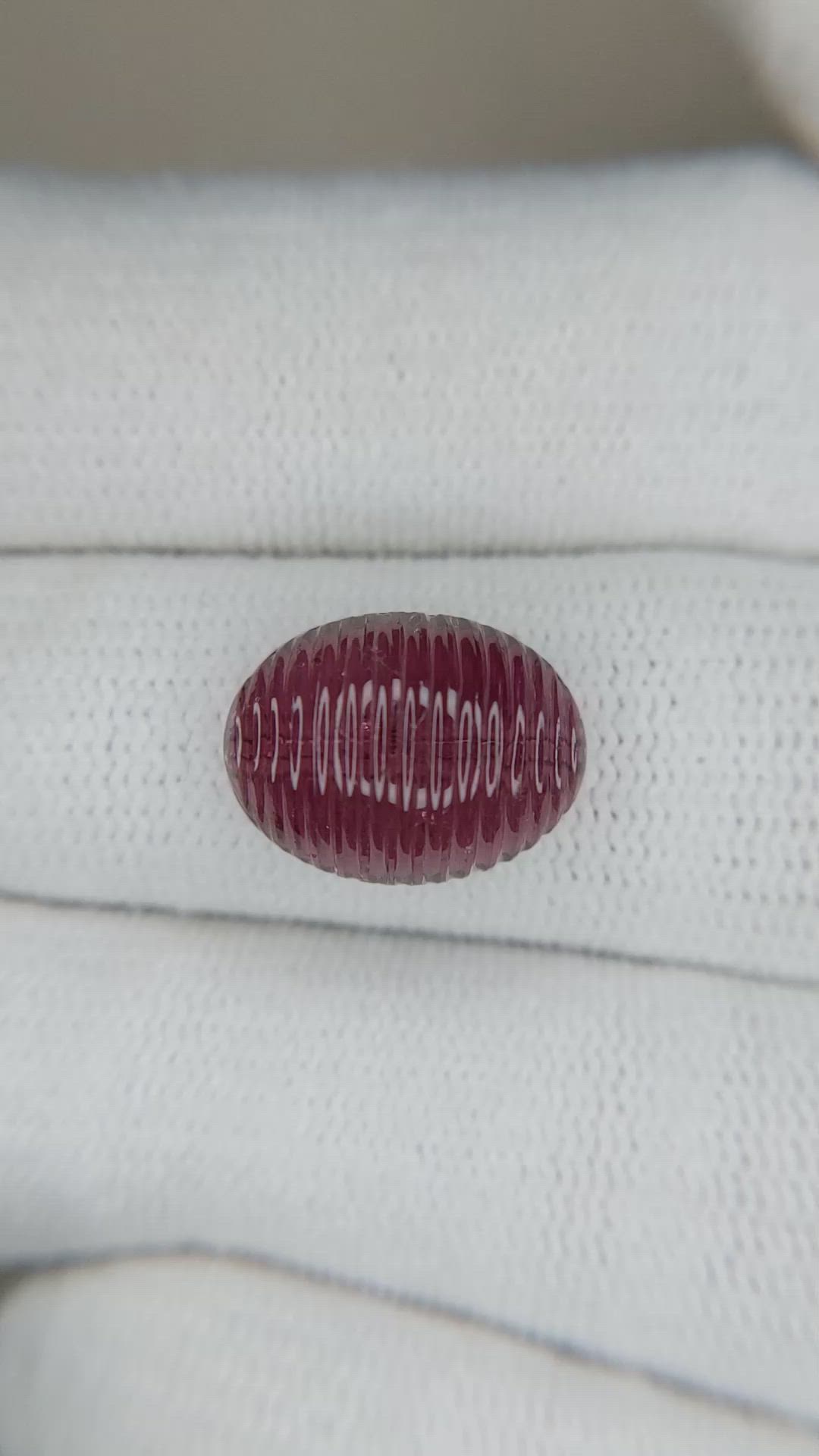
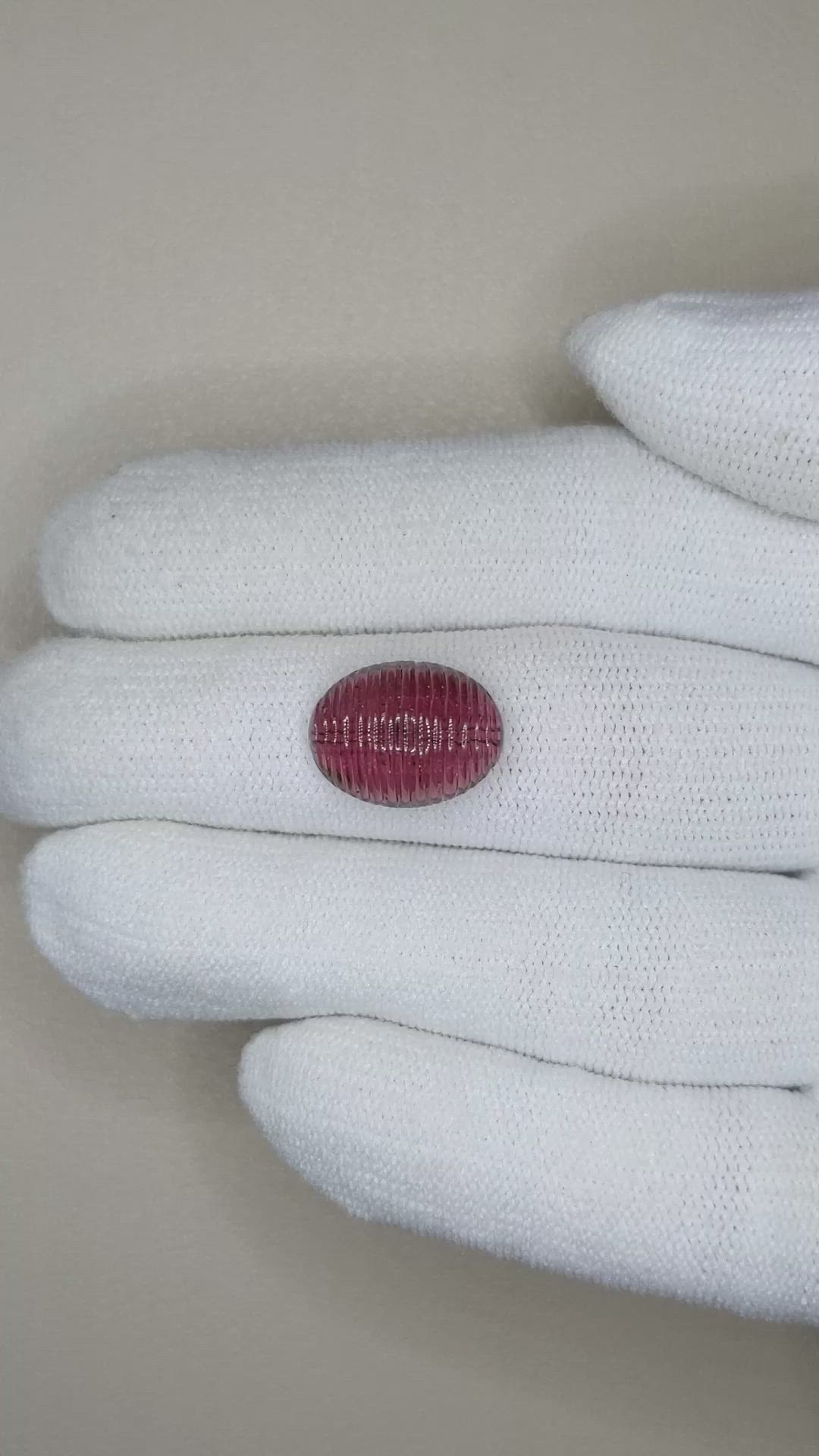
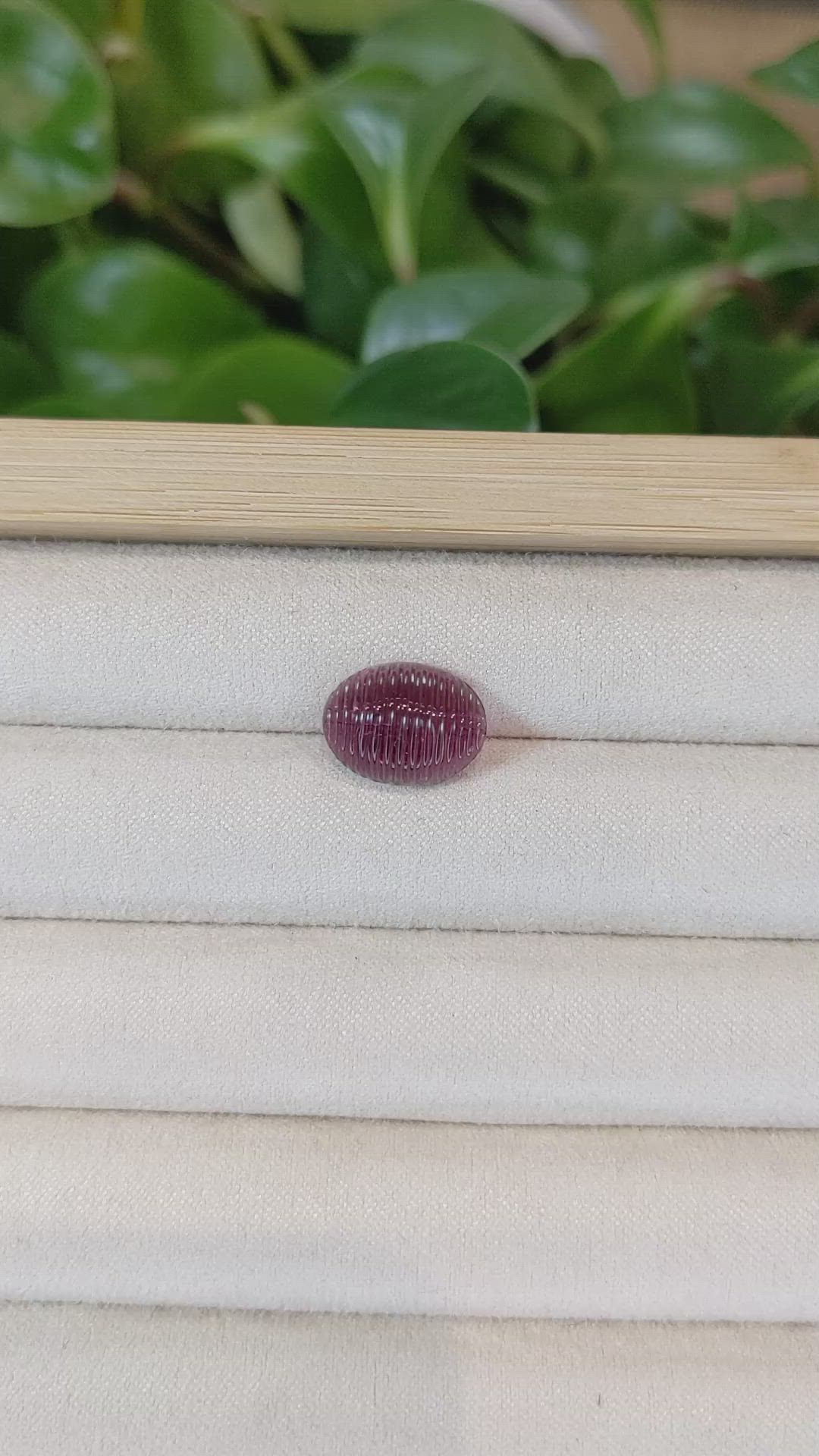
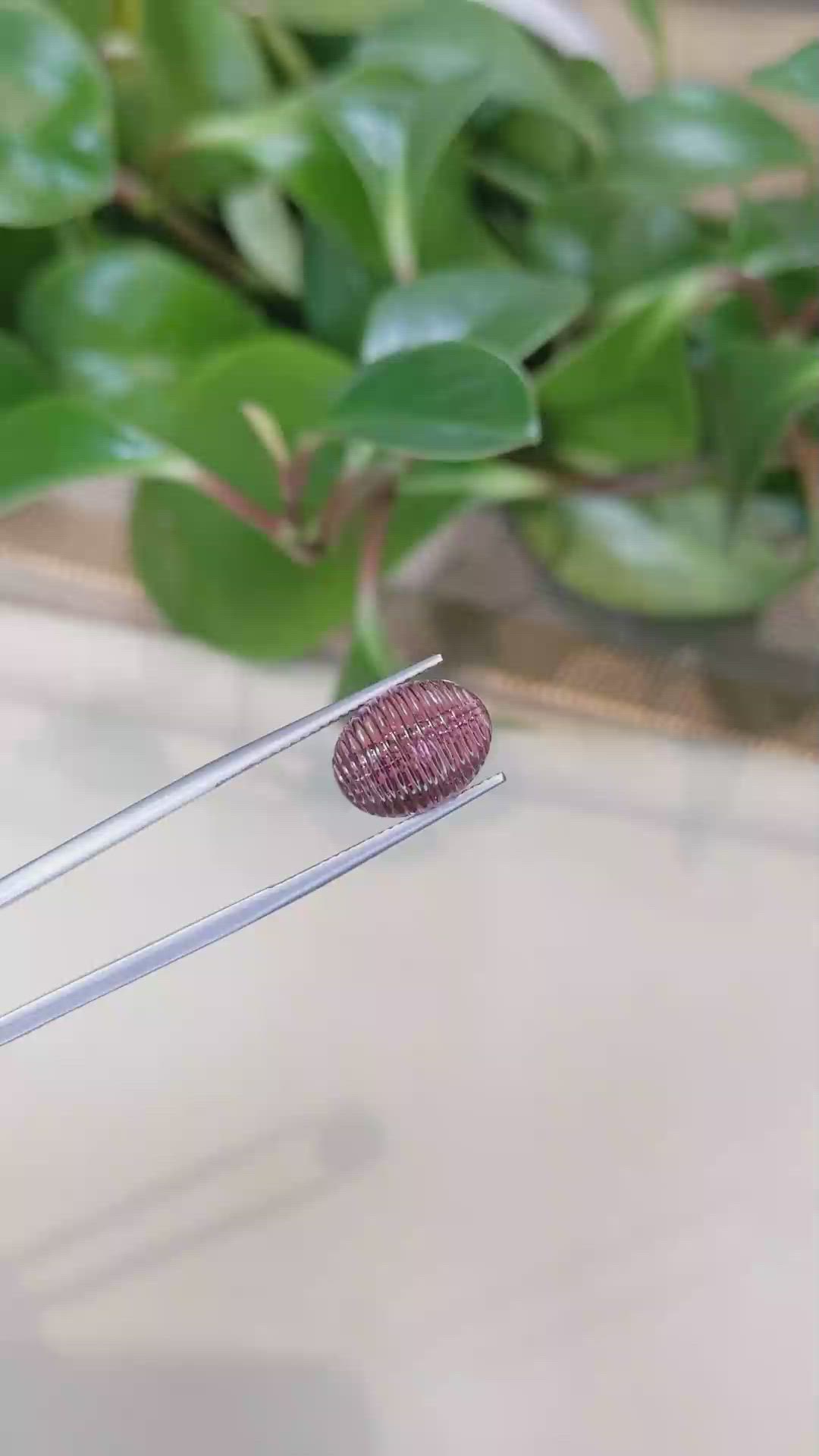
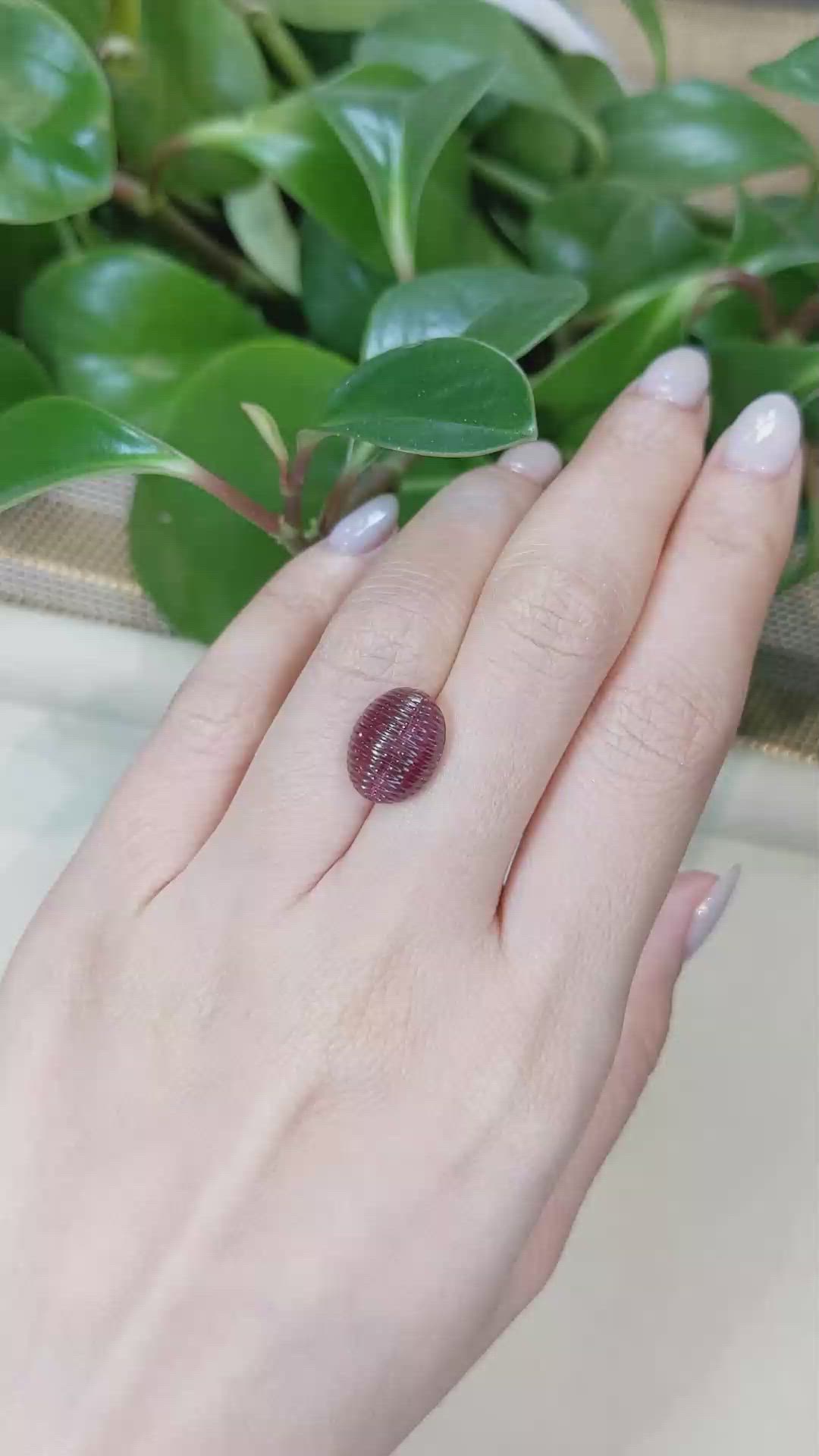

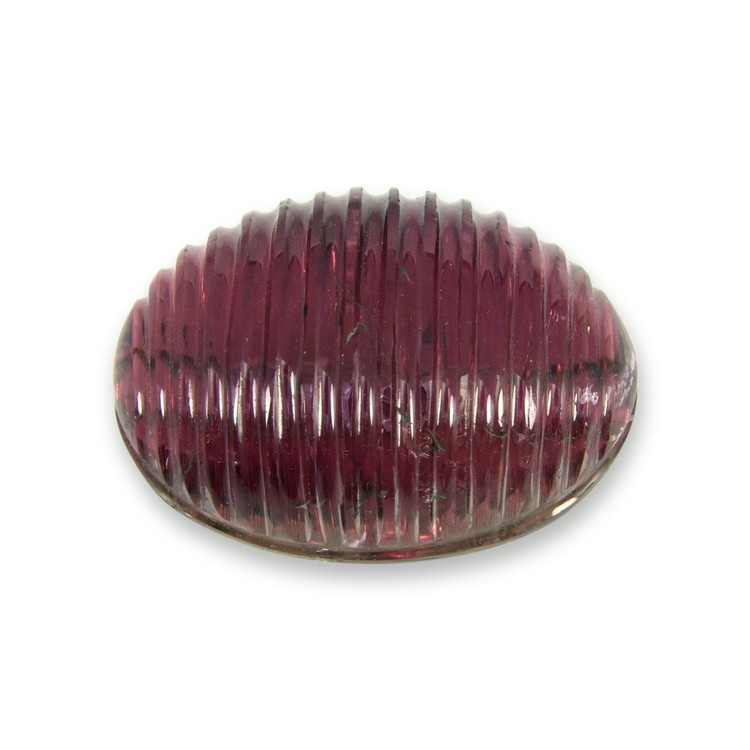
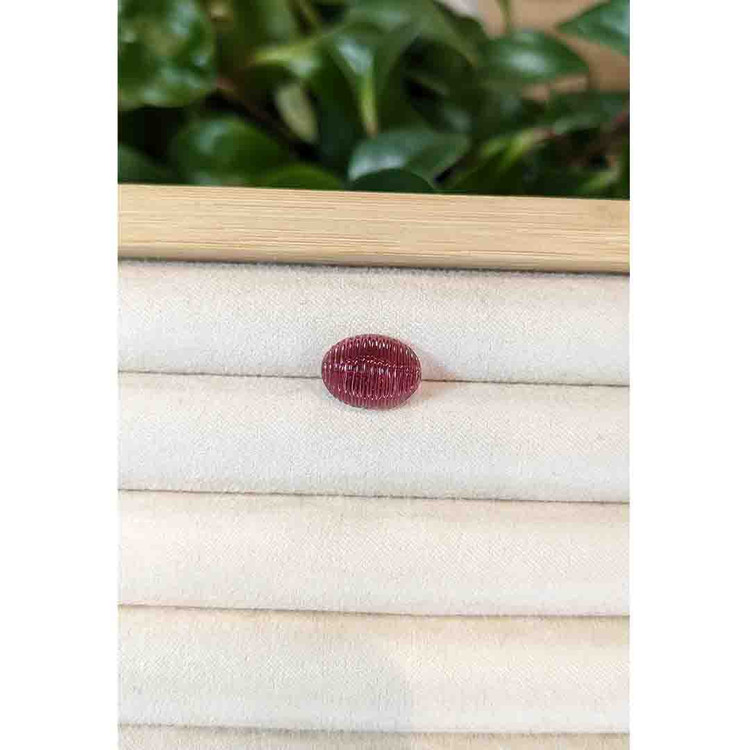
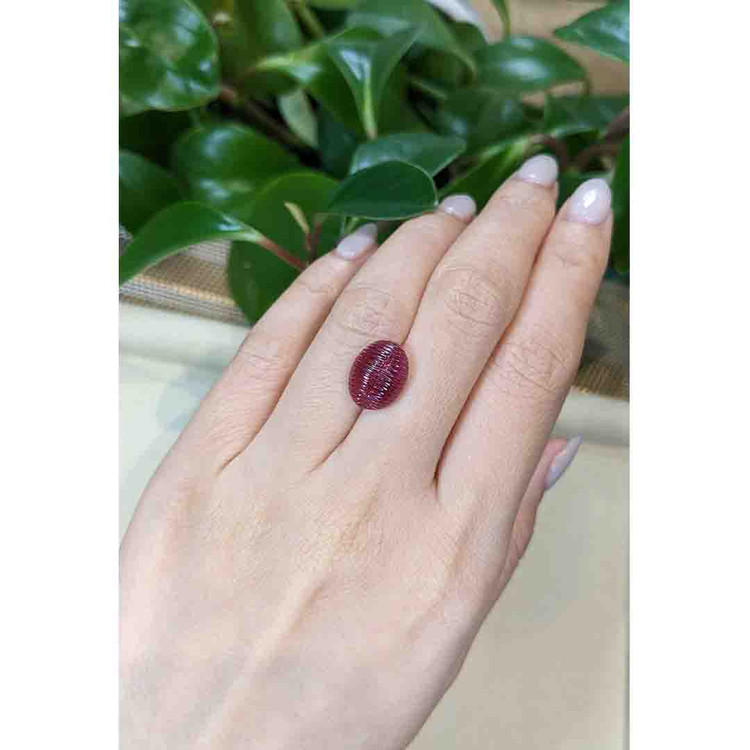
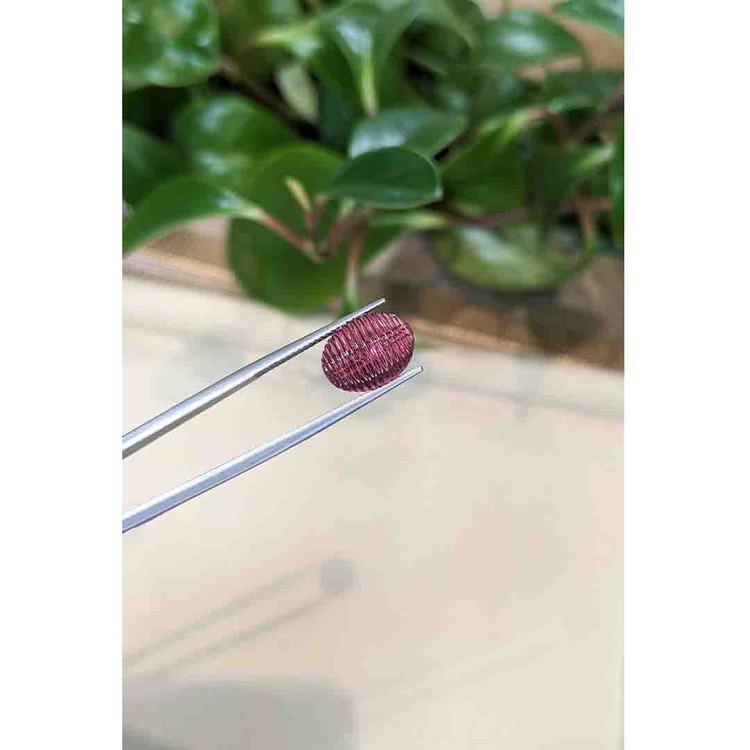

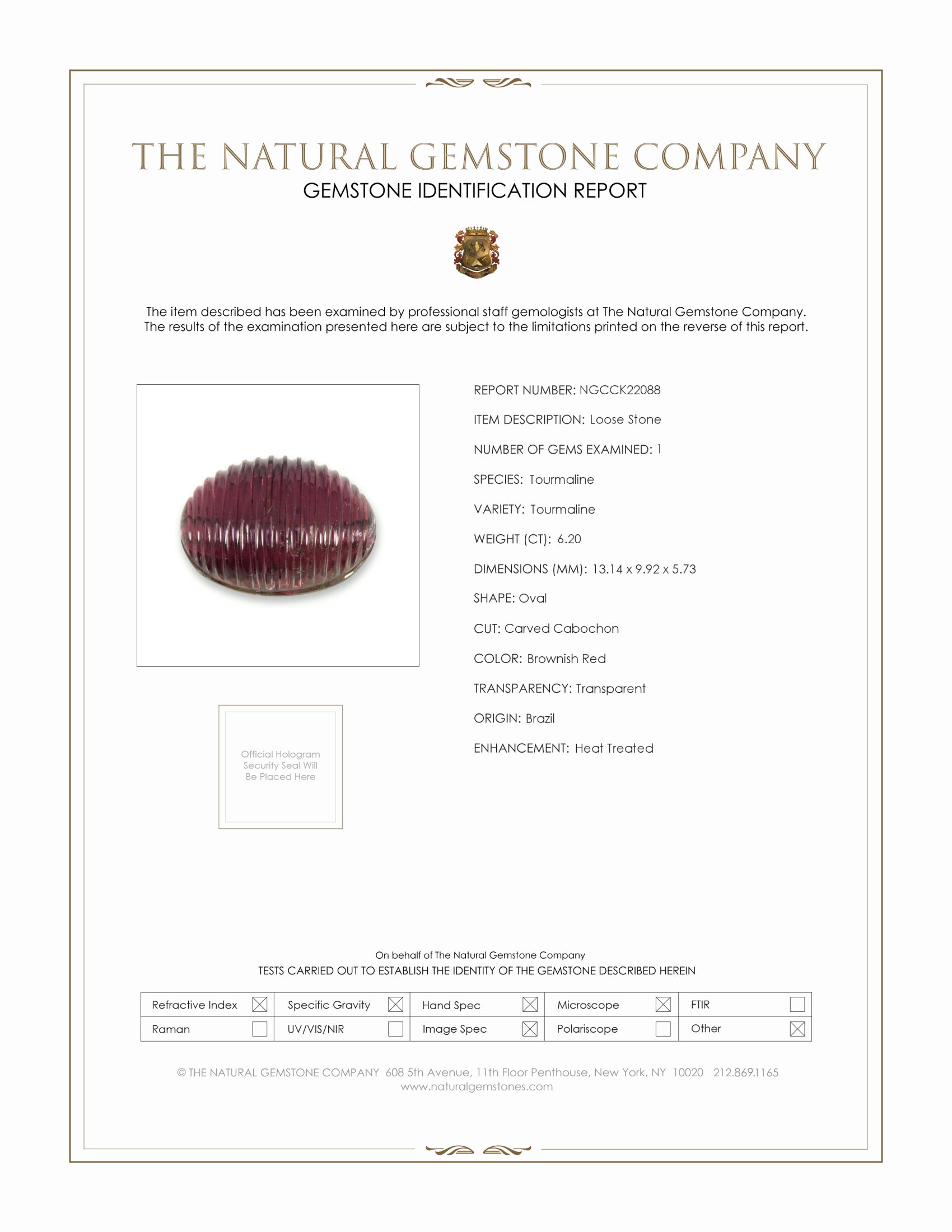
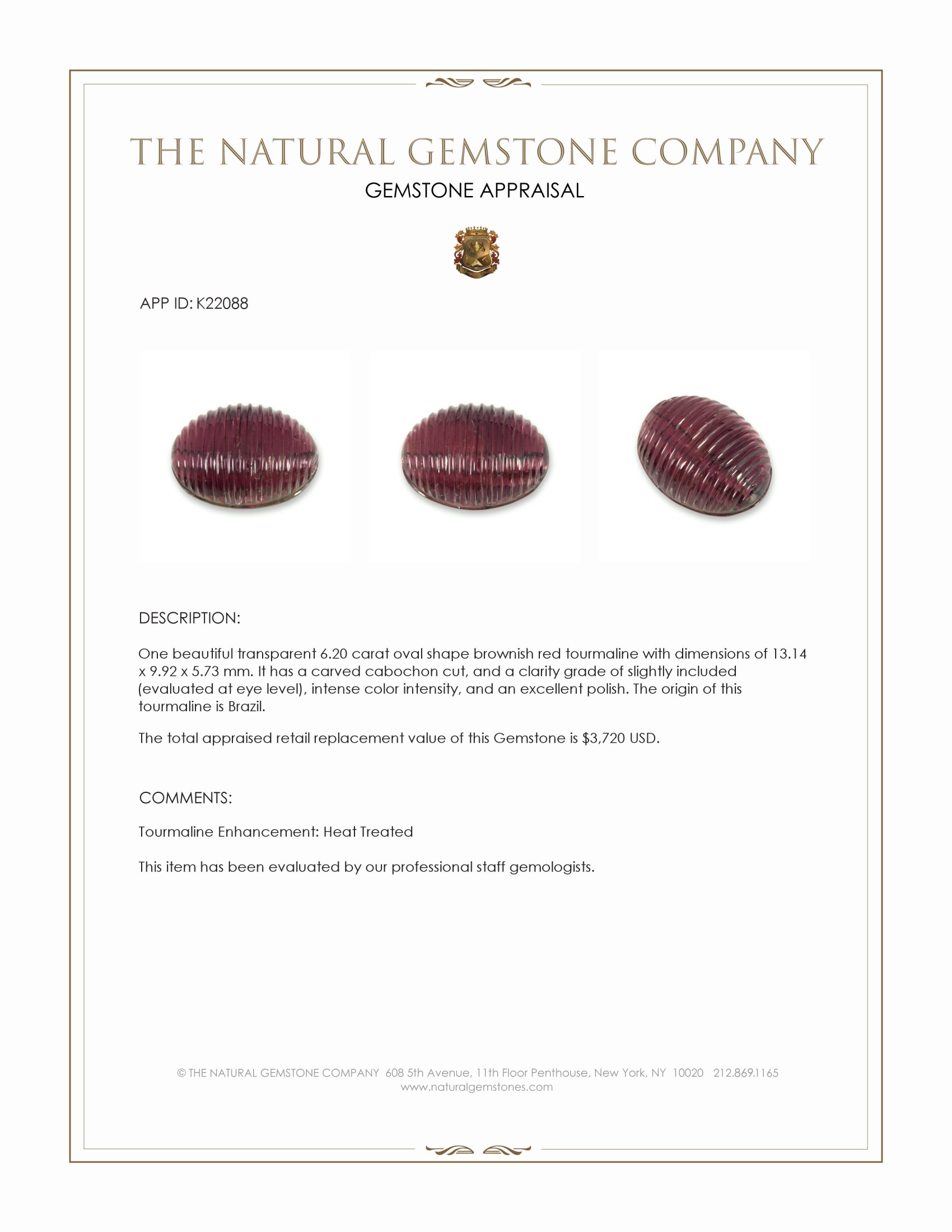
6.20 Ct. Cabochon Tourmaline from Brazil
This loose stone is available to ship now
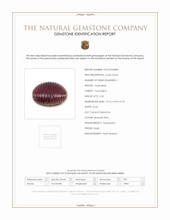
Item ID: | K22088 |
|---|---|
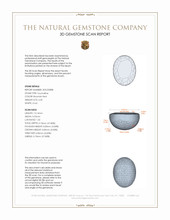
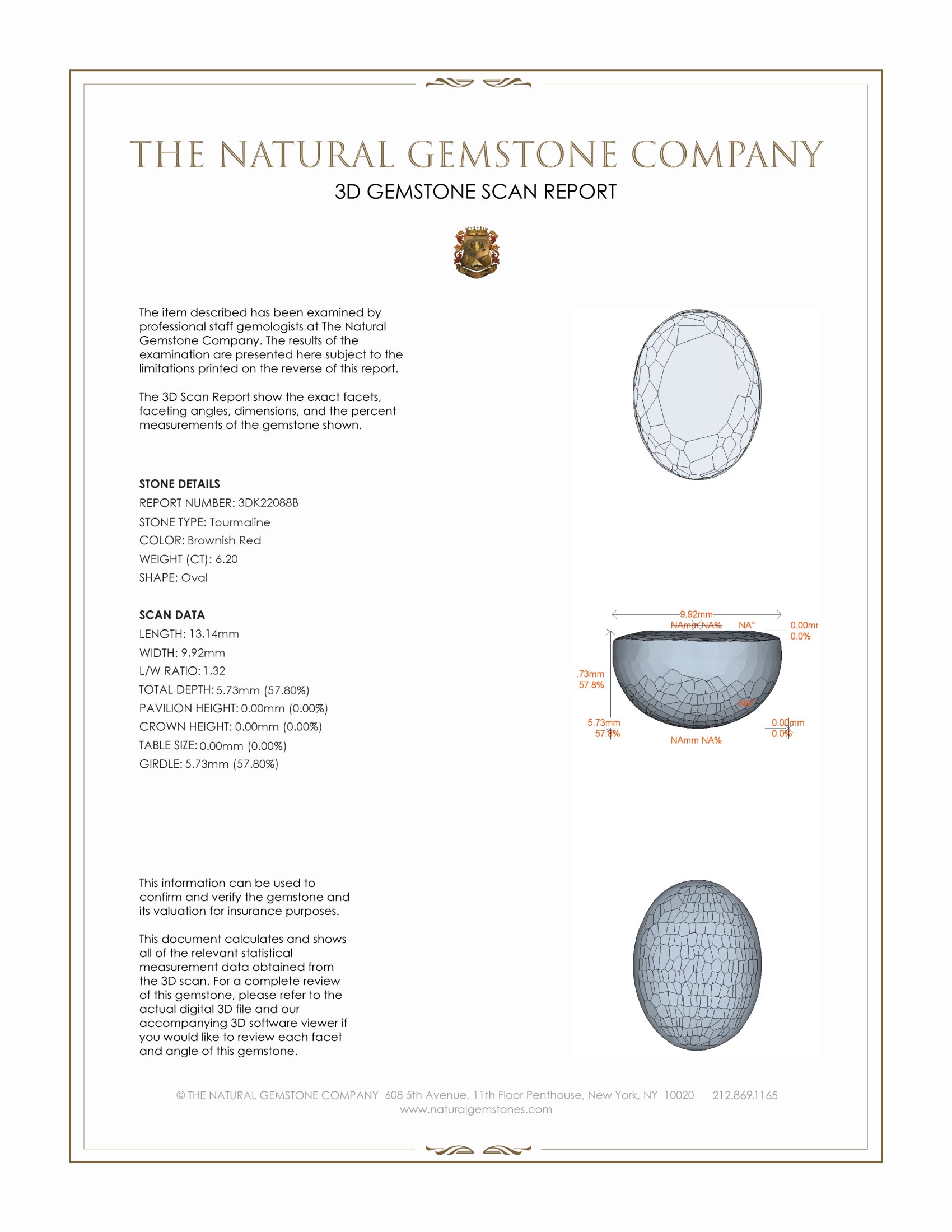
Dimensions (MM): help | Length: 13.14 Width: 9.92 Height: 5.73 |
Weight: | 6.20 Ct. |
Color: help | Brownish Red |
Color intensity: help | Intense |
Clarity: help | Slightly Included |
Shape: help | Oval |
Cut: | Carved Cabochon |
Cutting style: | Cabochon |
Enhancements: help | Heat Treated |
Origin: help | Brazil |
Per carat price: help | $600 |
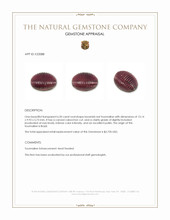
This transparent brownish red tourmaline weighs 6.20 carat, and measures 13.14 x 9.92 x 5.73 mm, presented in an elegant oval shape with a carved cabochon cut. The cabochon style emphasizes continuous curvature rather than faceting geometry, and this example displays a carefully proportioned dome height that was selected to maximize the depth and evenness of color across the table. The clarity is graded as slightly included when evaluated at eye level, which means that small natural internal features are present but do not detract from the gem when worn or viewed casually. Color intensity is classified as intense, with the brownish red hue evenly distributed along the long axis of the oval, and the polish is excellent, imparting a lively surface reflection that complements the gem body color. This specimen has been heat treated, a standard and stable enhancement used to deepen and harmonize tourmaline hues, and it originates from pegmatite deposits in Brazil. The Natural Gemstone Company offers this stone with full disclosure of treatment and origin, reflecting our commitment to transparency and gemological accuracy.
At the microscopic level this tourmaline reveals characteristics typical of late stage pegmatitic growth, including slender needle like inclusions, fine growth zoning, and occasional fluid cavities. These inclusions are consistent with the slightly included clarity grade, and they contribute positively to the gem story by confirming natural formation and provenance. Tourmaline is known for strong pleochroism, and even when cut as a cabochon this piece shows subtle directional color variation, which the lapidary exploited by orienting the long axis to align with the most desirable color face. Optical constants for tourmaline fall in a narrow refractive index range, approximately 1.624 to 1.644, and a specific gravity range near 3.02 to 3.26, values that support the visual impression of substance and stability. The balance between transparency and internal character in this gem makes it appealing to connoisseurs who appreciate natural complexity combined with wearable clarity.
The cutting and finishing workflow for this carved cabochon involved deliberate technical choices to conserve weight while achieving ideal proportions. The rough was preformed to follow the natural color zoning, preserving depth by minimizing lateral trimming, and the dome profile was adjusted to about fifty eight percent of the width to maintain optical mass and create a pleasing silhouette on the finger or pendant. Carving on a cabochon is typically subtle, consisting of controlled shaping passes with progressively finer abrasives to refine curvature and remove surface artifacts from the initial sawing and grinding. Final smoothing and polish were achieved using successively finer laps and polishing compounds, finishing with a high grade cerium oxide or diamond paste application to reach the excellent polish grade reported. The heat treatment applied prior to final cutting was conducted under controlled conditions to stabilize iron and manganese valence states, producing a richer brownish red tone while maintaining crystal integrity. Such thermal enhancement is common, well understood, and considered permanent under normal wearing conditions when correctly performed.
Imagine the geological narrative that produced this material, a tale unfolding over millions of years beneath the South American crust. Deep in a granite pluton, late stage melts enriched with volatile elements and boron began to crystallize in cavities and fractures. As the host magma cooled, hydrothermal fluids concentrated incompatible elements including lithium, sodium, aluminum, and transition metals such as iron and manganese. In this evolving chemical milieu tourmaline nucleated and grew as elongated prisms, each crystal recording changes in composition and temperature through growth bands, micro inclusions, and subtle color shifts. Over geological time these pegmatites were uplifted and exposed by erosion, and weathering liberated pockets of gem quality crystals that were later recovered by miners in Brazil. A particular crystal from this lineage was carefully selected for cutting, a process that revealed the inner color story and unlocked optical potential. The Natural Gemstone Company has taken that single geological journey and transformed it into an object of wearable geology, presenting a carved cabochon brownish red tourmaline that embodies both the slow artistry of earth processes and the precise skill of modern lapidary craft.


