
- Stone14
- Reports3



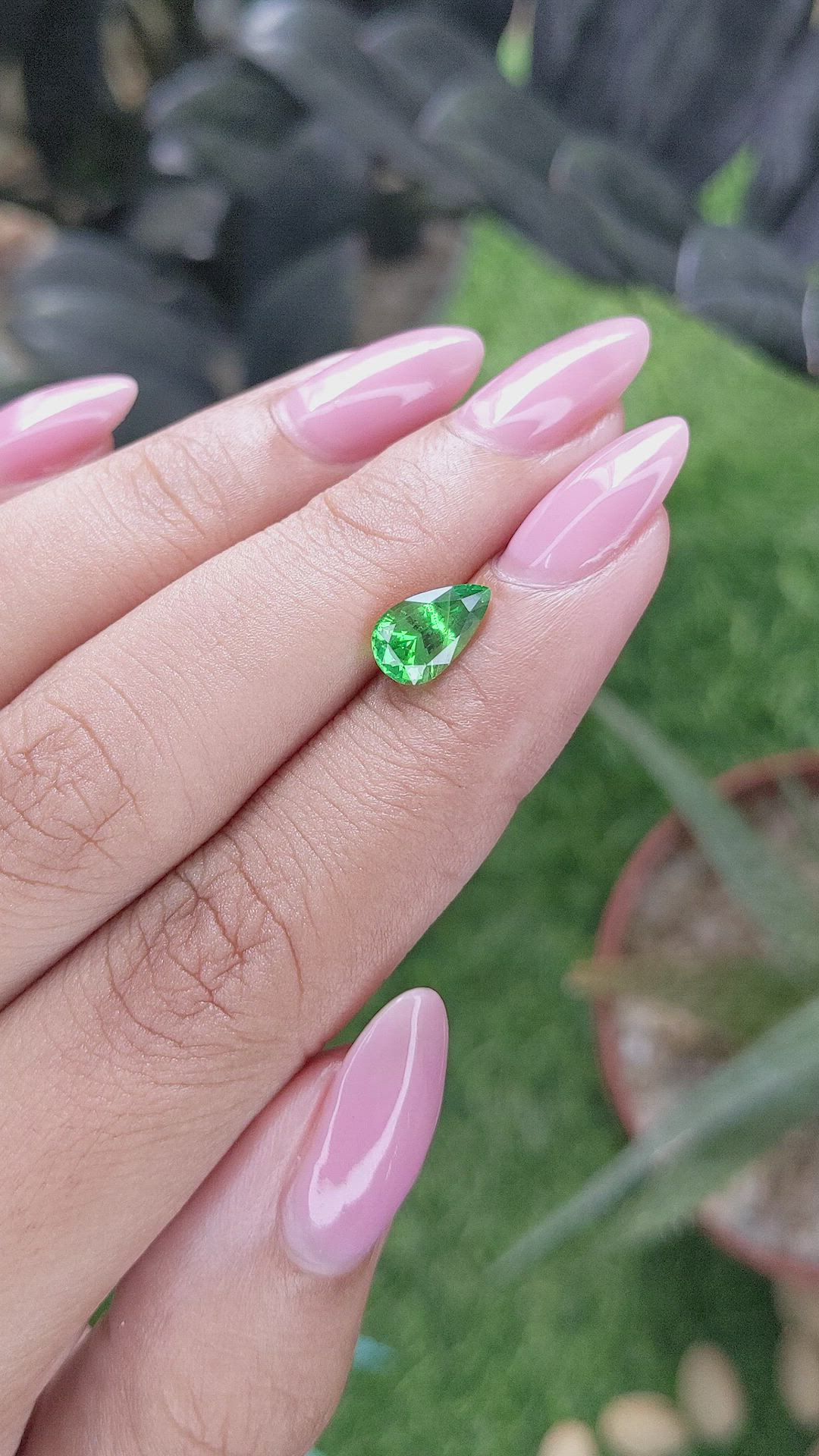
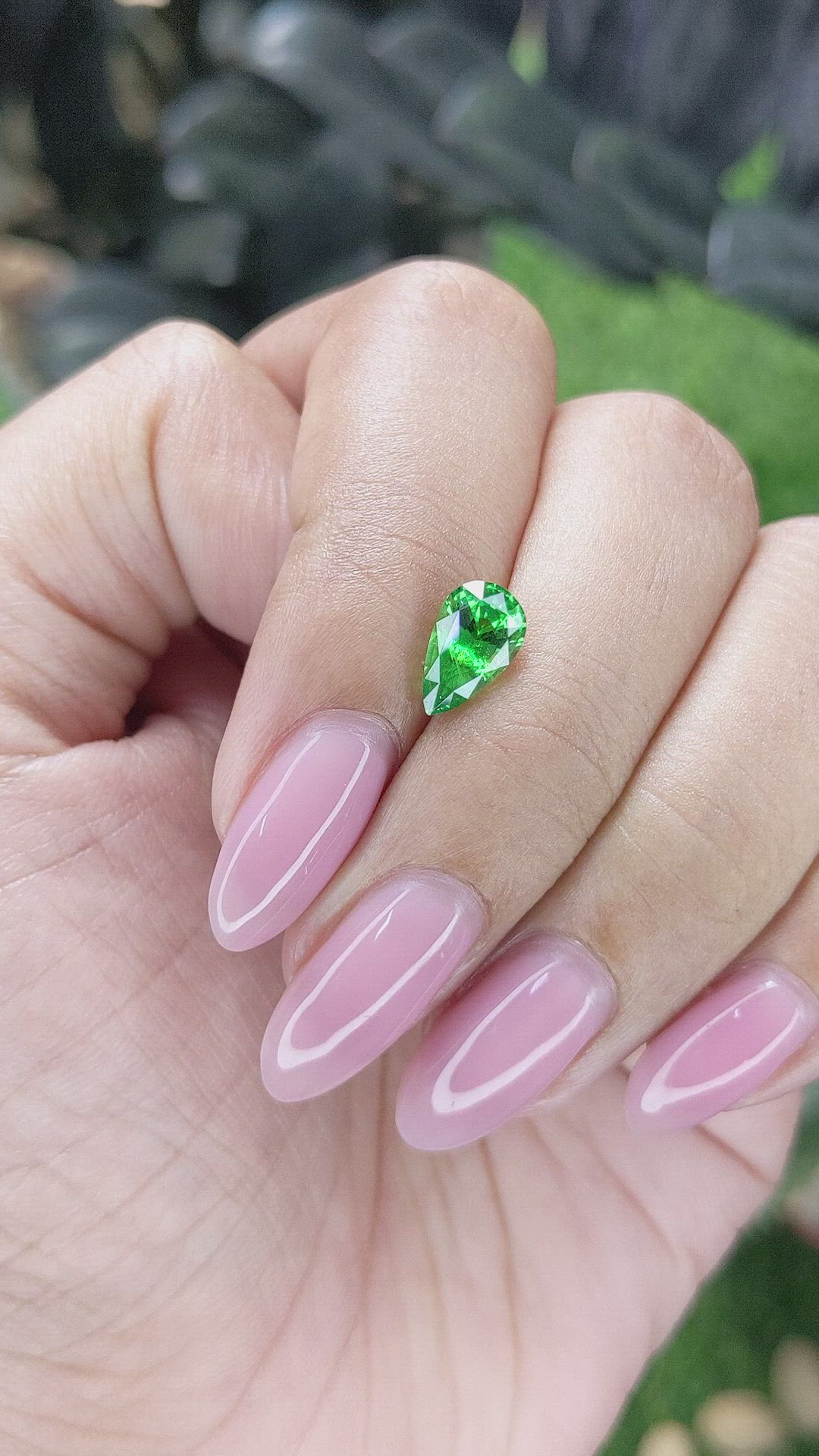





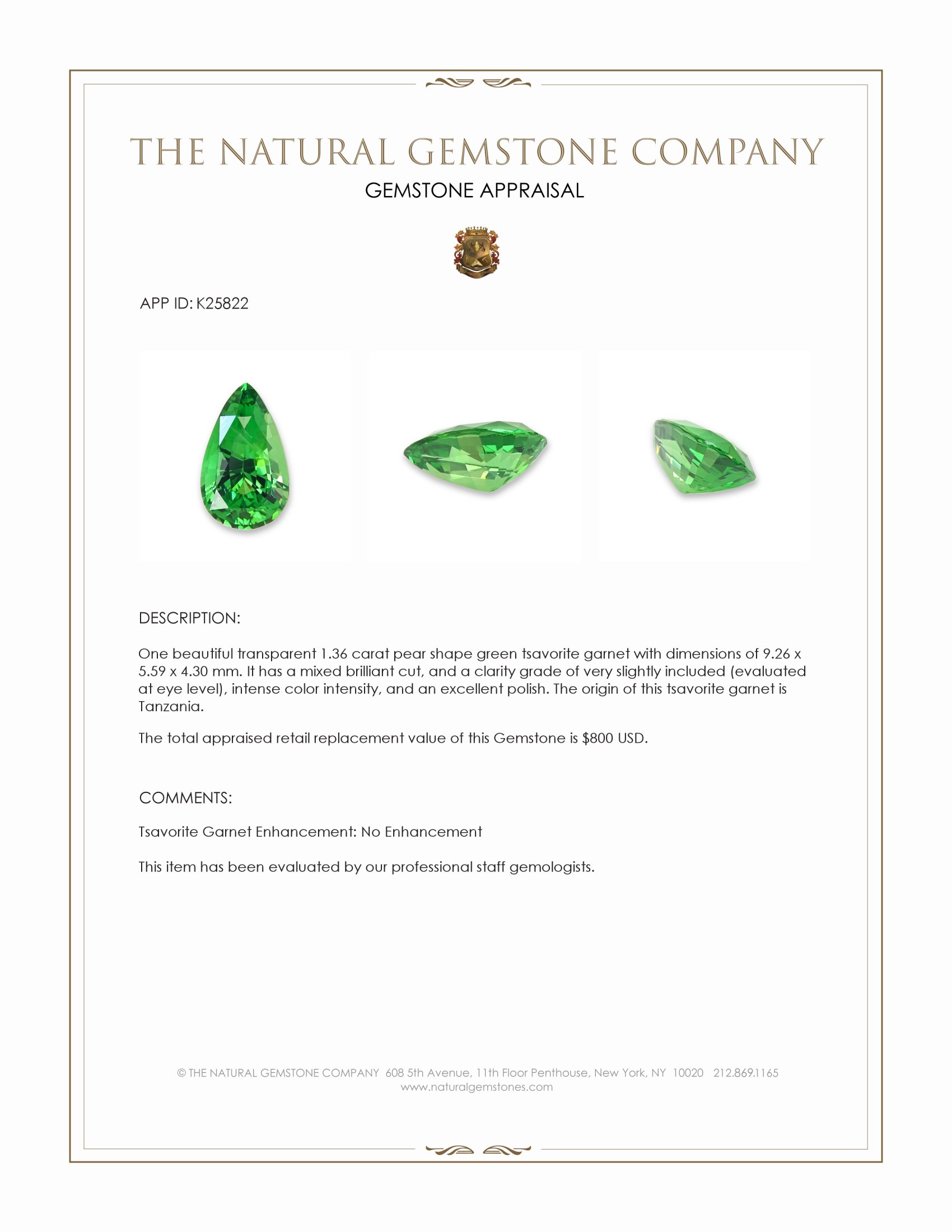
1.36 Ct. Tsavorite Garnet from Tanzania
This loose stone ships by Oct 23
Item ID: | K25822 |
|---|---|
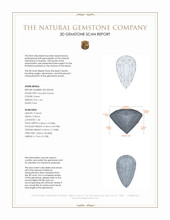
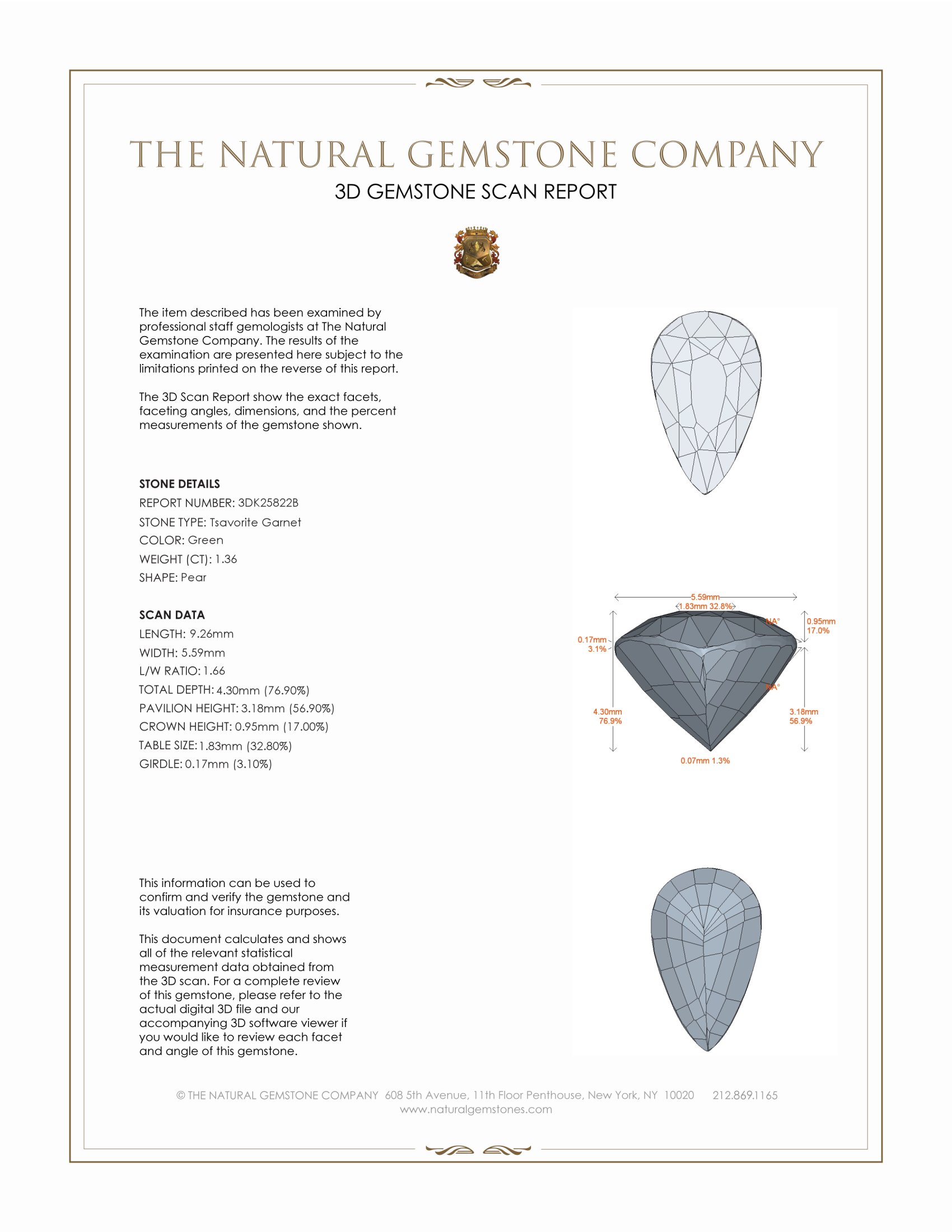
Dimensions (MM): help | Length: 9.26 Width: 5.59 Height: 4.3 |
Weight: | 1.36 Ct. |
Color: help | Green |
Color intensity: help | Intense |
Clarity: help | Very Slightly Included |
Shape: help | Pear |
Cut: | Mixed Brilliant Cut |
Cutting style: | Faceted |
Enhancements: help | No Enhancement |
Origin: help | Tanzania |
Per carat price: help | $588 |
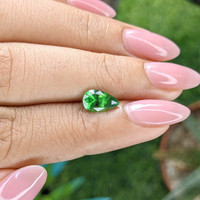
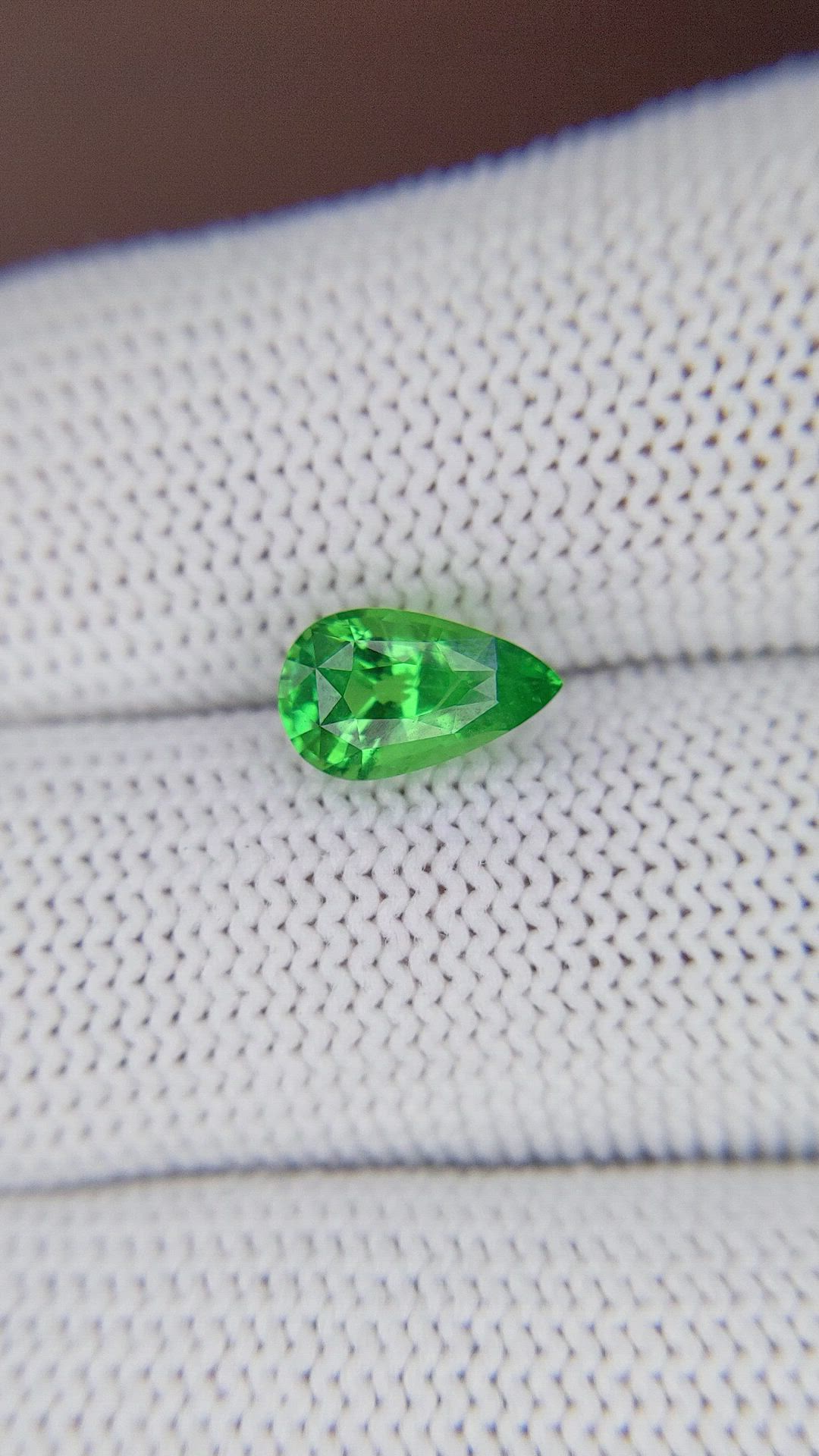
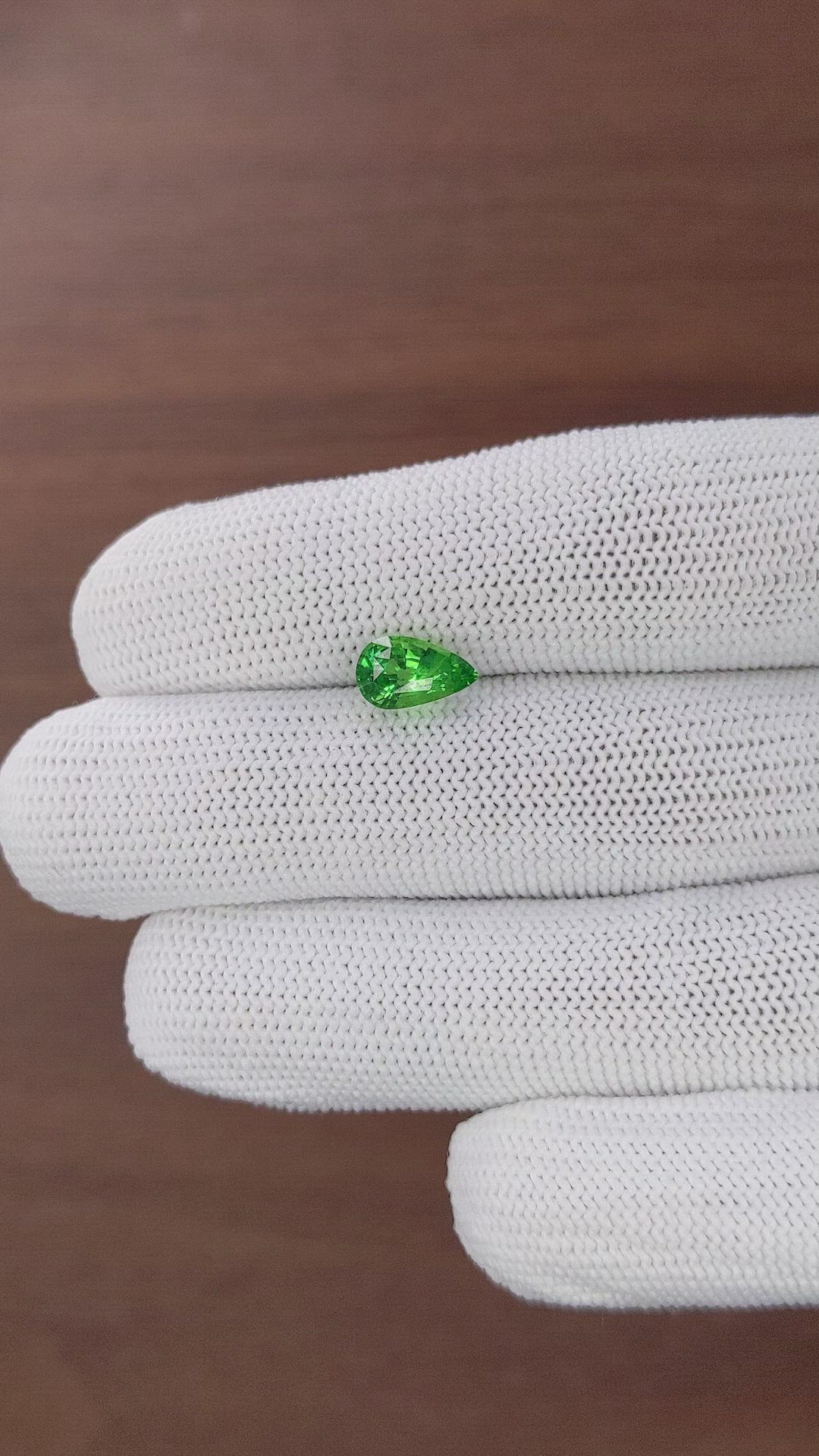
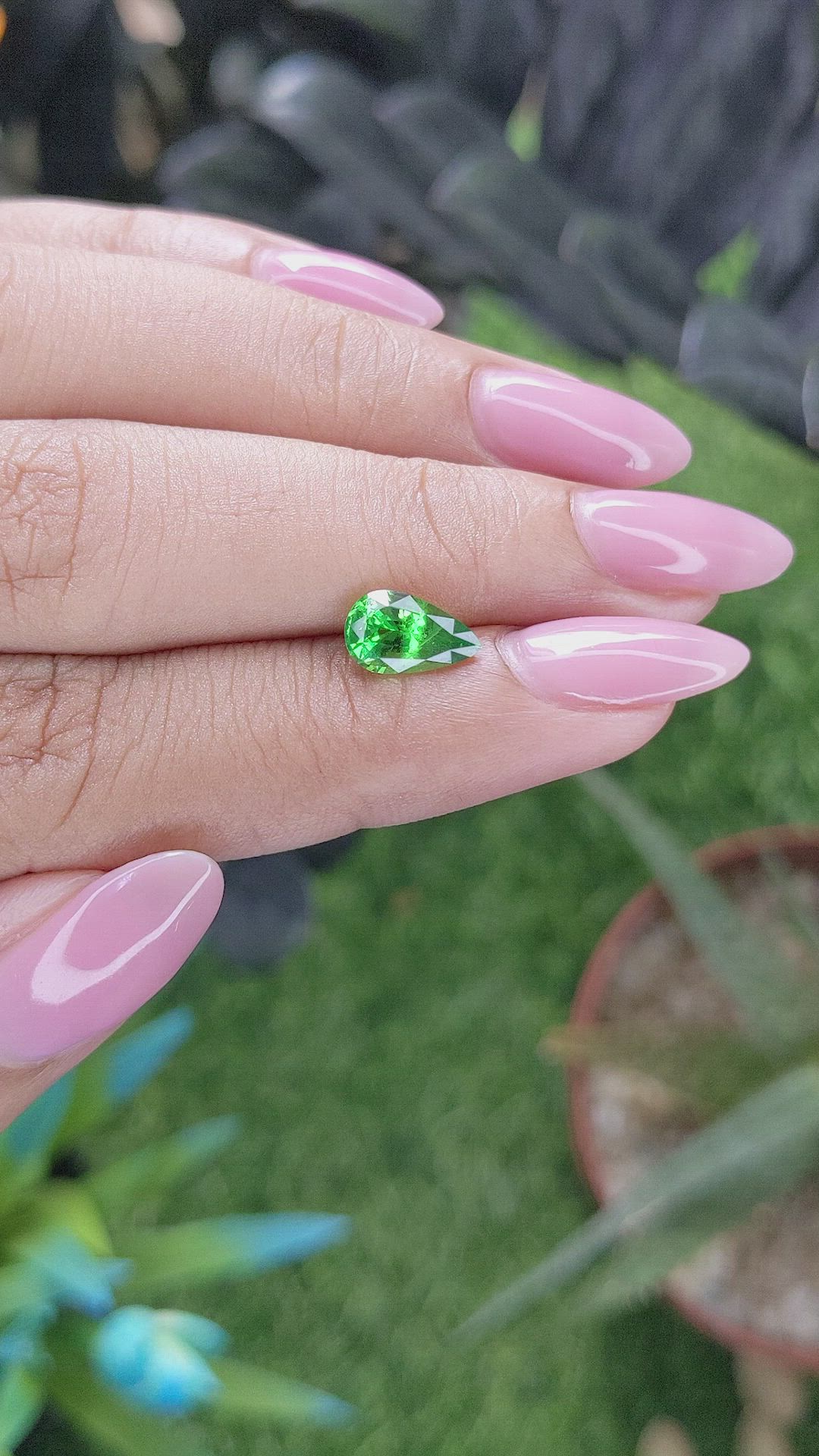
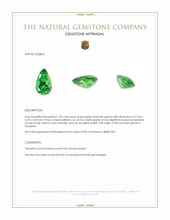
This one transparent pear shape green tsavorite garnet weighs 1.36 carats, and measures 9.26 by 5.59 by 4.30 millimeters. The stone is cut in a mixed brilliant style, combining a faceted crown designed to maximize scintillation with a carefully faceted pavilion to enhance light return. At eye level this gem is graded as very slightly included, with inclusions that do not detract from the overall transparency and that are consistent with natural formation. The color presents an intense green saturation that is vivid and well balanced throughout the stone, the polish is excellent, and there has been no enhancement. This tsavorite originates in Tanzania, and is offered and described by The Natural Gemstone Company with an emphasis on measurable attributes and provenance.
The origin story of this tsavorite is written in deep time, over a period of millions of years during which heat, pressure, and mineral rich fluids transformed the host rocks in eastern Africa. Tsavorite is a variety of grossular garnet whose green hue derives from trace elements such as vanadium and chromium, introduced into the crystal lattice by migrating hydrothermal fluids. In the subsurface environment these fluids circulated along fractures and contact zones between harder metamorphic rocks and calcium rich formations, providing the chemical ingredients and the open spaces necessary for well formed crystals to grow. Slow cooling and sustained pressure allowed atoms to arrange into the characteristic garnet structure, producing a gem with both structural integrity and optical clarity. The result is a crystal that retains a record of its environment, a stable and durable mineral form that emerged from dynamic geological processes taking place long before human history.
The mixed brilliant pear cut applied to this rough was executed to emphasize the stone s natural strengths, the tapered pear outline preserves weight while creating an elegant silhouette, and the mixed faceting pattern yields a pleasing balance of brilliance and fire. A tsavorite s higher refractive properties relative to many other common gem materials contribute to strong light performance, and the cutter s attention to pavilion depth and table proportions enhances the apparent color saturation without sacrificing return of light. The very slightly included clarity grading indicates inclusions are present under magnification or careful inspection, however at typical viewing distances the stone reads as transparent and lively. The excellent polish provides clean facet junctions and smooth planes that allow light to enter and exit with minimal diffusion, contributing to a crisp and lively appearance on the finger or in a pendant setting.
For practical use and long term enjoyment this 1.36 carat Tanzanian tsavorite is well suited to fine jewelry, the pear shape adapts readily to bezel or prong settings, and the stone s toughness and polish make it appropriate for daily wear with normal care. Because there is no enhancement to this gem, its color and clarity reflect intrinsic geological conditions rather than human intervention, and provenance from Tanzania adds a well documented geological context. The Natural Gemstone Company documents the measured specifications and visual characteristics, and recommends standard precautions for all colored gemstones, including avoiding sharp blows, prolonged exposure to harsh chemicals, and extreme thermal shock. When set with appropriate mounting and periodic professional cleaning, this tsavorite will retain the qualities imparted by its geological history and the cutter s work, offering a direct and enduring connection to the natural processes that created it.


