
- Stone15
- Reports3
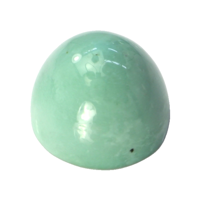
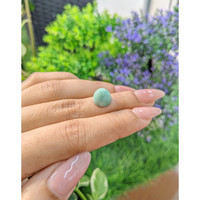
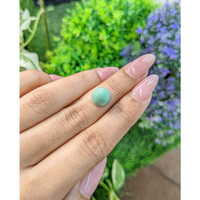
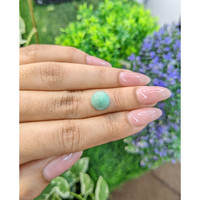


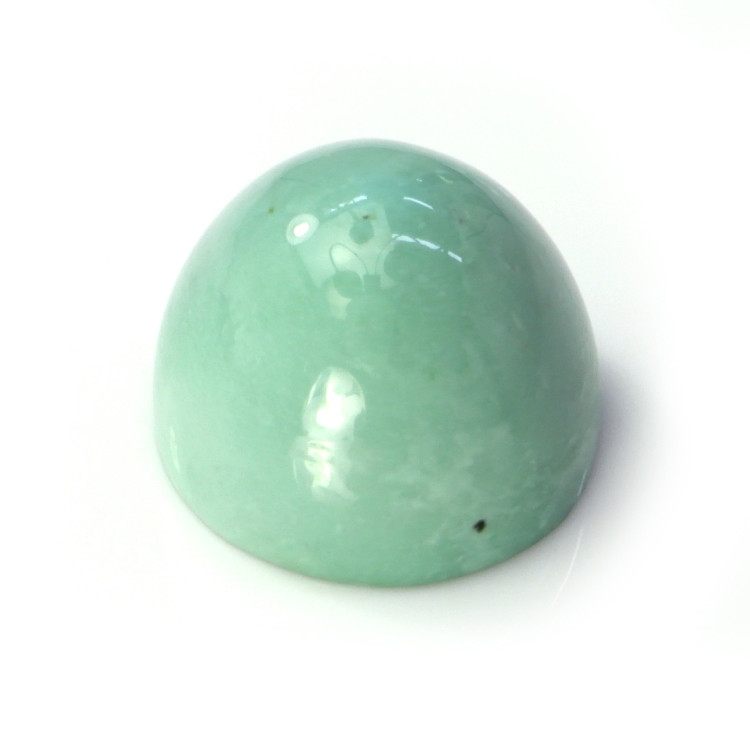
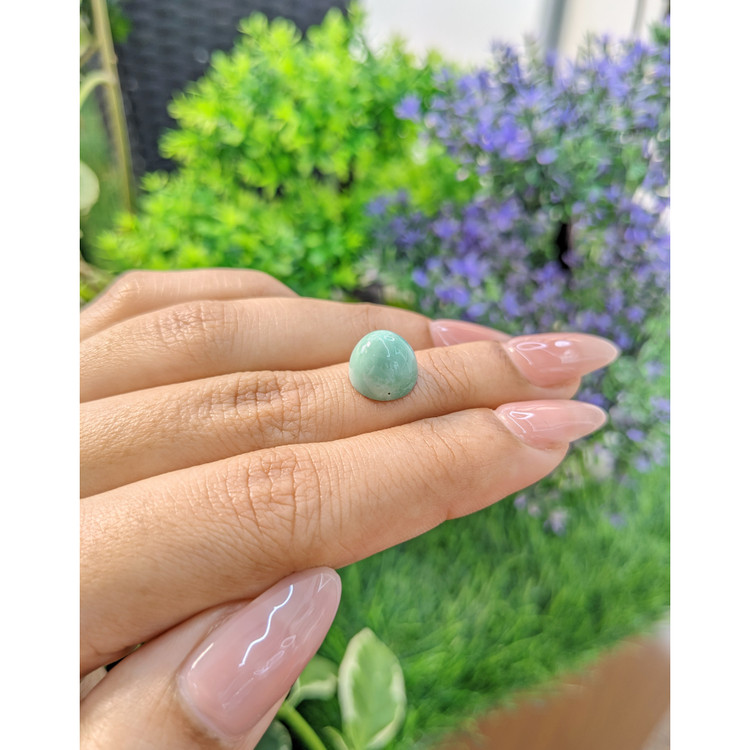
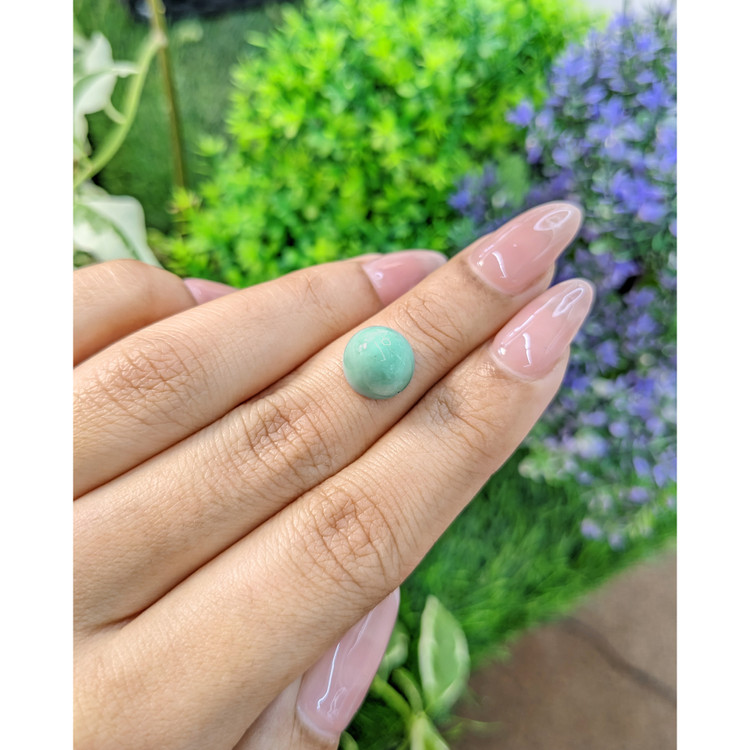
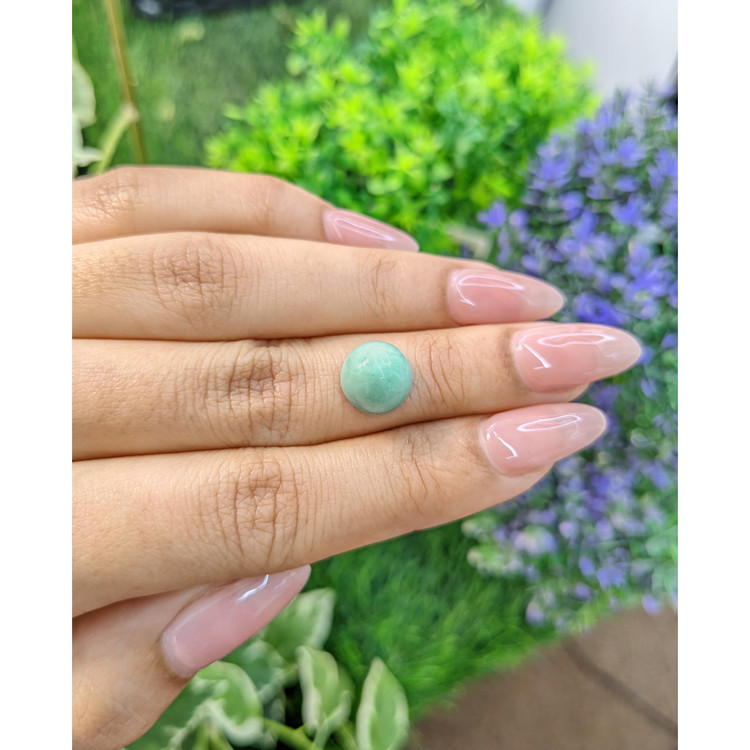

4.94 Ct. Cabochon Turquoise from Persia(Iran)
This loose stone is available to ship now
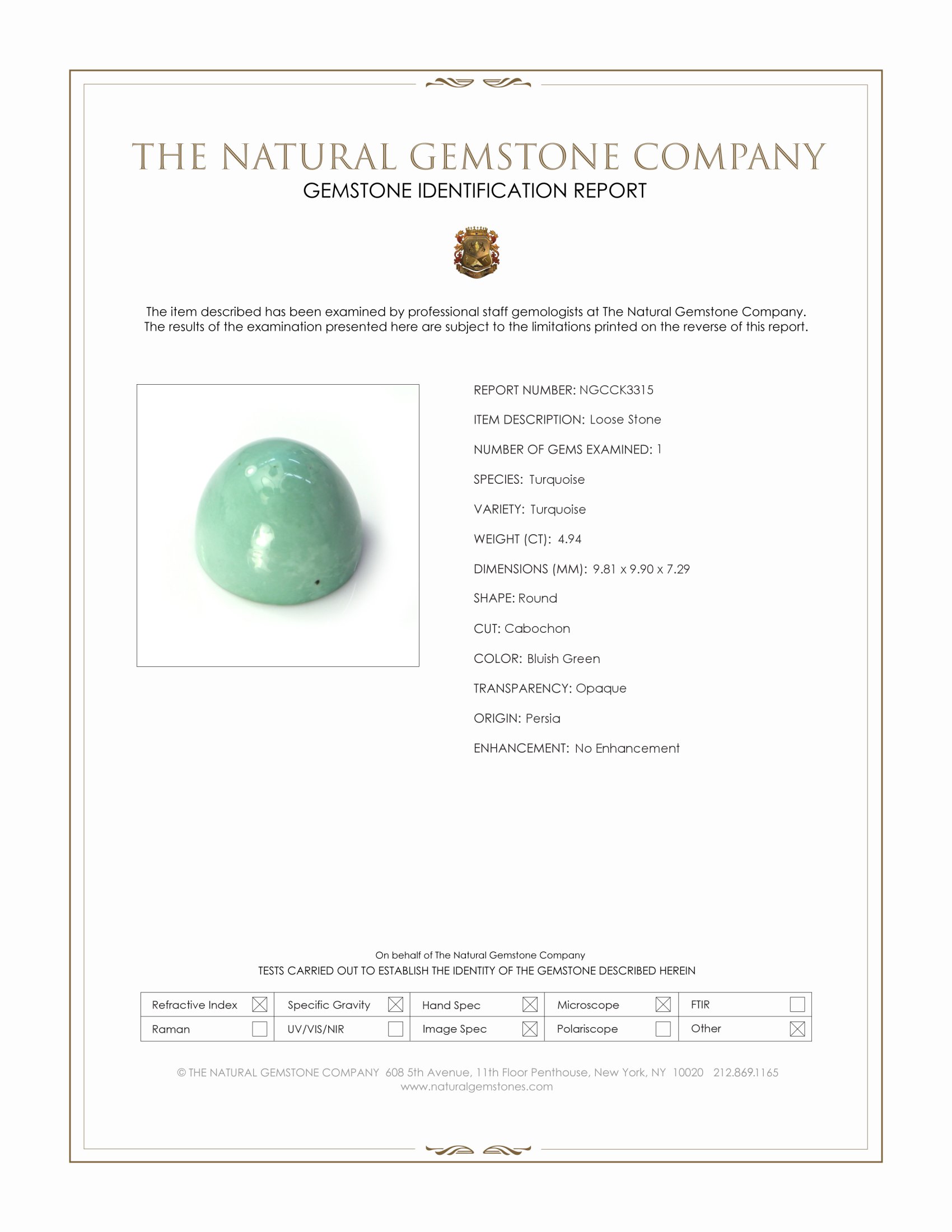
Item ID: | K3315 |
|---|---|
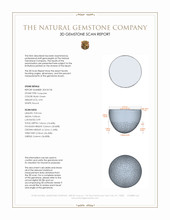
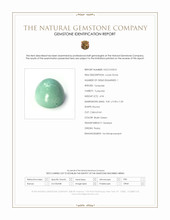
Dimensions (MM): help | Length: 9.81 Width: 9.9 Height: 7.29 |
Weight: | 4.94 Ct. |
Color: help | Bluish Green |
Color intensity: help | Medium |
Clarity: help | Not Applicable |
Shape: help | Round |
Cut: | Cabochon |
Cutting style: | Cabochon |
Enhancements: help | No Enhancement |
Origin: help | Persia(Iran) |
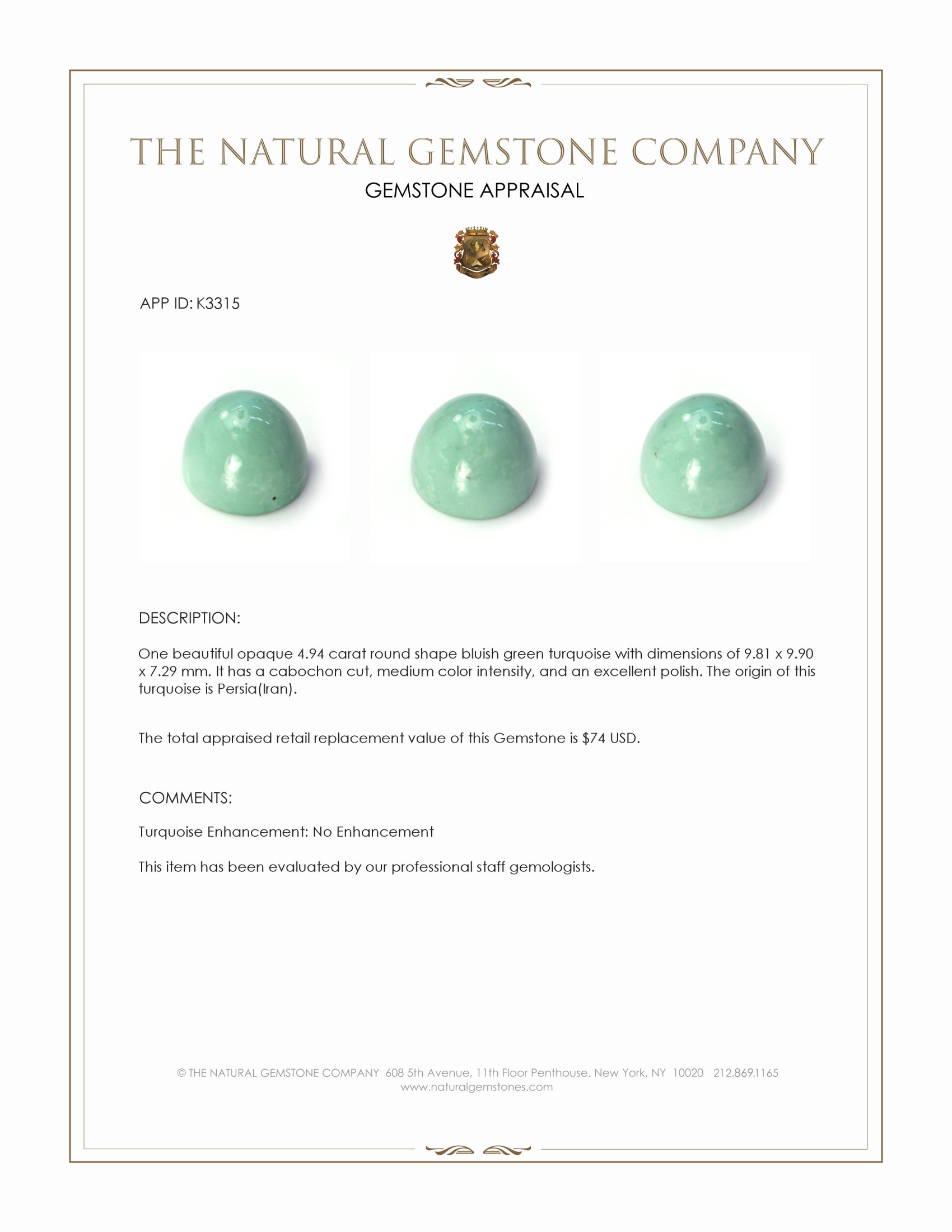
Per carat price: help | $15 |
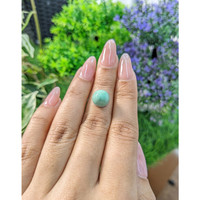
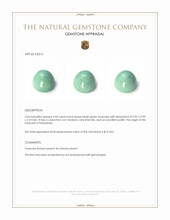
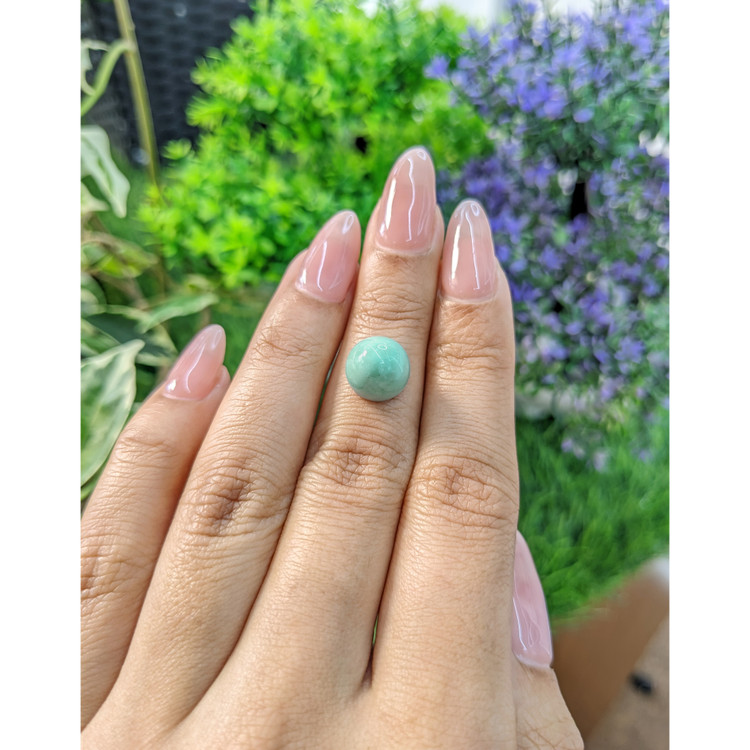
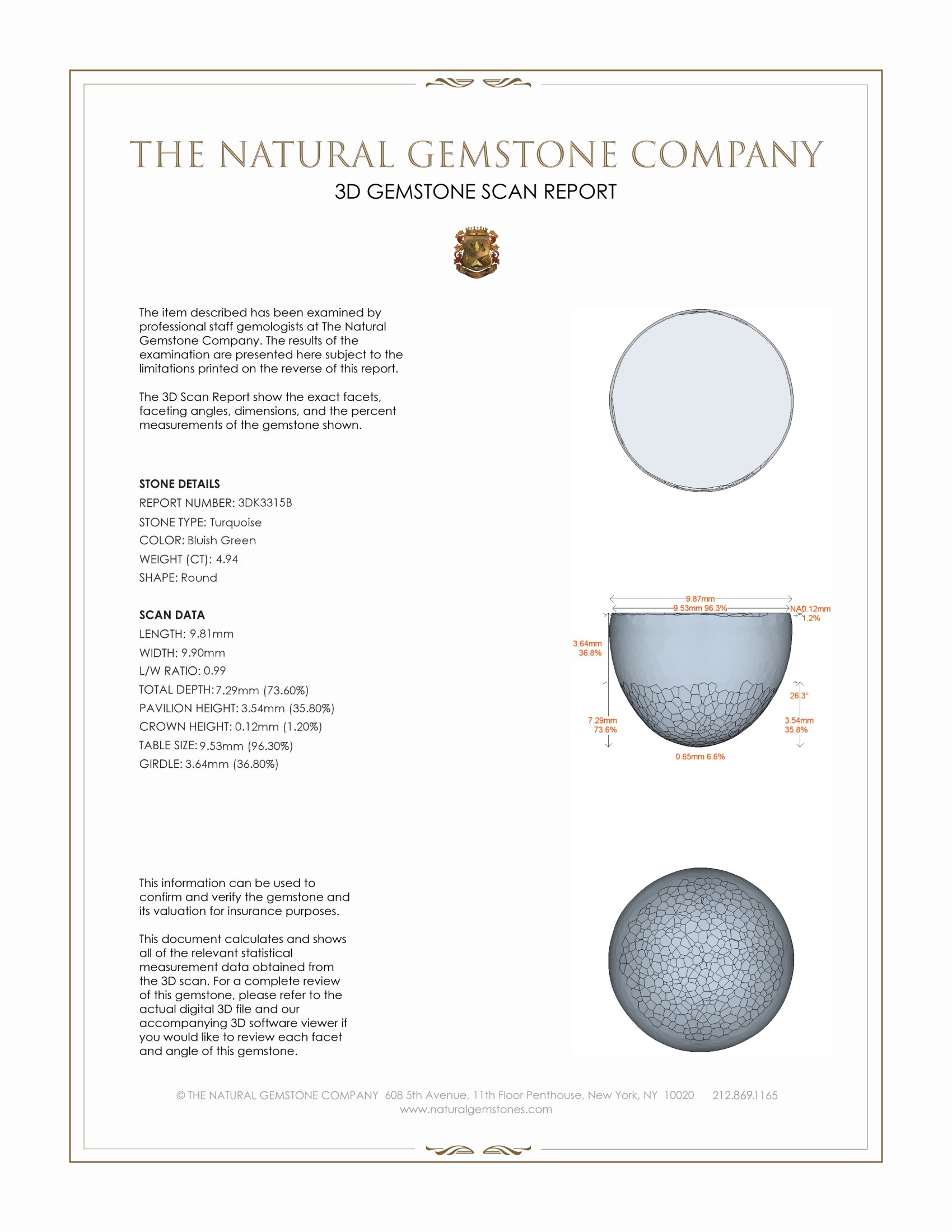
This turquoise specimen is a 4.94 carat, opaque, round cabochon, with measurements of 9.81 x 9.90 x 7.29 mm, and an origin of Persia, Iran. The piece exhibits a bluish green hue with medium intense color, and an excellent polish across the dome. The cabochon shape is a classical round high dome, executed to precise dimensional control, with a near perfect circular outline that reads 9.81 mm by 9.90 mm on orthogonal axes, indicating careful preform work and consistent lap control. The weight of 4.94 carats correlates with the recorded dimensions and dome height, producing a visually substantial cabochon that sits prominently in a setting. The material is naturally opaque, with minimal translucency at the rim under direct transmitted light, a characteristic typical of high quality Persian turquoise. No enhancement has been applied, the stone is offered in its natural state, and the finish quality reflects a final polishing sequence that removed abrasions while maintaining the smooth convexity inherent to a well executed cabochon.
The cutting and finishing process for this turquoise emphasizes traditional cabochon craftsmanship, with attention to dome curvature, girdle regularity, and surface integrity. The dome height of 7.29 mm relative to the diameter yields a pronounced dome, which requires controlled grinding to avoid overthinning at the edges and to ensure even material removal. The lapidary workflow for this piece likely included an initial preforming stage on silicon carbide wheels to establish the outline, progressive sanding through a series of progressively finer grits to refine the dome profile, and a final polish on a felt or leather lap with cerium oxide or tin oxide to achieve the glossy surface visible in the images. The polish is uniform, indicating correct lap speed and minimal heat exposure, which preserves the turquoise matrix and prevents microfracturing. The cabochon shows subtle surface clouding and natural granular texture beneath the polish, inherent to the microcrystalline structure of turquoise, and displays a tiny dark speck consistent with an accessory mineral inclusion rather than a surface blemish. These details demonstrate conscientious material handling and an understanding of turquoise porosity during cutting, a consideration that is particularly important given that this piece is untreated.
Color characterization of this turquoise is technically described as bluish green, with medium intensity, a balanced tone, and moderate saturation. In gemological terms the hue sits between blue and green, indicating a primary copper influence for the blue component combined with iron substitution that shifts hue toward green. The medium intensity denotes that the stone is neither pale nor deeply saturated, offering a nuanced color that adapts well to different metal tones when set. Persian turquoise is historically prized for a clear blue to azure hue, and this specimen represents a slightly greener variant within that regional typology. The color distribution is relatively even across the dome, with mild variegation and clouding that add depth without distracting matrix patterns. Because the stone is untreated, the color stability relies on the natural mineralogical composition and internal porosity. From a durability perspective the stone aligns with turquoise hardness expectations, typically around 5 to 6 on the Mohs scale, and the lack of stabilization or impregnation means the surface may be more absorbent than treated material, informing recommendations for protective mounting and routine care.
For practical use and long term preservation, the handling and setting of an untreated Persian turquoise cabochon require specific considerations that we at The Natural Gemstone Company communicate to our clients. Given the high dome profile and the untreated nature of the stone, bezel mounting is recommended to provide lateral support to the girdle and to shield the dome from direct knocks. A low to medium height bezel will protect the circumference, while a thin bezel edge polished flush with the dome will maintain the visual prominence of the cabochon. If a gallery setting is desired, consider titanium or gold channels that reduce stress concentrations. Ultrasonic and steam cleaning methods should be avoided, and cleaning should be limited to warm water, mild detergent, and a soft cloth, drying immediately to prevent prolonged moisture exposure. Exposure to chemicals, body oils, and prolonged sunlight should be minimized to reduce any potential surface alteration. The Natural Gemstone Company can advise on bespoke mounting options to complement the bluish green tone, recommending metal pairings and design approaches that highlight the color while protecting the stone. This untreated Persian turquoise cabochon combines classic regional character, thoughtful lapidary execution, and collector appeal, making it a suitable choice for bespoke jewelry or for inclusion in a curated mineral collection.


