
- Stone10
- Reports2


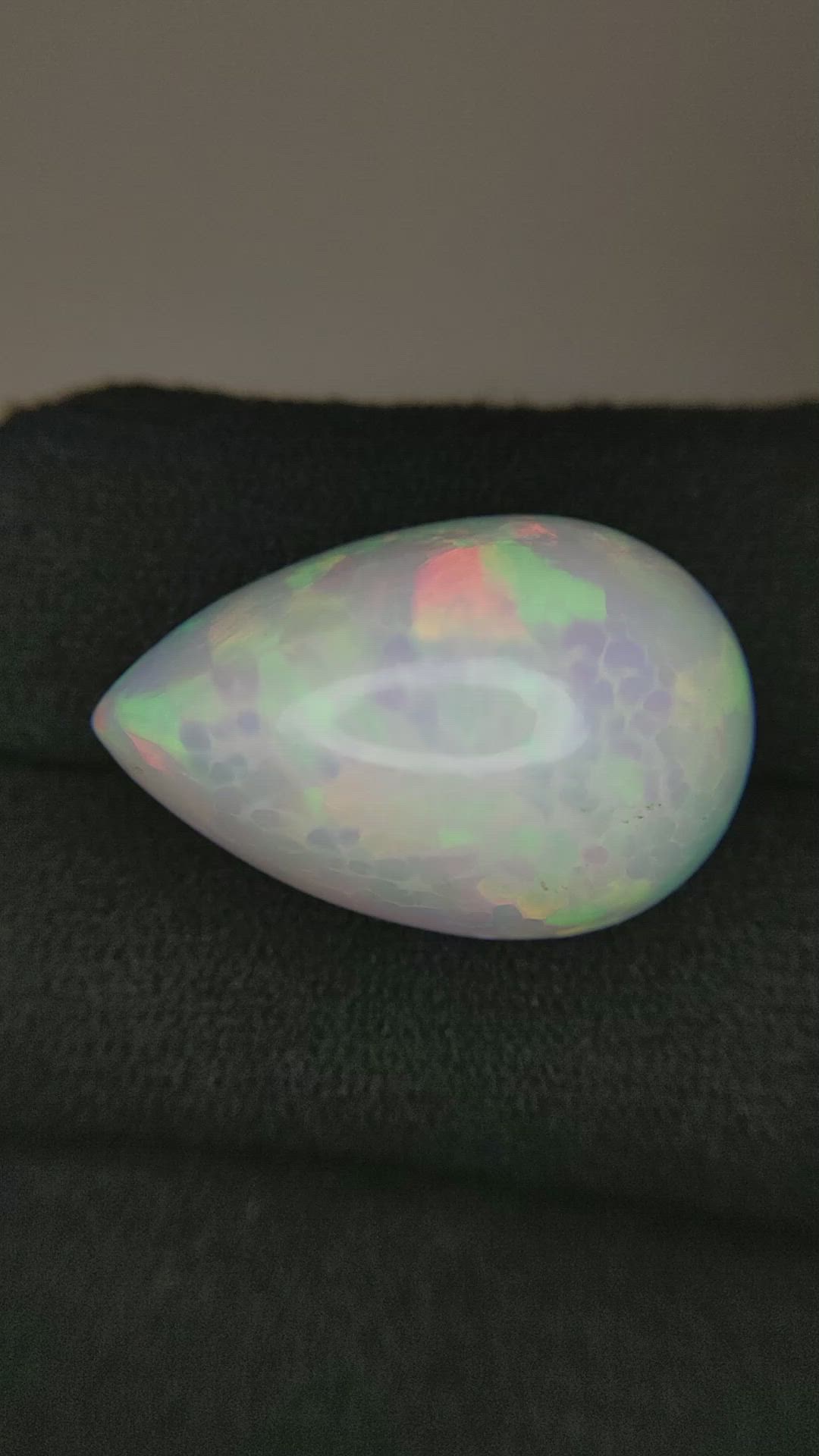
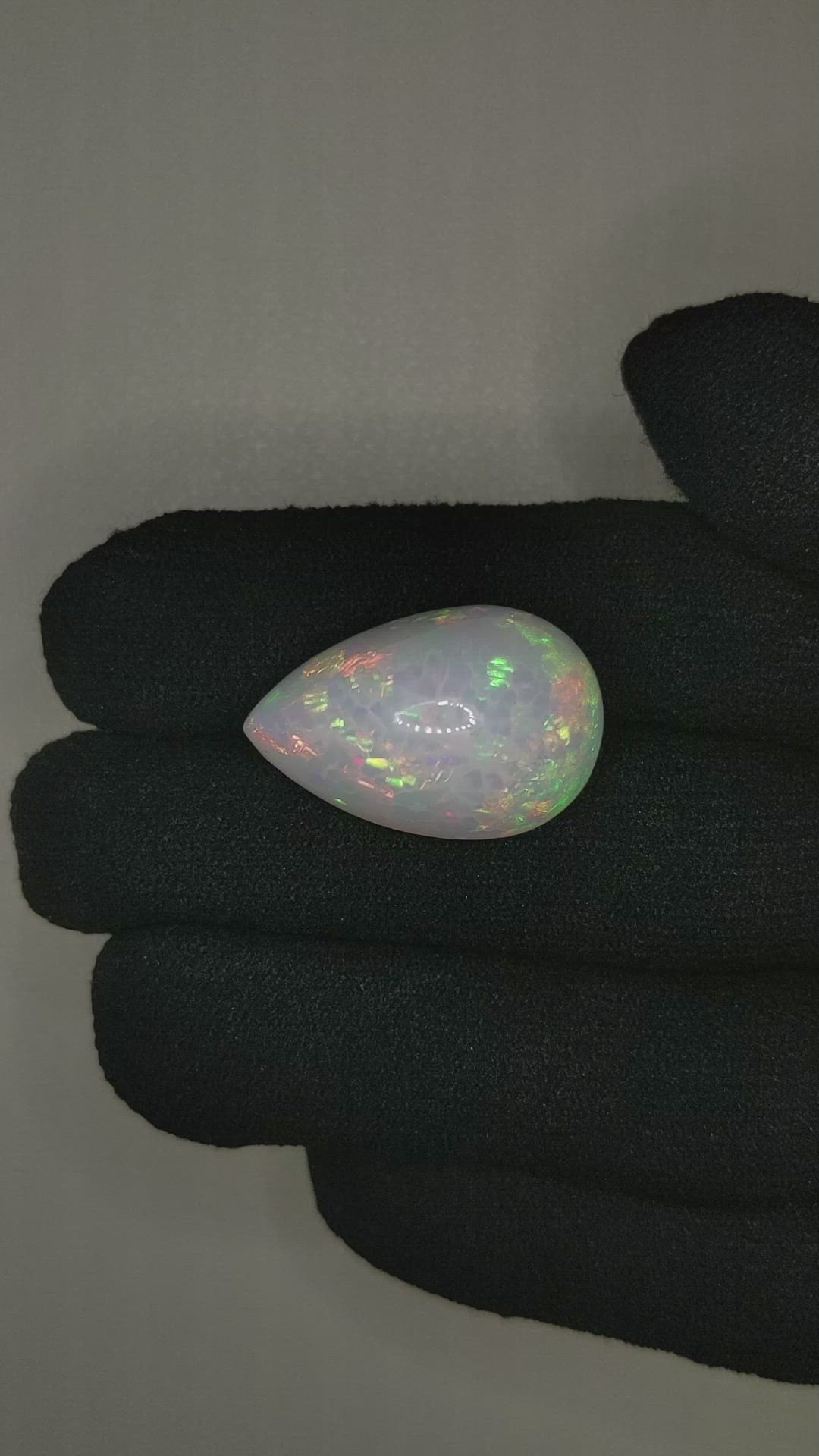
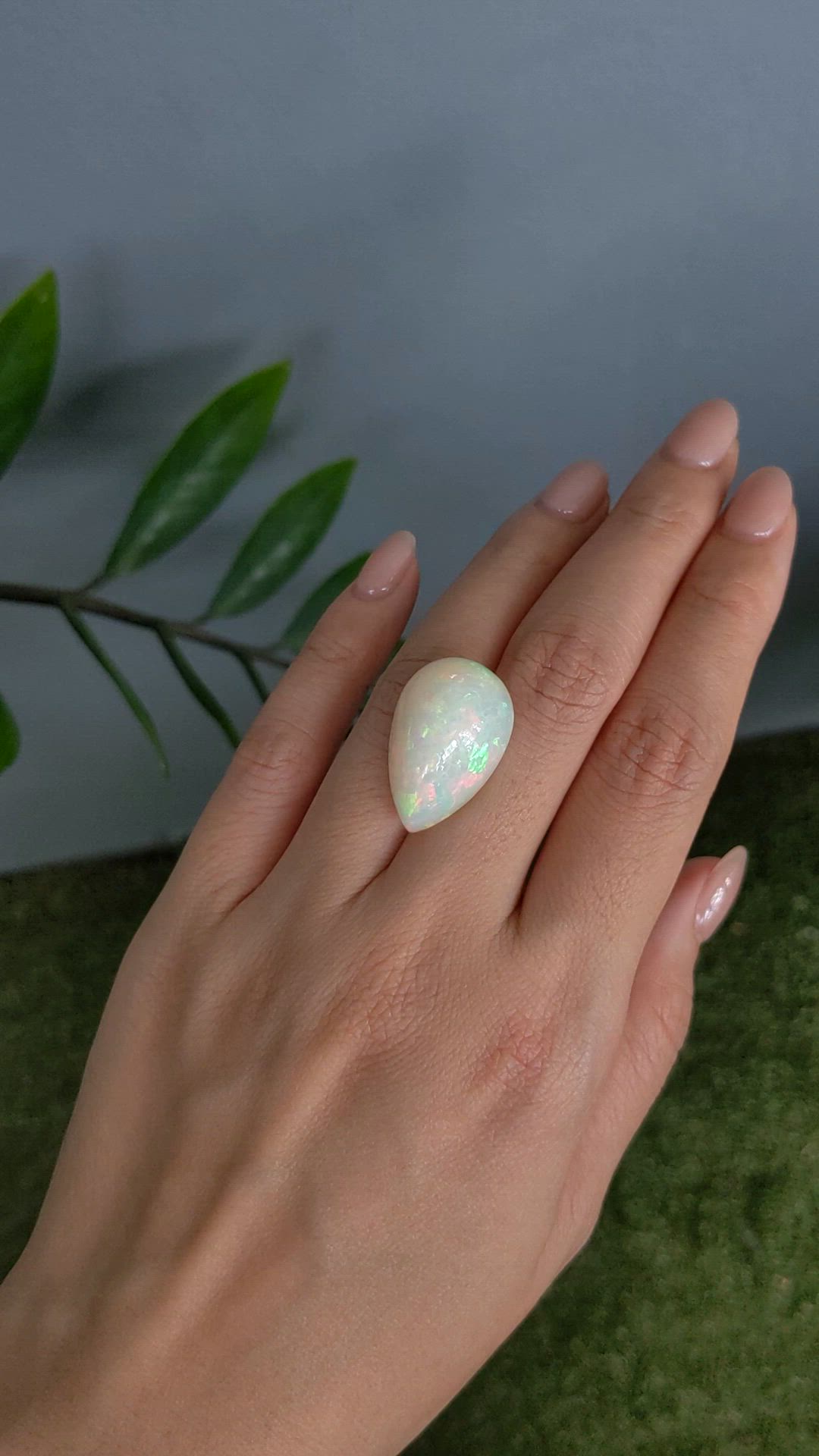
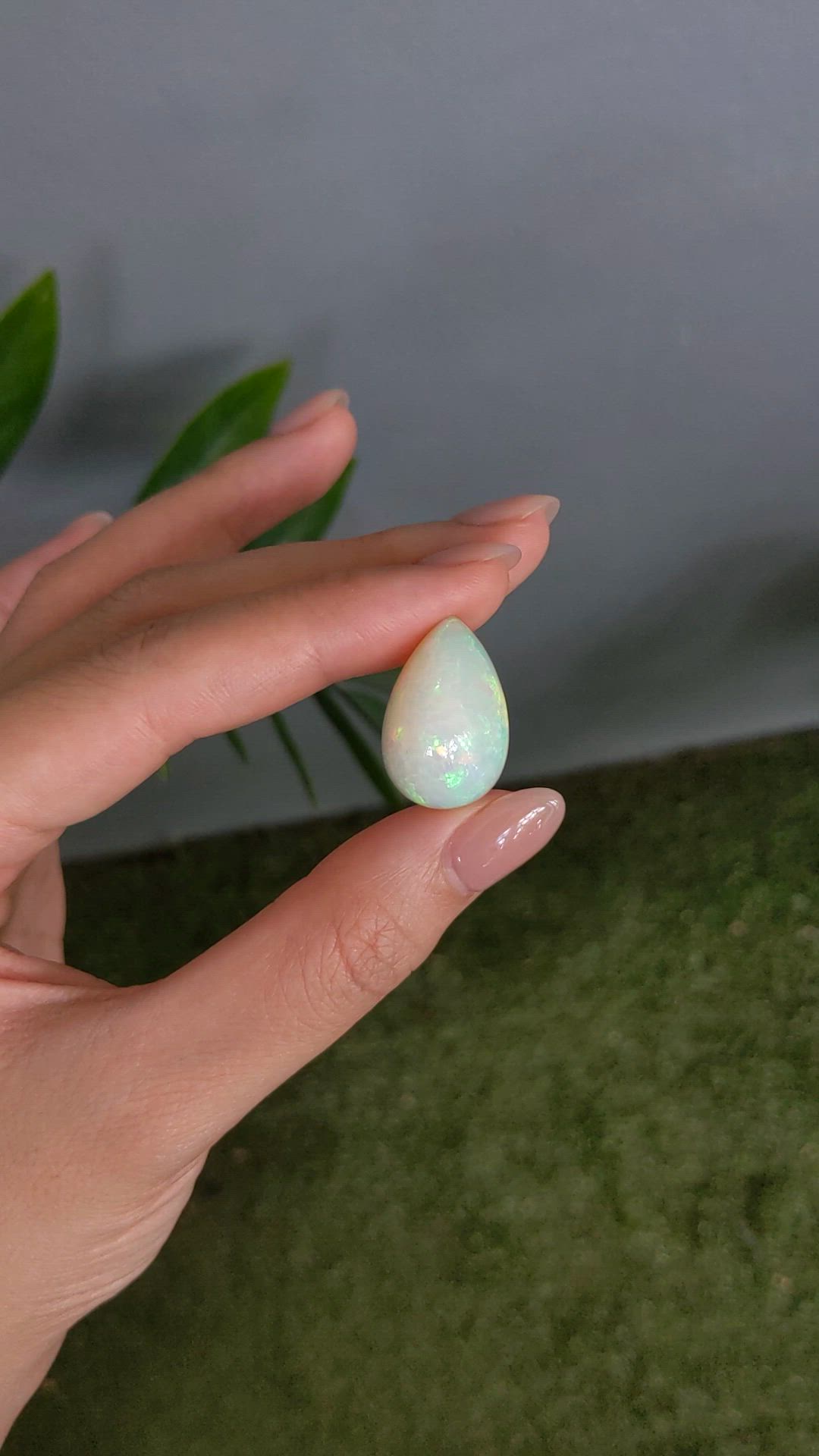


16.98 Ct. Multi Color Cabochon White Opal (Light Opal) from Ethiopia
This loose stone ships by Oct 17
Item ID: | K25377 |
|---|---|
Dimensions (MM): help | Length: 24 Width: 15.8 Height: 11.3 |
Weight: | 16.98 Ct. |
Color: help | Multi Color |
Color intensity: help | Medium |
Clarity: help | Slightly Included |
Shape: help | Pear |
Cut: | Cabochon |
Cutting style: | Cabochon |
Enhancements: help | No Enhancement |
Origin: help | Ethiopia |
Per carat price: help | $14 |
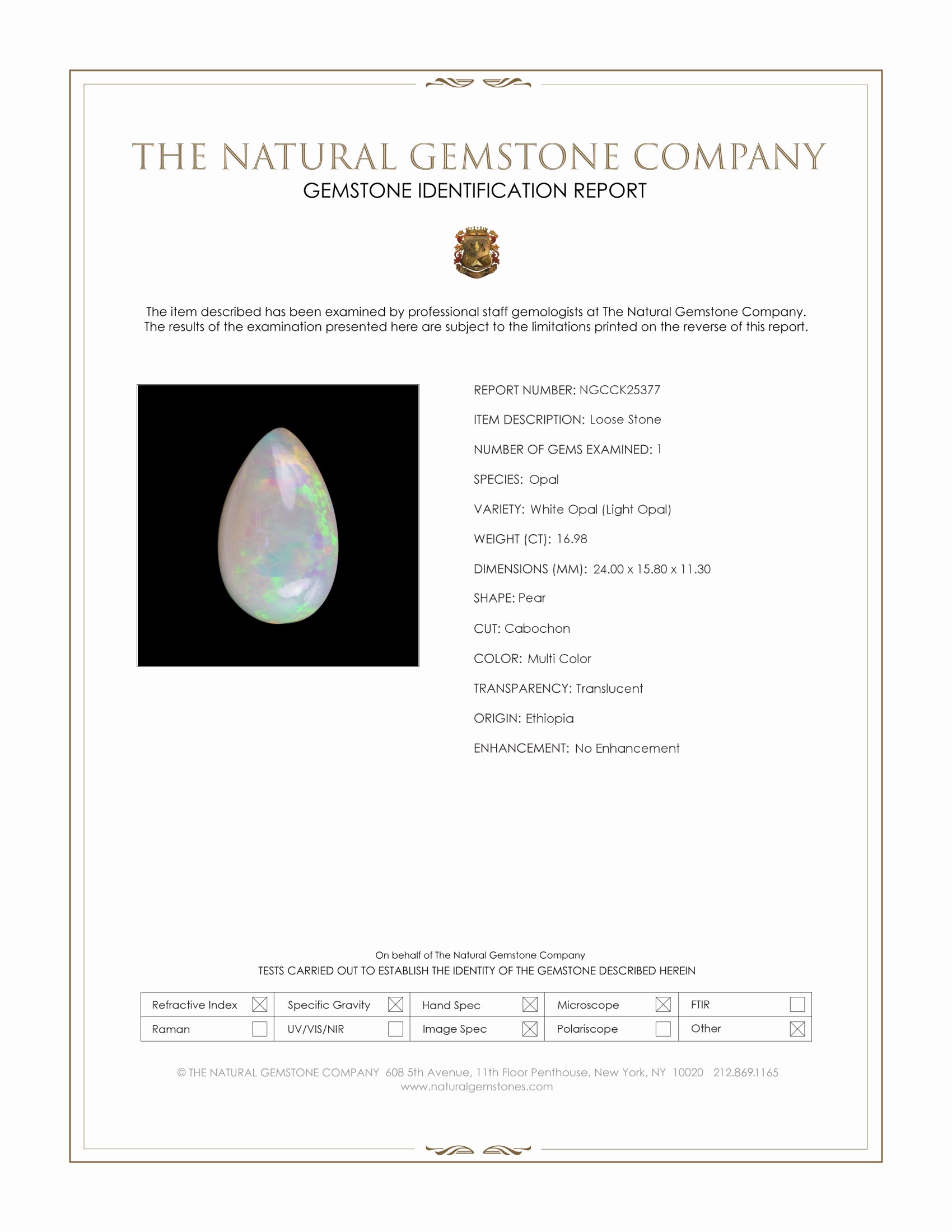
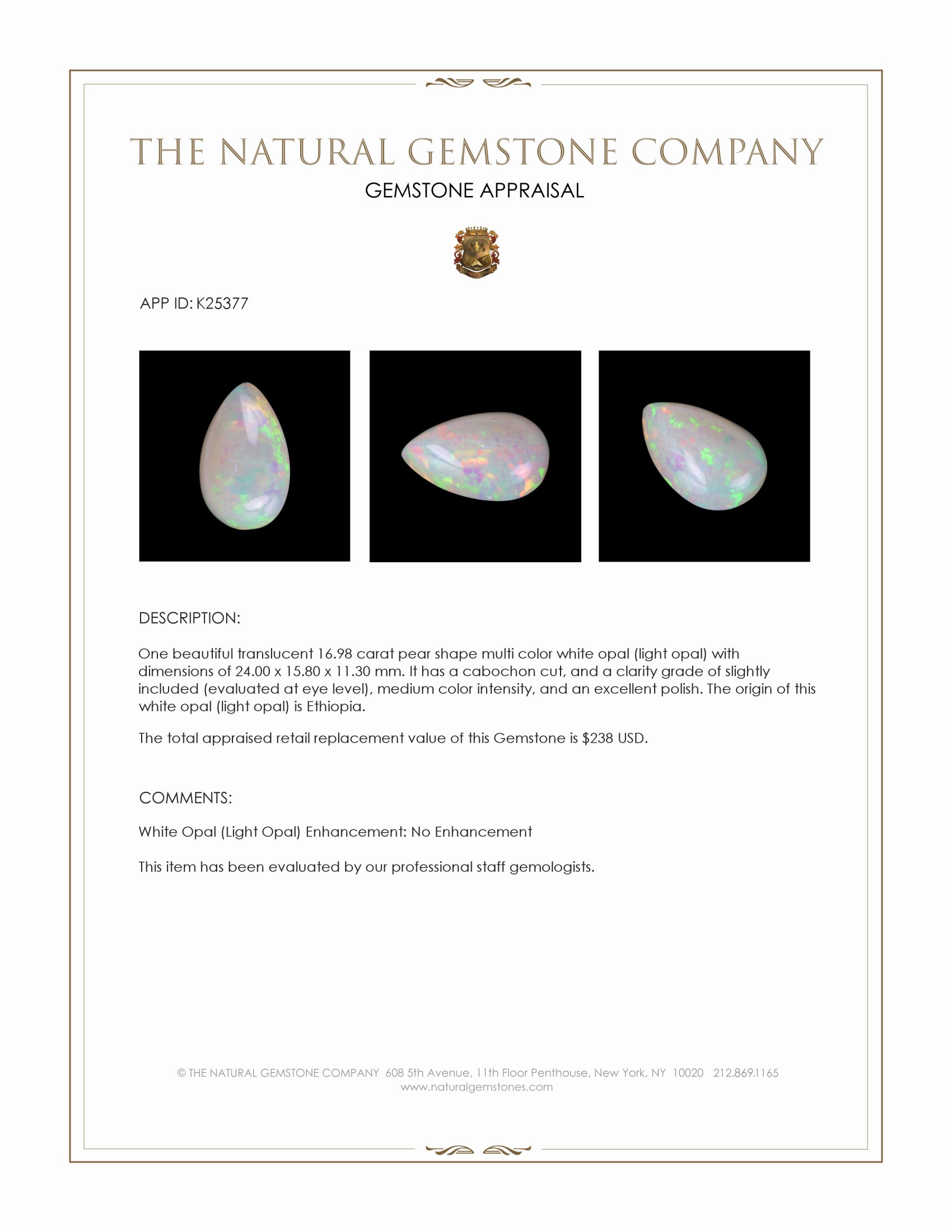
This translucent pear shape White Opal Light Opal weighs 16.98 carats and measures 24.00 x 15.80 x 11.30 mm, cut as a high domed cabochon to optimize play of color and surface appeal. The cutting style is cabochon, clarity grade slightly included evaluated at eye level, medium color intensity, and the polish is excellent, with no enhancement recorded. Origin is Ethiopia, and the example presented by The Natural Gemstone Company displays a multi color palette with predominant green and red flashes across a delicate milky body. The pear outline is precisely executed to industry tolerances, the apex is centered, and the overall symmetry is balanced to facilitate even light return across the surface. Opal type White Opal Light Opal.
From a lapidary perspective the cabochon profile is the primary tool for translating internal microstructure into visible brilliance. This opal has a well proportioned dome height that allows maximum diffraction of incident light while preserving translucency of the body. During cutting the orientation of the preform was chosen to align arrayed silica sphere planes with the viewing surface, producing broadflash and patch play patterns rather than isolated pinfire. The cutter used progressive grit stages with fine polishing laps to achieve an excellent polish that enhances specular reflection from the surface while avoiding abrasion related surface microfractures that would suppress color play. The slightly included clarity reading indicates minor internal potch or thin healed fissures that remain below the threshold of significant optical interference at normal viewing distances. Those internal features do not disrupt the ordered silica arrays that generate spectral diffraction, so the color play remains vivid. The Ethiopian provenance is relevant technically because it often correlates with high ordering of silica spheres and a characteristic mix of vibrant greens and warm reds when viewed under angled light.
Comparing the brilliance of this White Opal Light Opal to more common faceted gemstones clarifies why it stands apart for collectors who appreciate optical complexity. Faceted diamonds and other high refractive index gems derive brilliance from refractive index driven reflection and dispersion within geometric facets, producing sharp scintillation and persistent white light return interspersed with spectral flashes. Sapphires and emeralds rely on faceting to create defined light windows and internal reflection pathways, which emphasize clarity and saturation of hue. By contrast, the opal produces brilliance through diffraction from nanoscale silica sphere arrays, a mechanism that yields shifting spectral patches and full spectral flashes that change color and pattern as the stone or the light source moves. The cabochon cut complements this mechanism, providing a continuous curved surface that reveals broad swathes of color rather than discrete facet based sparks. On a practical level this means that in ambient diffuse light the opal will present a soft, ethereal luminosity with layered color depth, while under directional point lighting the same stone will generate lively, dynamic color shifts that no faceted stone can replicate in the same way.
For the technically minded buyer or jeweler this specimen offers a compelling combination of size, surface area, and internal ordering that maximize visual impact. The 16.98 carat weight and the 24.00 by 15.80 millimeter face allow broadflash patterns to develop across the pear silhouette, and the dome geometry has been executed to balance resilience and optical performance. Slight inclusions evaluated at eye level are common in natural white opals and in this example they act as character markers without compromising the engineered optical pathways. Because there is no enhancement, the piece is in its natural state, allowing accurate assessment of stability and long term behavior under normal wear. When set, a secure bezel that follows the pear outline will protect the girdle and allow the cabochon surface to read cleanly, and orientation of the tip toward the finger or away from the light source can be used to modulate visible patterning in finished jewelry. The Natural Gemstone Company presents this White Opal Light Opal for clients who value the science of light and structure as much as the aesthetic, a stone that literally diffracts its own kind of brilliance into a spectrum that changes with every glance.


