
- Stone13
- Reports3
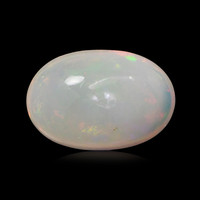
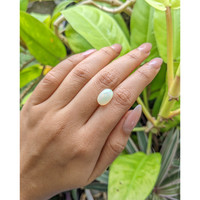
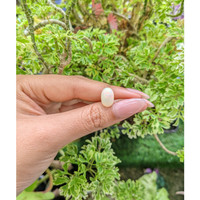
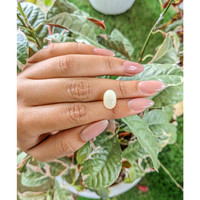
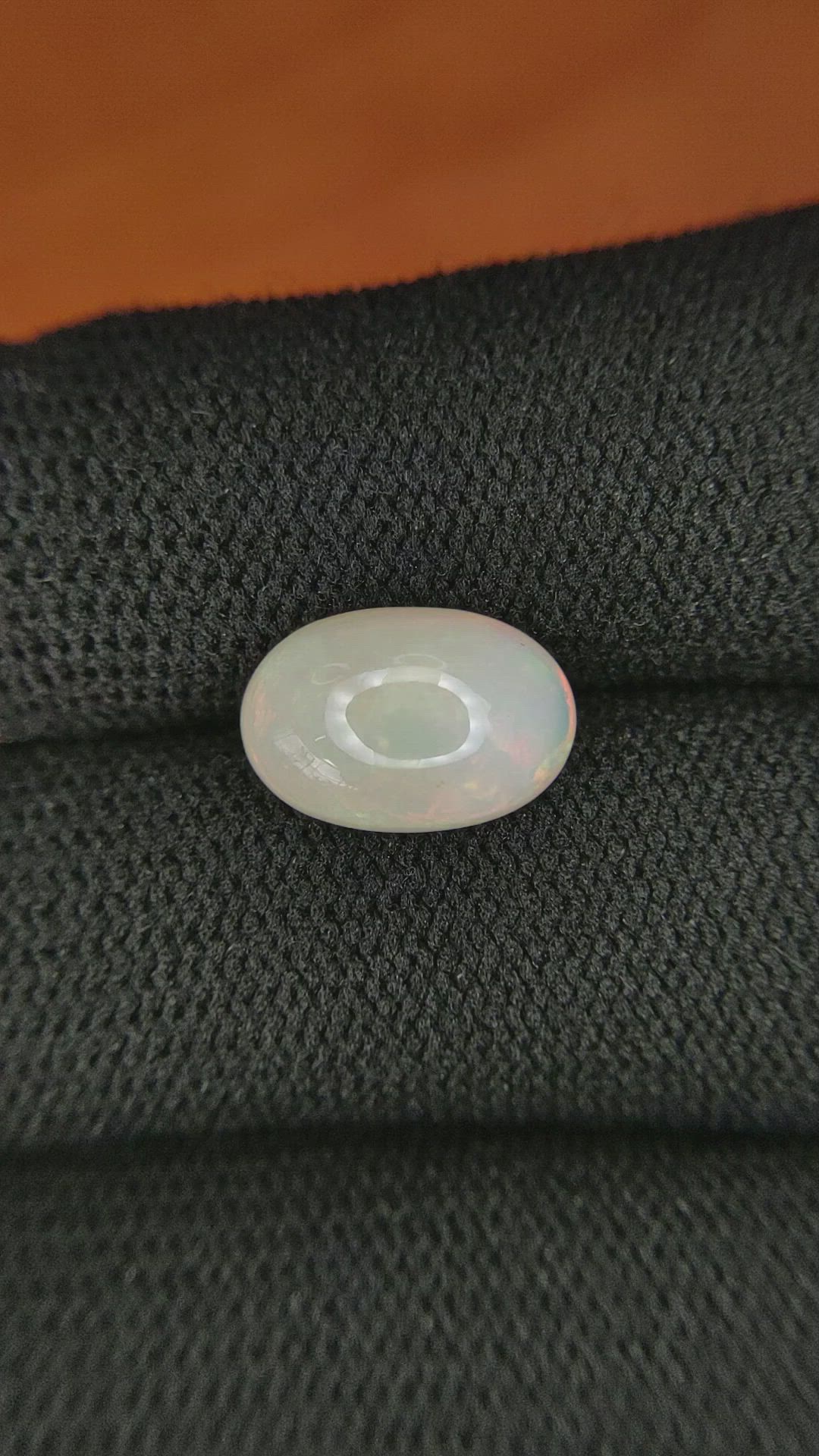
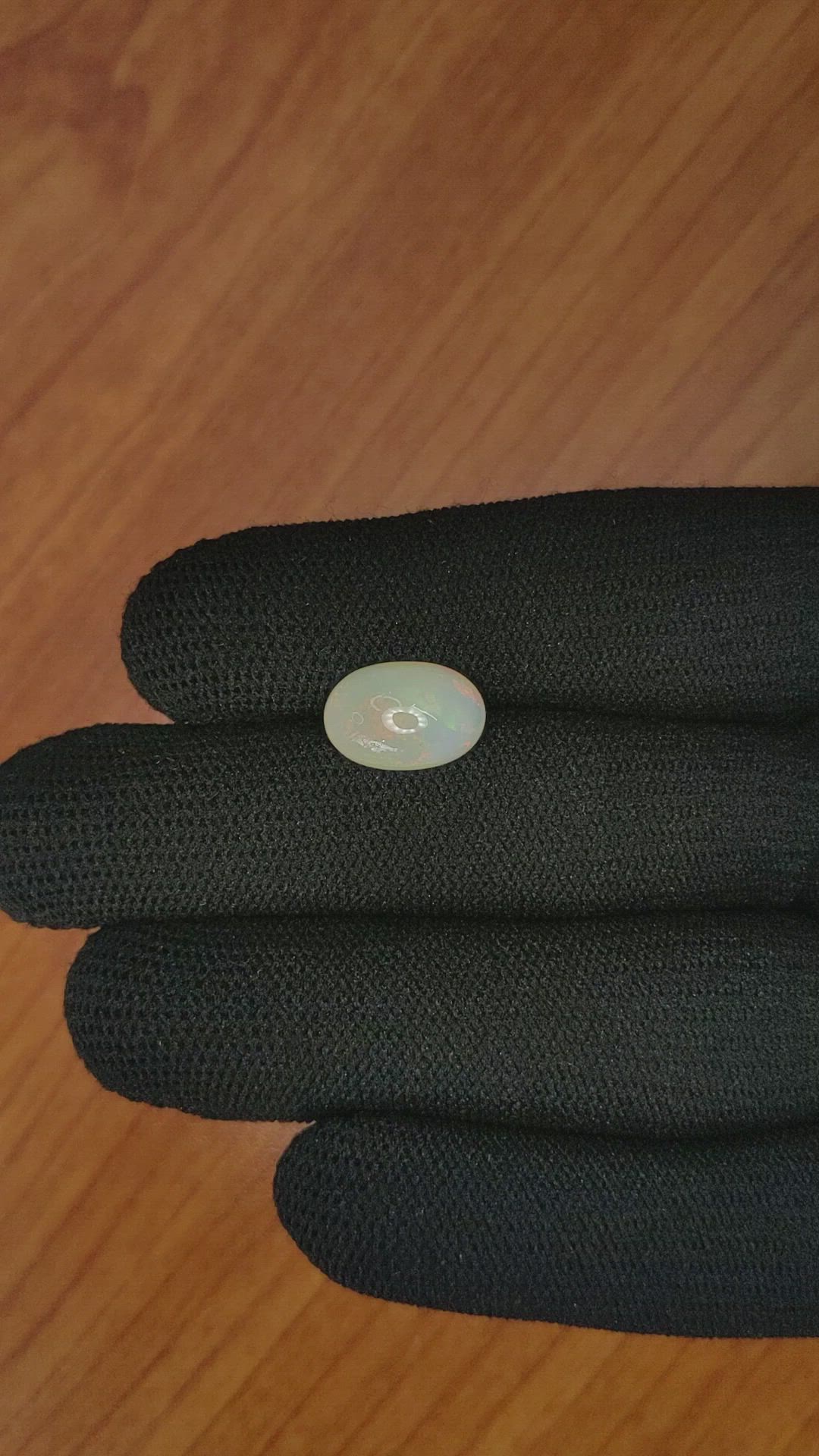
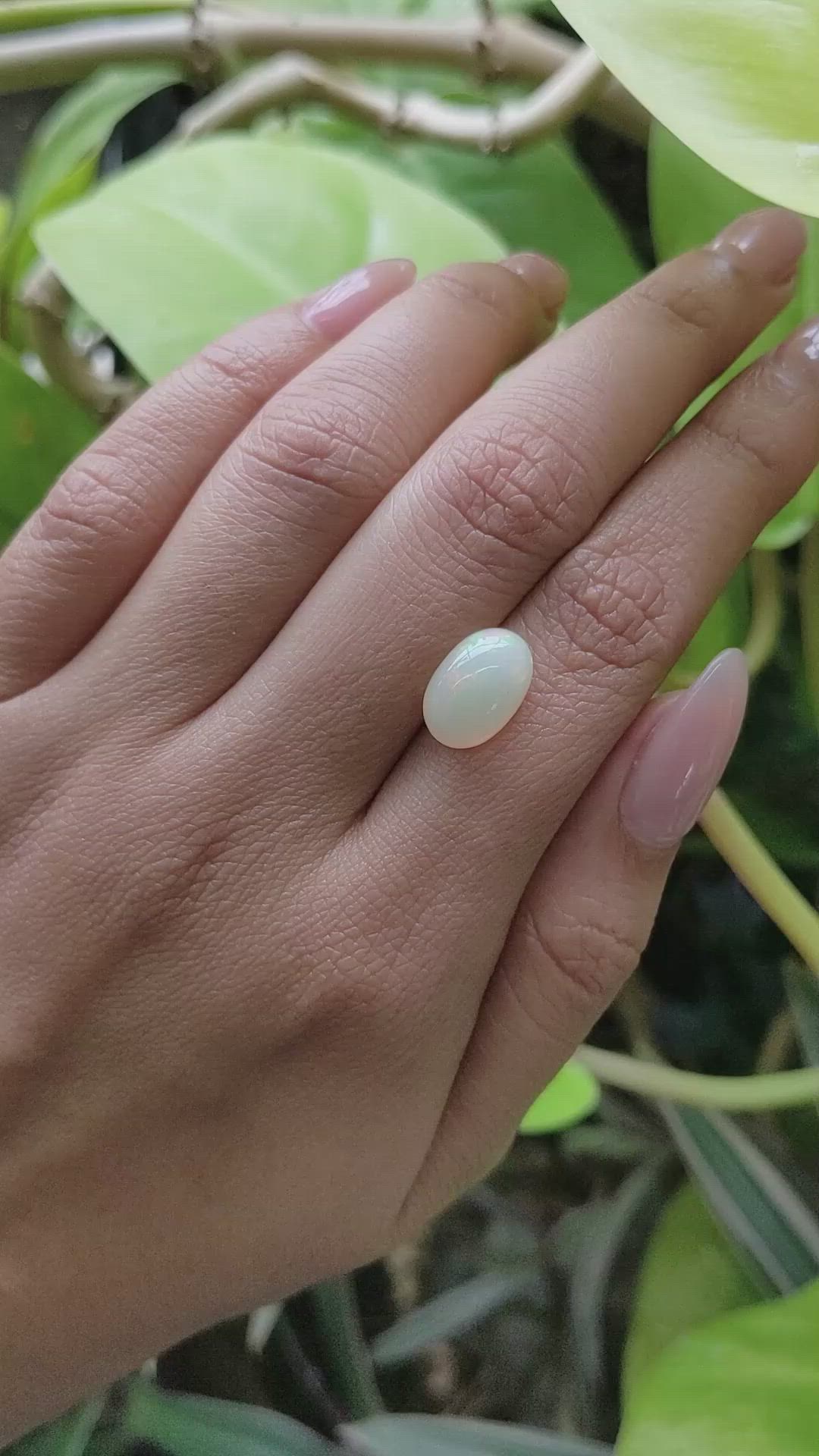
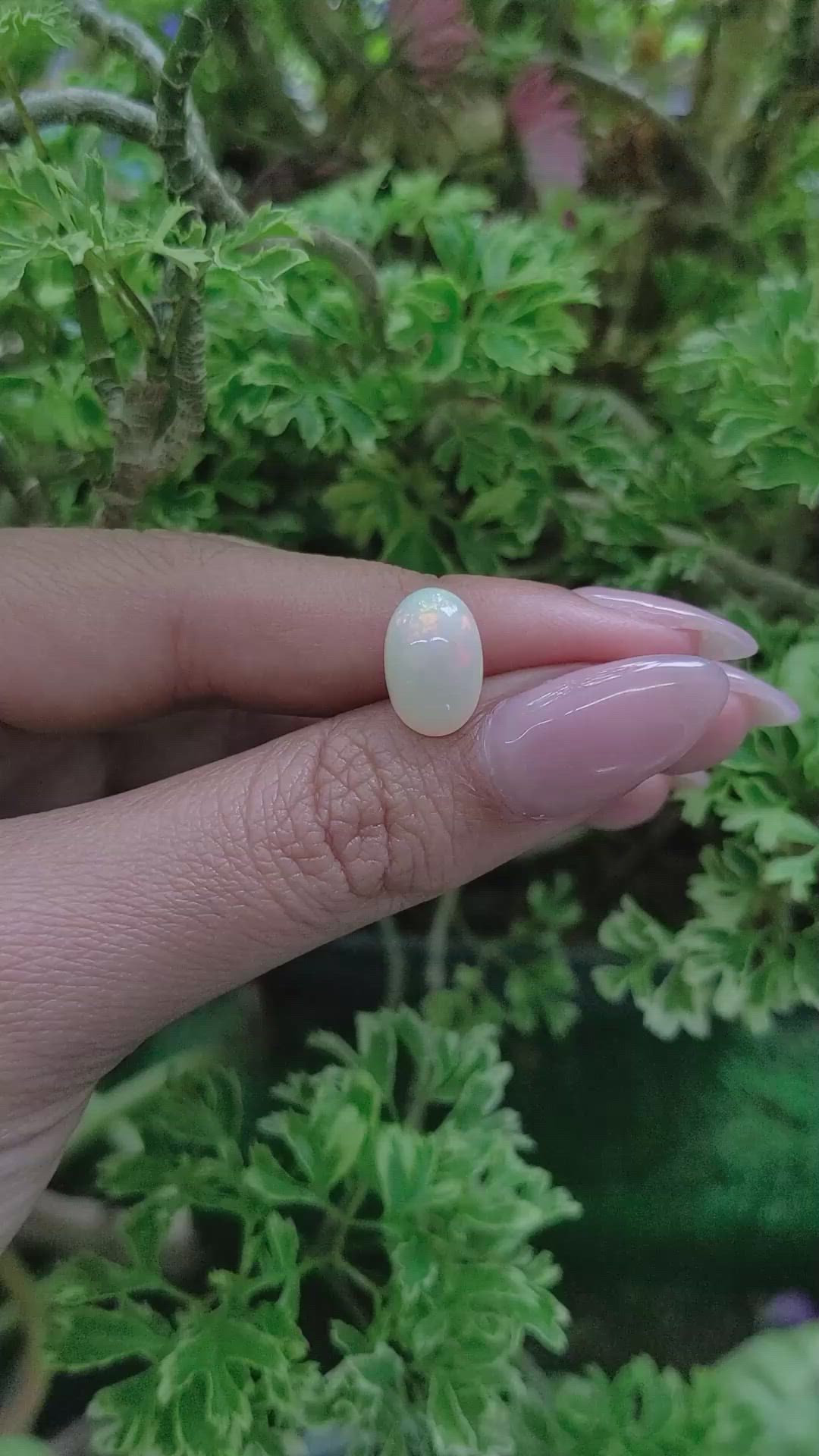

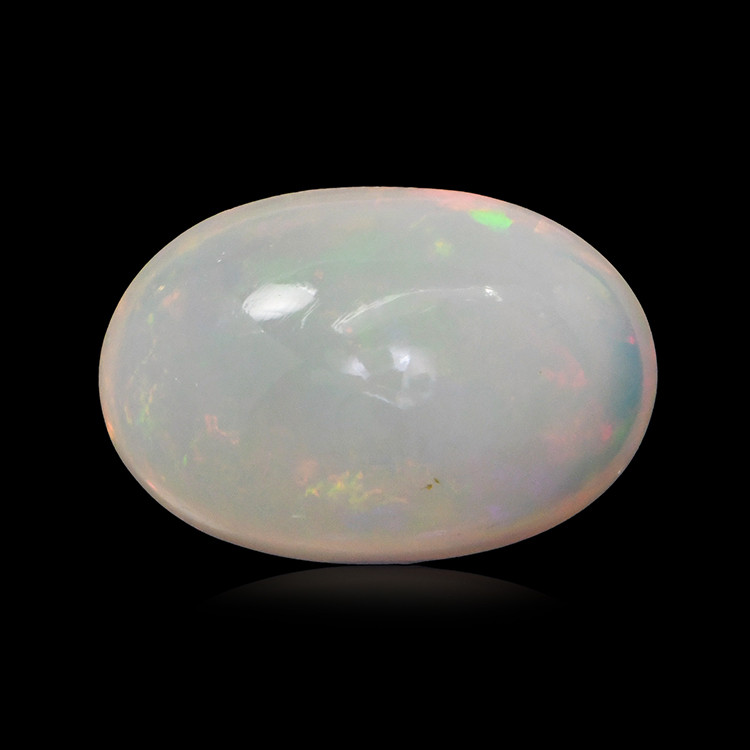
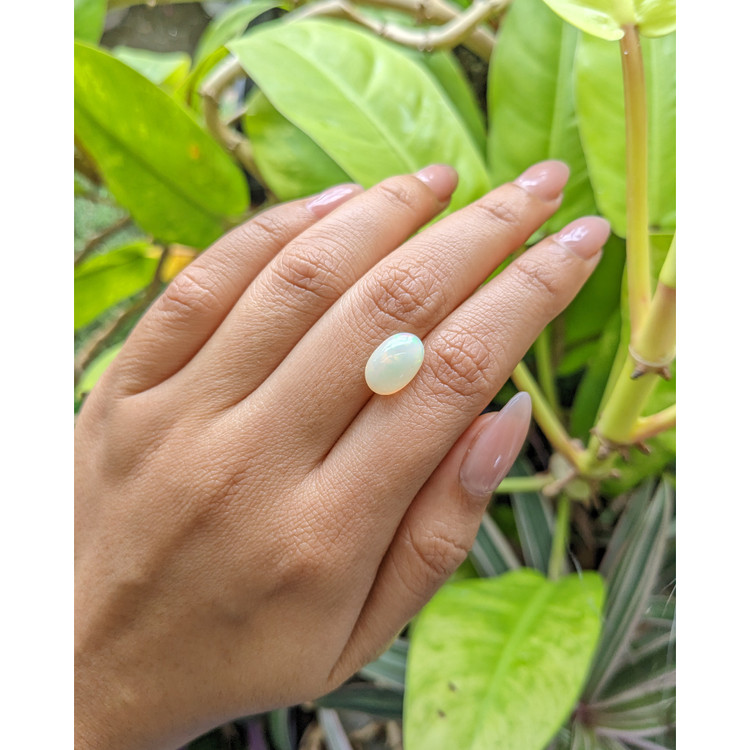
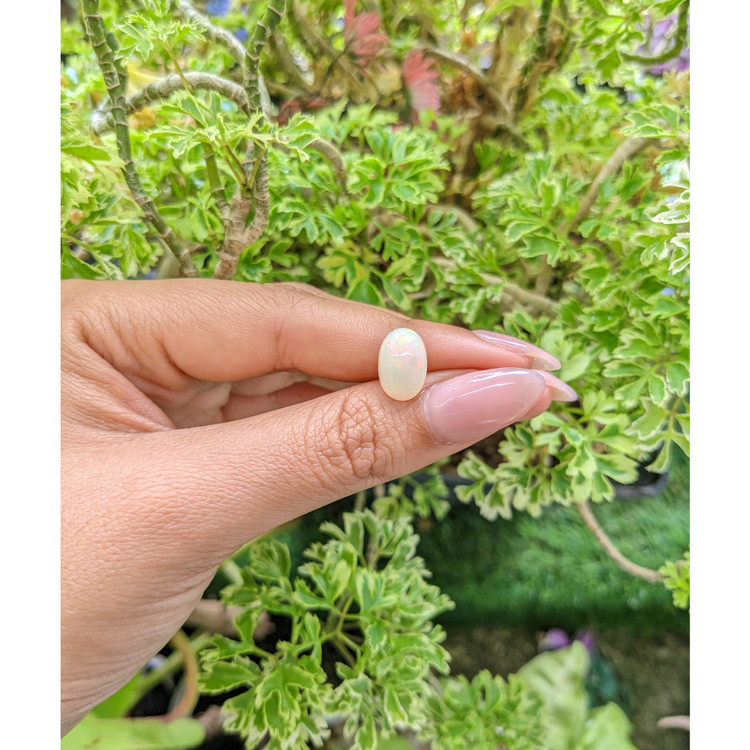
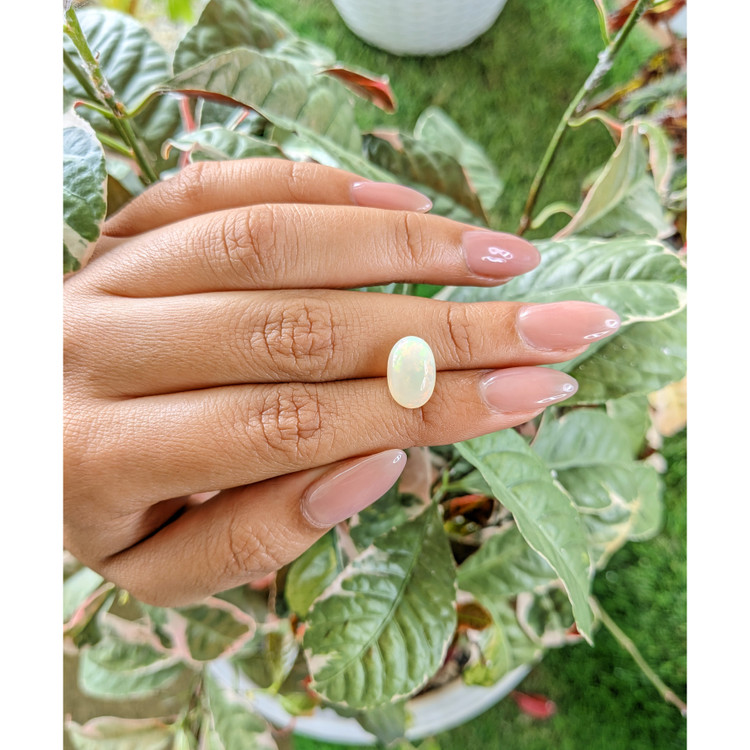

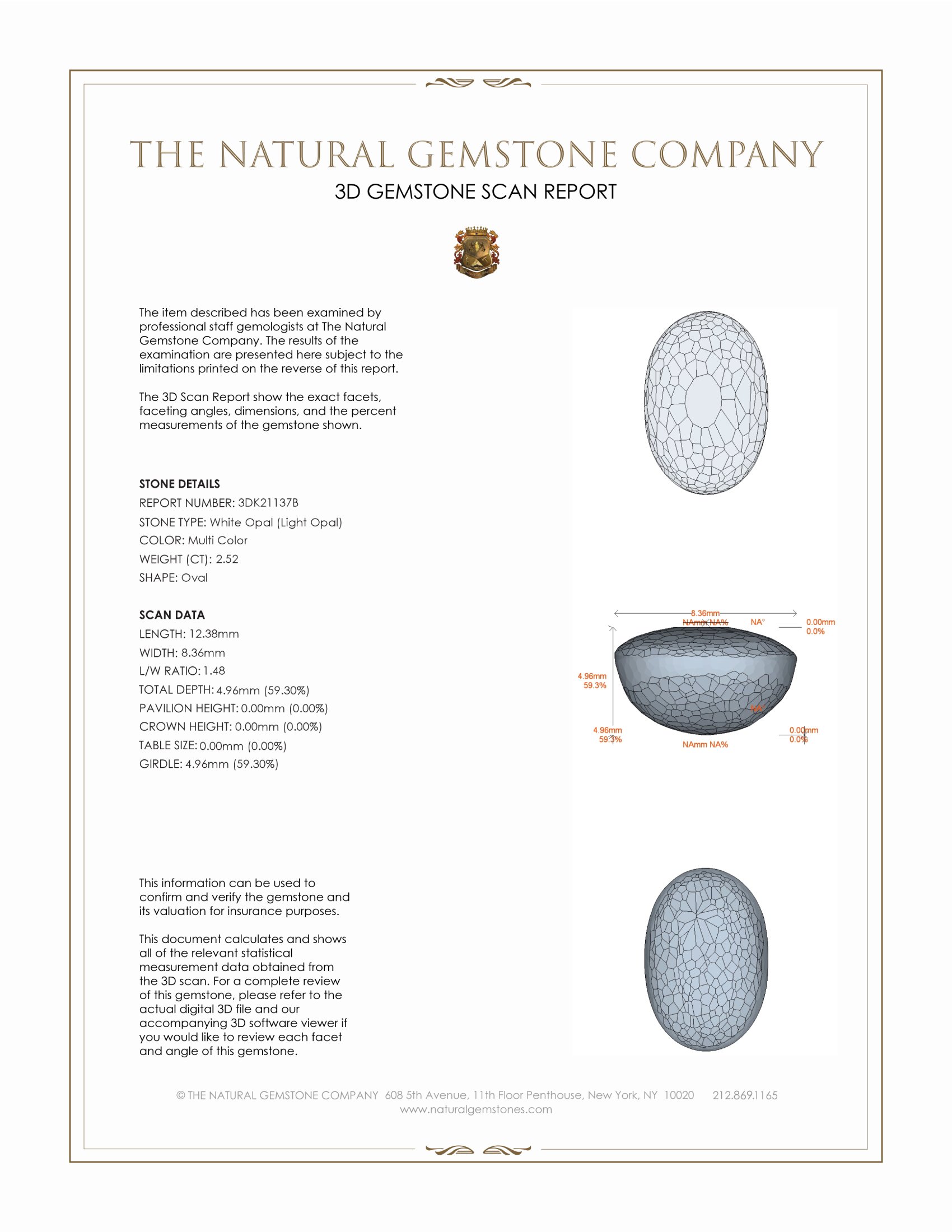
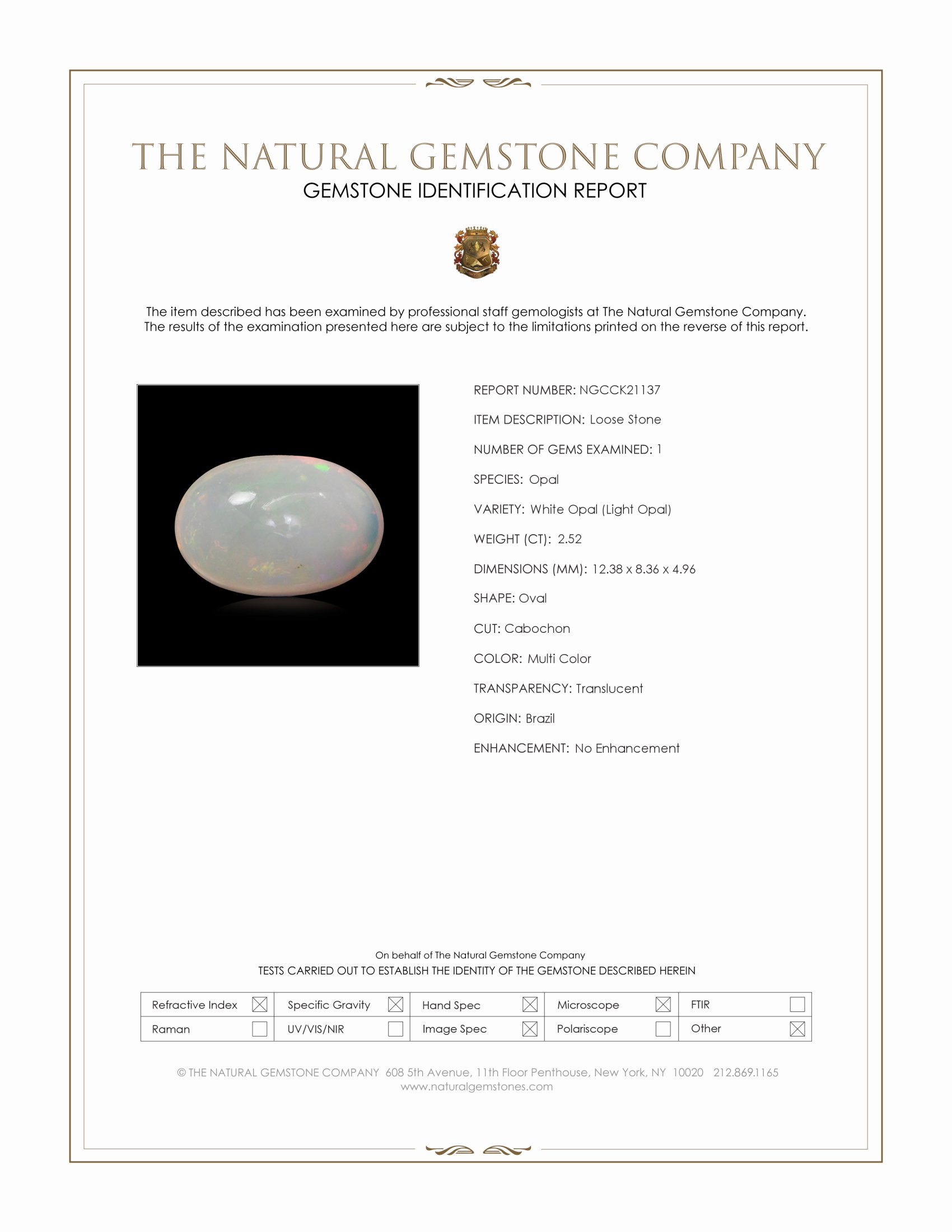
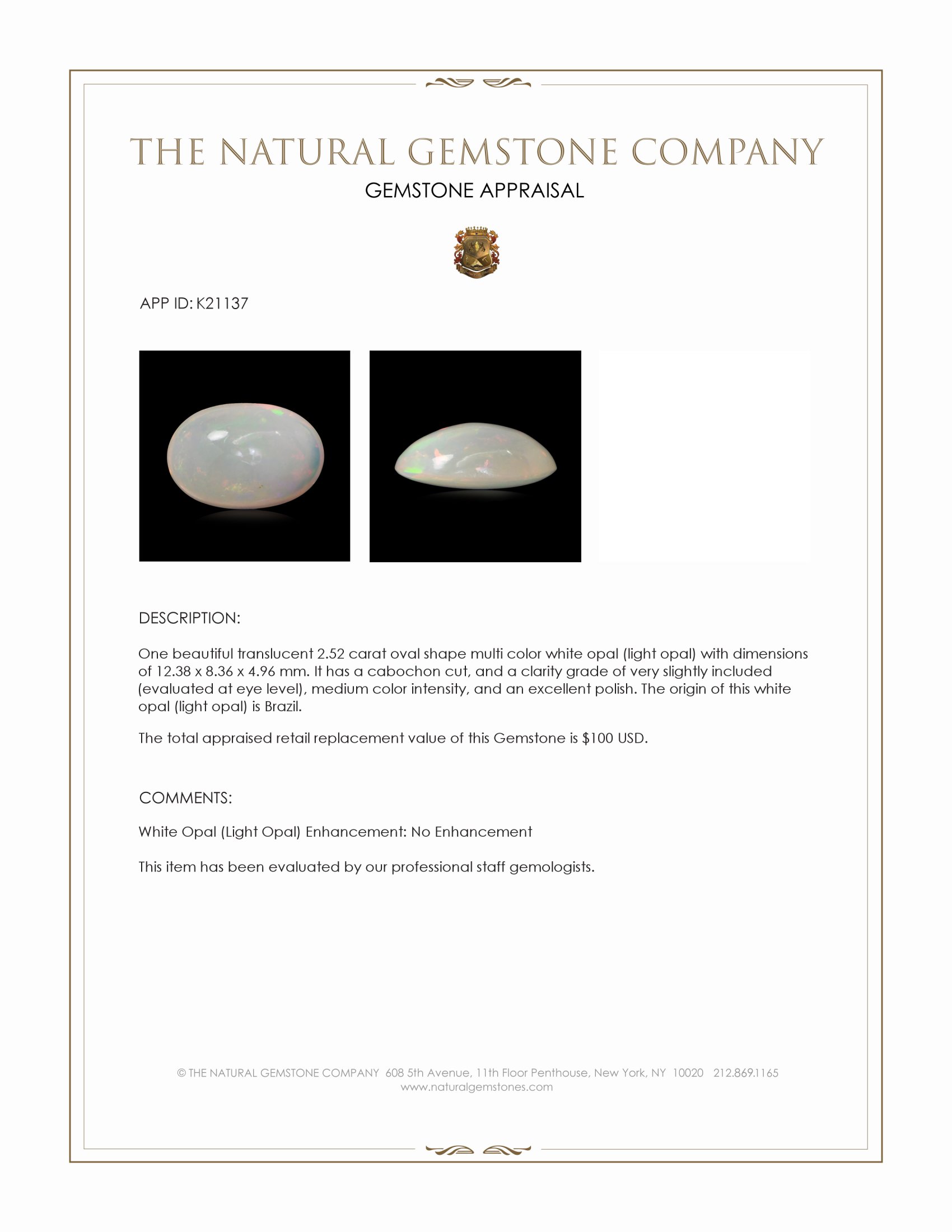
2.52 Ct. Multi Color Cabochon White Opal (Light Opal) from Brazil
This loose stone ships by Oct 15
Item ID: | K21137 |
|---|---|
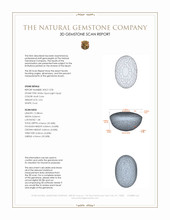
Dimensions (MM): help | Length: 12.38 Width: 8.36 Height: 4.96 |
Weight: | 2.52 Ct. |
Color: help | Multi Color |
Color intensity: help | Medium |
Clarity: help | Very Slightly Included |
Shape: help | Oval |
Cut: | Cabochon |
Cutting style: | Cabochon |
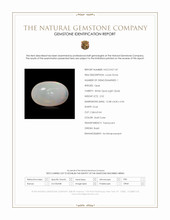
Enhancements: help | No Enhancement |
Origin: help | Brazil |
Per carat price: help | $40 |
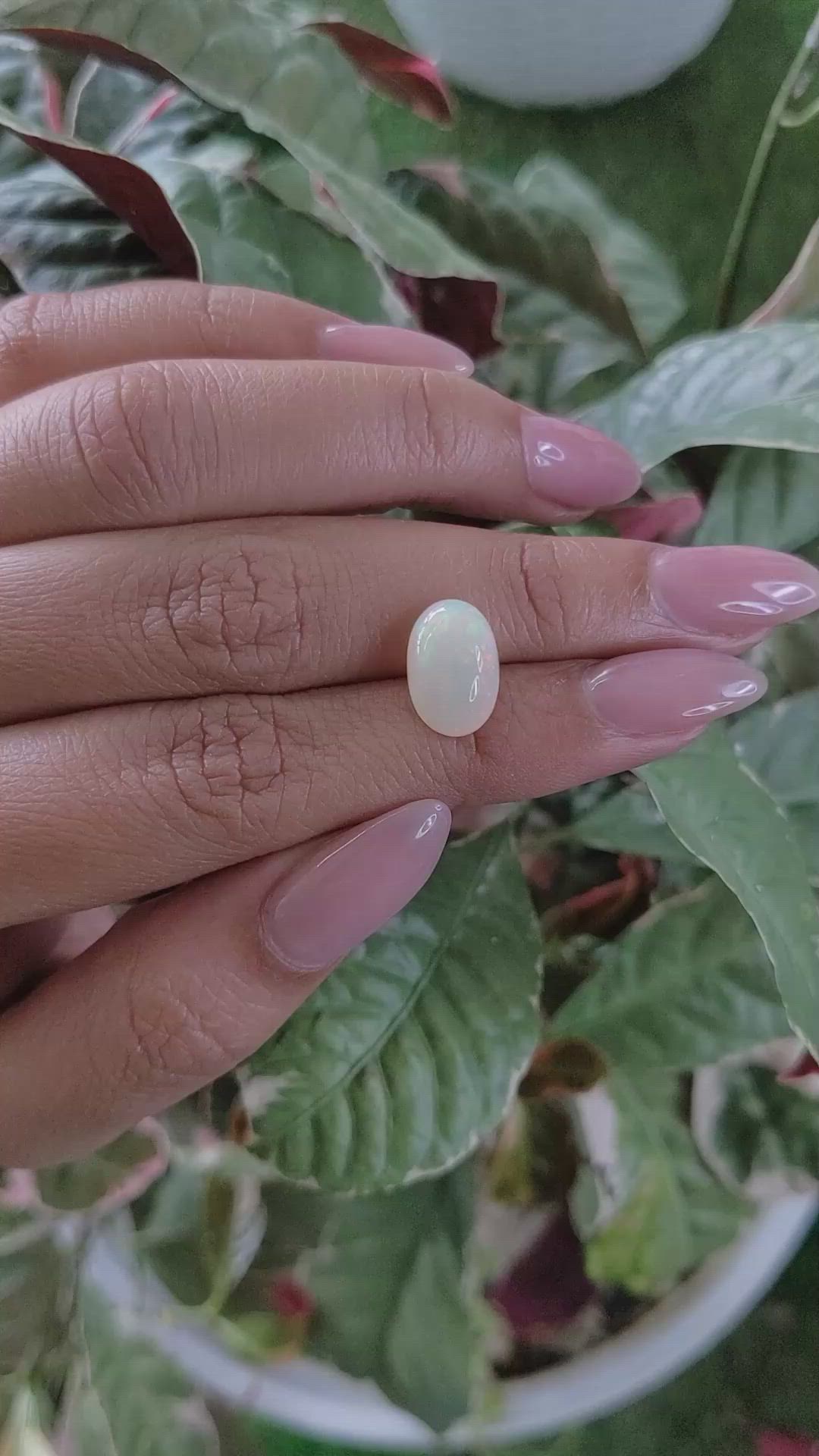
This White Opal (Light Opal) from Brazil, presented by The Natural Gemstone Company, is a translucent, cabochon-cut oval weighing 2.52 carats and measuring 12.38 by 8.36 by 4.96 millimeters. The piece exhibits a medium bodycolor intensity on the white spectrum, with translucency sufficient to allow internal light scattering while preserving a soft, milky ground. The cutting style is a classic domed cabochon with an even oval outline and a controlled dome height that optimizes play-of-color without compromising structural stability. Clarity is graded as very slightly included at eye level, indicating only minor internal features visible to the unaided eye under standard viewing conditions. The polish quality is excellent, reflecting a meticulous final lapidary finish, and the gemstone has undergone no enhancements or treatments; its optical properties are intrinsic to the natural hydrated silica structure formed in its Brazilian host environment.
The unmistakable signature of this opal derives from a combination of microscopic silica sphere packing and discrete internal inclusions that modulate diffraction and light diffusion. At the microscale, the regularity and spacing of silica spheres create a diffraction grating that generates play-of-color; in this specimen, the sphere domain ordering is sufficiently coherent to yield concentrated pinfire and flash effects in red, green, and blue wavelengths as the stone is rotated. Superimposed on that lattice are subtle, very slightly included features: thin, translucent potch veils, minute angular matrix specks, and isolated fluid or gas microcavities. These inclusions do not degrade the stone’s transparency severely; rather, they introduce localized refractive index contrasts that scatter incident light and broaden the perceived color palette. The result is a layered optical signature — a distributed pinfire field punctuated by softer cloud-like patches and narrow linear veils — which is diagnostically useful for identification and appraisal, and contributes directly to the aesthetic complexity prized by connoisseurs.
From a lapidary and craftsmanship perspective, this cabochon reflects deliberate choices intended to balance optical performance with mechanical integrity. The oval proportions, 12.38 by 8.36 millimeters with a thickness of 4.96 millimeters, correspond to a height-to-width ratio that yields an optimal dome angle for white opal: sufficient curvature to present multiple diffraction facets to the viewer while keeping maximum depth above potential microfractures. Preforming and grinding were executed with progressive abrasive sequences to establish accurate symmetry and avoid over-thinning in areas where natural inclusions concentrate stress. Pre-polish stages used fine diamond and oxide abrasives to remove subsurface damage, and the final polish was achieved with a cerium-oxide or tin-oxide regime selected to produce a high-gloss finish on hydrated silica without overexposure to heat or moisture. No stabilization or resin filling was applied; the cutting decision prioritized preserving original internal texture and the natural interplay between potch and play-of-color, which is central to this specimen’s signature character.
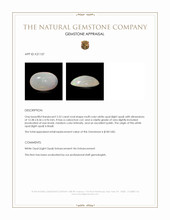
For the technical buyer and jeweler, this white opal presents clear parameters for setting, care, and valuation. The medium color intensity and translucent body make the stone most effective in settings that allow movement and light access, such as open-back bezels or partially exposed gallery mounts; opaque closed-back mountings will attenuate diffraction and reduce perceived color intensity. Given the very slightly included clarity, routine handling precautions are appropriate: avoid sudden thermal shock, strong solvents, and aggressive ultrasonic cleaning. The absence of enhancement simplifies provenance and long-term assessment; documented origin from Brazil and the distinctive inclusion pattern support both identification and market documentation. At 2.52 carats, the piece occupies an attractive segment for collectors seeking natural, untreated opals with verifiable optical signatures, and The Natural Gemstone Company provides detailed imagery and measurement data to facilitate appraisal, insurance, and bespoke setting design. The combination of intrinsic silica-grain diffraction, minor internal veils that enrich color diffusion, and high-quality cabochon finishing delivers a gemstone whose uniqueness is both scientifically explicable and aesthetically compelling.


