
Garnet Price Chart: Garnet Prices per Carat by Variety
Garnet is not a single gemstone but a family of closely related minerals, which is why it comes in almost every color: deep red and raspberry pink, vivid orange, honey and cinnamon tones, and brilliant greens. That variety also explains why garnet prices range so widely. A classic red Almandine can be very affordable, while a fine Demantoid or Tsavorite ranks among the most valuable colored gemstones in the world. Our Garnet Price Chart provides a closer look at these price differences, helping you understand how garnet variety, color, quality, size, and rarity influence the value of each gemstone.
This guide explains how garnets are priced, compares every garnet variety we offer, and gives a clear garnet price chart with typical per-carat ranges, along with practical tips to help you choose with confidence.
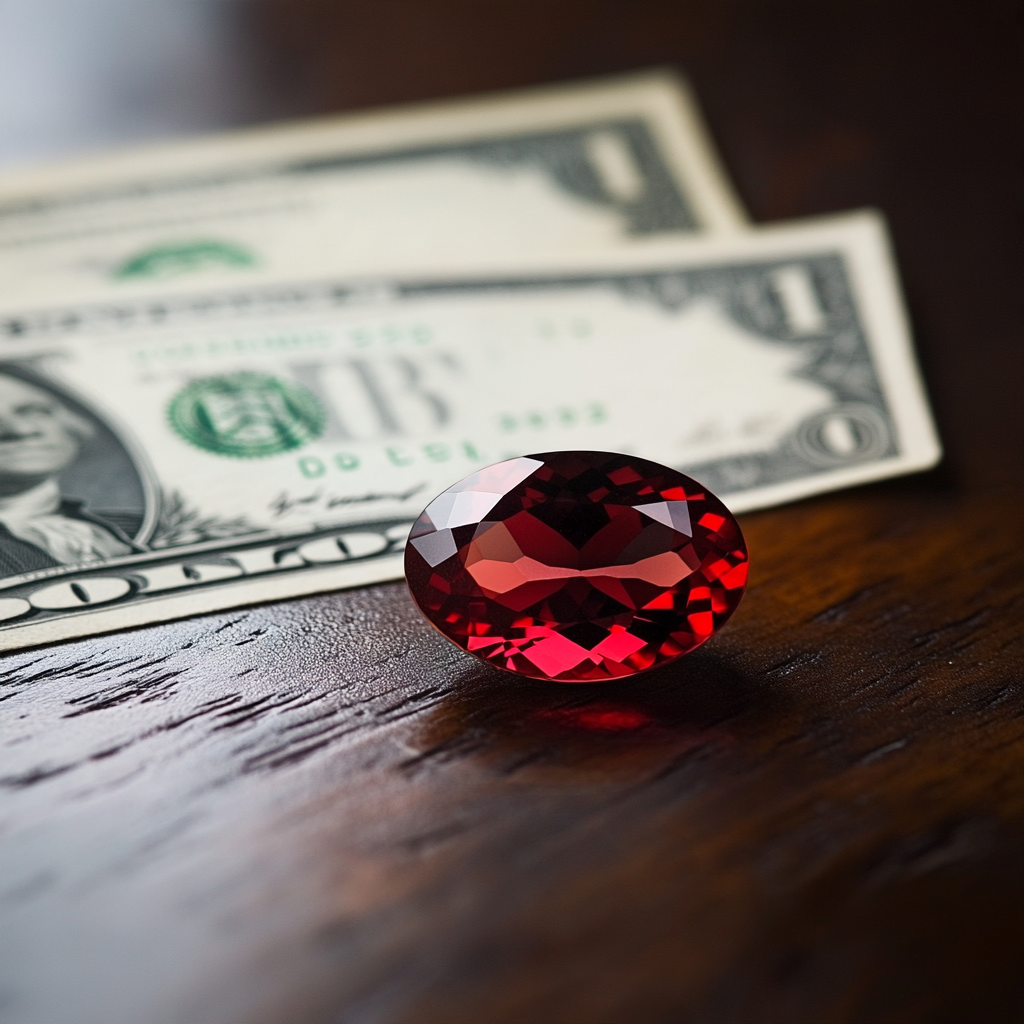
Introduction to Garnet Pricing
- The gemstone market: Like all gemstones, garnet prices follow supply and demand. Rarity, beauty, size and the reputation of a source all affect what a stone is worth.
- Variety comes first: The variety of garnet is the biggest single influence on price. The green garnets (Demantoid and Tsavorite) sit at the top of the market, while the classic red garnets (Almandine and Pyrope) are the most widely available and the most affordable. Within each variety, quality decides where a stone falls in its price range.
Garnet Value Ranking at a Glance
From most to least valuable per carat, based on the price chart below:
- Premium: Demantoid and Tsavorite, the rarest and most valuable garnets.
- High value: Fine “Mandarin” Spessartite, fine color-change garnet, and fine mint Grossular.
- Mid-range: Malaya, Andradite, Rhodolite and Mali garnet.
- Most affordable: Hessonite, Pyrope and Almandine, the classic red garnets.
The ranges overlap. An exceptional stone from a “mid-range” variety can cost more than an ordinary stone from a higher one, so always compare individual stones on their own quality.
What Determines the Price of a Garnet?
1. Color: The Primary Value Factor
- Rarity of the color: The most valuable garnets have rare, vivid colors: the intense greens of Demantoid and Tsavorite, the pure “Mandarin” orange of fine Spessartite, and a strong, clean color change. Classic deep red garnets such as Almandine and Pyrope are loved for their rich color, but because they are plentiful they are the most affordable garnets.
- Hue, tone and saturation: Within every variety, a pure, saturated hue with a medium to medium-dark tone is worth the most. Stones that are too dark, too pale, or muddied by brown or gray sell for less.
- Even color: Uniform color without noticeable zoning adds value.
2. Clarity
- Eye-clean stones: Garnets with no inclusions visible to the naked eye show the best transparency and brilliance and command higher prices.
- Expectations differ by variety: There is no single universal clarity scale for garnets. Dealers and laboratories commonly describe stones as loupe-clean, eye-clean, slightly included or included. Red garnets, Rhodolite and Spessartite are often eye-clean, while Demantoid and Tsavorite more commonly contain inclusions, so a clean stone in these varieties carries a real premium.
- Inclusions that add character: The fine “horsetail” inclusions typical of Russian Demantoid are prized by collectors and can add to its appeal.
3. Cut
- Light performance: A well-proportioned, symmetrical cut maximizes brilliance and shows a garnet’s color at its best. Good cutting matters especially for dark red garnets, which can look too dark when cut too deep.
- Cut styles: Garnets are faceted in rounds, ovals, cushions, pears, emerald cuts and more, and are also cut as cabochons. The quality of the cut matters far more to price than the shape.
4. Carat Weight
- Priced per carat: Garnets are usually priced per carat, so total price is the per-carat price multiplied by the weight.
- Size affects rare and common varieties differently: For rare varieties such as Demantoid, Tsavorite and fine Spessartite, large clean stones are scarce, so the price per carat rises noticeably with size. Fine Demantoid and Tsavorite above about 2 carats are especially rare. For common red garnets, larger sizes are easier to find and add relatively little to the price per carat, which makes them an excellent choice for bold statement pieces.
5. Origin
- Notable sources: Some origins carry a premium or a special reputation, for example Russian Demantoid from the Ural Mountains, East African Tsavorite from Tanzania and Kenya, “Mandarin” Spessartite from Namibia and Nigeria, Malaya garnet from the Umba Valley in East Africa, and Hessonite from Sri Lanka.
- Quality first: Origin matters most when it is confirmed by a reputable laboratory. A beautiful stone from any source is still a beautiful stone.
6. Treatments
- Almost always untreated: One of garnet’s great strengths is that it is almost always untreated, so its color is natural. Any treatment should always be disclosed by the seller and noted on a laboratory report.
7. Market Demand and Trends
- Consumer preferences: Popularity can affect prices. Growing demand for vivid green and orange garnets, for example, has made fine Tsavorite and Spessartite more sought after.
- Enduring appeal: Garnet has been worn for thousands of years and is the birthstone for January, which keeps it a favorite for gifts and everyday jewelry.
Garnet Price Chart
The chart below shows typical per-carat price ranges for the garnet varieties we offer, listed from most to least valuable. Ranges reflect our own garnet pricing guides and the stones currently in our collection. Individual stones can fall outside these ranges depending on their color, clarity, cut, size and origin, and prices change with the market.
| Garnet variety | Typical colors | Quality tier | Price per carat (USD) |
|---|---|---|---|
| Demantoid Garnet | Green andradite: yellowish-green to intense green | All qualities | $1,000 – $10,000 |
| Tsavorite Garnet | Green grossular: vivid green | Lighter green or included, under 1 ct | $200 – $1,000 |
| Bright medium green, 1 – 2 ct | $1,000 – $3,000 | ||
| Fine deep green, over 2 ct | $2,000 – $5,000 | ||
| Spessartite Garnet | Orange to reddish-orange | Commercial (brownish or included) | $200 – $600 |
| Reddish-orange, eye-clean | $800 – $1,500 | ||
| Pure “Mandarin” orange, eye-clean, excellent cut | $1,500 – $3,000 | ||
| Grossular Garnet (mint and other colors) | Mint green to yellowish-green | Under 1 ct | $200 – $600 |
| Eye-clean, 1 – 2 ct | $600 – $1,200 | ||
| Fine larger stones | $1,200 – $2,000 | ||
| Color-Change Garnet | Blue-green or greenish in daylight; purple to red in incandescent light | All qualities | $300 – $1,700 |
| Malaya Garnet | Pink, peach, pinkish-orange to reddish-orange | Typical qualities | $200 – $800 |
| Exceptional, larger stones | $800 – $1,500 | ||
| Andradite Garnet | Yellow, olive-green, brownish-green, brown | All qualities | $200 – $800 |
| Rhodolite Garnet | Raspberry-pink to purplish-red | Commercial | $30 – $100 |
| Good | $100 – $300 | ||
| Fine (vivid, eye-clean) | $300 – $700 | ||
| Mali Garnet | Yellowish-green, olive, yellowish-brown, golden yellow | Typical qualities | $100 – $300 |
| Fine golden-yellow or yellow-green, eye-clean | $300 – $600 | ||
| Hessonite Garnet | Honey-yellow, cinnamon, orange to reddish-orange | Lighter yellow-brown | $50 – $150 |
| Vivid reddish-orange or cinnamon, eye-clean | $150 – $300 | ||
| Pyrope Garnet | Blood red to purplish red | All qualities | $70 – $300 |
| Almandine Garnet | Deep red to purplish red | All qualities | $50 – $200 |
Garnet Varieties and What They Cost
Demantoid Garnet
Demantoid, the green variety of andradite garnet, is one of the rarest and most valuable garnets. Its name means “diamond-like”, and its dispersion (“fire”) is even higher than diamond’s. Discovered in Russia’s Ural Mountains in the mid-19th century, it was a favorite of Fabergé and Victorian jewelers. Russian stones often show prized “horsetail” inclusions. Demantoid is also found in Namibia and Madagascar. Most fine Demantoids are under 2 carats, and larger clean stones are very rare. Typical price: $1,000 – $10,000 per carat. Shop Demantoid Garnets
Tsavorite Garnet
Tsavorite is the vivid green variety of grossular garnet, colored by vanadium and chromium. It was first discovered in northeastern Tanzania in 1967 and later found in Kenya near Tsavo National Park, which gave the gem its name. Tsavorite rivals fine emerald in color, with more brilliance and better durability (Mohs 7 – 7.5), and is almost always untreated. Bright, saturated stones above 2 carats are scarce. Typical price: $200 – $5,000 per carat, depending on color and size. Shop Tsavorite Garnets
Spessartite (Spessartine) Garnet
Spessartite is the orange garnet, colored by manganese and named after the Spessart region of Germany. The most valuable stones are a vivid, pure orange, often called “Mandarin” garnet, from Namibia and Nigeria. Spessartite is also found in Tanzania, Madagascar, Brazil and the United States. Reddish-orange and golden-orange stones are also popular, while brownish tones are more affordable. Typical price: $200 – $3,000 per carat. Shop Spessartite Garnets
Grossular Garnet
Grossular is a garnet species that occurs in many colors. Tsavorite (green) and Hessonite (orange to cinnamon) are its best-known varieties and are priced separately in our chart. Our Grossular collection also features fresh mint-green to yellowish-green stones, mainly from Tanzania, which offer a lovely, lighter green at a gentler price than Tsavorite. Typical price: $200 – $2,000 per carat. Shop Grossular Garnets
Malaya Garnet
Malaya is a blend of pyrope and spessartite first found in the Umba River Valley on the Tanzania–Kenya border in the 1960s and 1970s. The name comes from a Swahili word often translated as “outcast”, because the stones did not fit any existing category. Today its warm peach, pink and pinkish-orange to reddish-orange colors are much admired, and some stones show a color change. Typical price: $200 – $1,500 per carat. Shop Malaya Garnets
Andradite Garnet
Andradite is the garnet species with the highest brilliance and fire. Its green variety is Demantoid. Other andradites, in yellow, olive-green, brownish-green and brown tones, offer that brilliance at a far more accessible price. Typical price (non-demantoid): $200 – $800 per carat. Shop Andradite Garnets
Rhodolite Garnet
Rhodolite, a blend of pyrope and almandine, ranges from raspberry-pink to purplish-red. Its name comes from the Greek rhodon, meaning “rose”. It is usually brighter and lighter than other red garnets, is often eye-clean, and offers excellent value. Sources include Sri Lanka, Tanzania, Mozambique and Madagascar. Typical price: $30 – $700 per carat. Shop Rhodolite Garnets
Mali Garnet
Mali garnet is a grossular–andradite blend discovered in Mali, West Africa, in the 1990s. It comes in yellowish-green, olive, golden-yellow and yellowish-brown tones, and its andradite content gives it exceptional brilliance. Bright golden-yellow and yellow-green stones are the most prized. Typical price: $100 – $600 per carat. Shop Mali Garnets
Hessonite Garnet
Hessonite, the “cinnamon stone”, is the honey-yellow to cinnamon and reddish-orange variety of grossular. It has a characteristic swirly “heat wave” appearance inside. Sri Lanka is its classic source, and in Vedic astrology it is known as Gomed. Vivid reddish-orange and cinnamon stones are the most desirable. Typical price: $50 – $300 per carat. Shop Hessonite Garnets
Pyrope and Almandine (Red Garnets)
The classic deep red to purplish-red garnets are the traditional January birthstone and have been worn since ancient times. Durable (Mohs 7 – 7.5) and widely available, they are the most affordable garnets and ideal for everyday jewelry and larger statement stones. We offer them in our Almandine Garnet and general Garnet collections. Typical price: Pyrope $70 – $300; Almandine $50 – $200 per carat. Shop Almandine Garnets · Shop all Garnets
Garnet Grading and Certification
Why Certification Matters
- Independent confirmation: A report from a reputable gemological laboratory confirms that a garnet is natural, identifies its species and variety, and records any treatment.
- Most important for valuable varieties: Certification matters most for Demantoid, Tsavorite, color-change garnets and other higher-value stones, where the variety, and sometimes the origin, has a large effect on price.
What a Garnet Report Covers
- Identity and variety: For example, confirming a green garnet as Demantoid (andradite) or Tsavorite (grossular).
- Weight and measurements: The carat weight and dimensions of the stone.
- Color description: The hue, tone and saturation of the color.
- Treatments: Whether any treatment is detected. Garnets are almost always untreated.
- Origin (on some reports): Useful for varieties where origin affects value, such as Russian Demantoid.
How Garnet Quality Is Described
- Color: Assessed by hue, tone and saturation against what is ideal for the variety, for example a pure, intense green for Tsavorite or a vivid pure orange for Spessartite.
- Clarity: There is no single universal garnet clarity scale. Stones are usually described as loupe-clean, eye-clean, slightly included or included, judged against what is typical for the variety.
- Cut: Judged on symmetry, proportions, polish and how well the stone returns light.
Comparing Garnets: Key Points
- Rarity drives price: Demantoid and Tsavorite are the rarest and most valuable garnets, followed by fine Mandarin Spessartite, fine color-change garnets and fine mint Grossular.
- Red garnets offer great value: Almandine, Pyrope and Rhodolite give rich color and excellent durability at accessible prices.
- Same variety, wide range: A top-quality stone can cost many times more per carat than a commercial stone of the same variety.
- Origin can matter: Some sources, such as Russian Demantoid, are especially sought after.
- Natural beauty: Garnets are almost always untreated, so their color is natural.
Tips for Buying a Garnet
- Start with the variety and color you love: Decide between a rare green, a vivid orange, a soft Malaya pink or a classic red, then compare stones within that variety.
- Judge color first: Look for a lively, saturated color that is neither too dark nor too pale, viewed in daylight and indoor light.
- Check clarity for the variety: Aim for eye-clean in red garnets, Rhodolite and Spessartite. Expect some inclusions in Demantoid and Tsavorite.
- Look at how the stone sparkles: A well-cut garnet looks bright across its face, without dark or washed-out areas.
- Ask for a report on valuable stones: For Demantoid, Tsavorite, color-change and larger fine stones, choose stones with a reputable laboratory report.
- Watch the videos: View stones on video in different lighting, especially color-change garnets.
- Buy for beauty: Choose a garnet because you love it. Like all gemstones, garnet prices can rise or fall, and we do not recommend buying gemstones as a financial investment.
Garnet Price FAQs
What is the most expensive type of garnet?
Demantoid is generally the most valuable garnet, at typically $1,000 – $10,000 per carat. Fine Tsavorite follows closely, and fine pure orange “Mandarin” Spessartite, color-change garnet and mint Grossular are also highly valued.
Are red garnets valuable?
Red garnets such as Almandine and Pyrope are beautiful and durable, but because they are plentiful they are the most affordable garnets, typically $50 – $300 per carat. Rhodolite, a raspberry-pink to purplish-red garnet, ranges from about $30 per carat for commercial stones to $700 for fine ones.
Why is Tsavorite more expensive than red garnet?
Tsavorite is far rarer. It comes mainly from a small area of Tanzania and Kenya, and clean, vividly colored stones, especially above 2 carats, are scarce. Red garnets are found in large quantities in many parts of the world.
Does a larger garnet cost more per carat?
For rare varieties such as Demantoid, Tsavorite and fine Spessartite, yes: the price per carat rises noticeably with size. For common red garnets, larger stones cost more in total but the price per carat rises only slightly.
Are garnets treated?
Garnets are almost always untreated, so their color is natural. Any treatment should be disclosed by the seller and noted on a laboratory report.
Is garnet a good investment?
We recommend choosing a garnet for its beauty and personal meaning rather than as an investment. Gemstone prices can rise or fall, and gemstones are not easy to sell quickly.
Is garnet durable enough for everyday wear?
Yes. Most garnets rate about 6.5 – 7.5 on the Mohs scale, suitable for rings, earrings and pendants with sensible care. Demantoid is slightly softer and is best in protective settings for rings worn daily.
Find Your Perfect Garnet
From rare green Demantoid and Tsavorite to vivid Mandarin Spessartite, soft Malaya and classic red Almandine, garnet offers something for every taste and budget. Explore our garnet collection, or contact our gemstone specialists for help comparing stones or finding the right garnet for your jewelry.