
December Birthstones: Tanzanite, Turquoise and Zircon, Three Blues With Three Stories
By the gemologist team at The Natural Gemstones Company. Last reviewed: 12 November 2026.
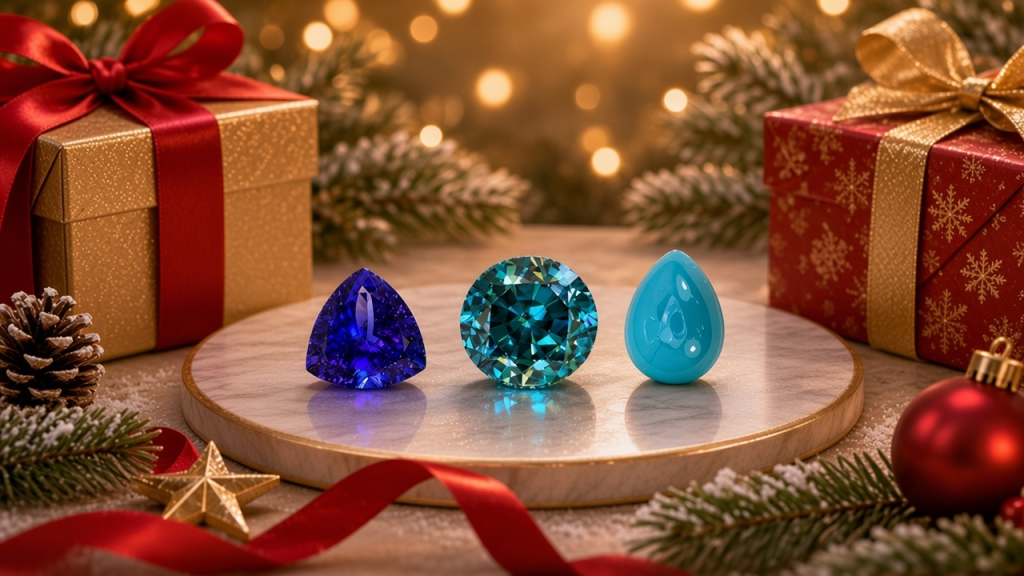
What are the December birthstones? The December birthstones are tanzanite, turquoise and zircon, a trio of blues that range from violet-blue to sky blue to sea blue, and many lists also name blue topaz as a modern alternative. Turquoise is an ancient birthstone. Zircon was added to the modern December birthstone list in 1952, and tanzanite was added in 2002 after being discovered in Tanzania in 1967. Each has a different personality, hardness and care need, so December birthdays have an unusual amount of choice, at prices from a few dollars per carat for turquoise to collector tanzanite.


For why birthstones matter to people, read The Psychology of Birthstones.
What Color Is the December Birthstone?
Blue, in almost every shade. Tanzanite is violet-blue to blue, turquoise is an opaque sky blue to blue-green, zircon is a bright, glittering sea blue, and blue topaz runs from pale sky blue to deep “London” blue. If you want one word for December, it is blue; if you want a choice, the four stones give you four very different blues.
| Tanzanite | Turquoise | Zircon | |
|---|---|---|---|
| Color | Violet-blue to blue | Sky blue to blue-green | Blue (and other colors) |
| Mohs hardness | About 6 to 7 | About 5 to 6 | About 6.5 to 7.5 |
| Source in this guide | Tanzania | USA and Persia (Iran) | Cambodia and Ceylon (Sri Lanka) |
| Treatment seen on our stones | Heat treated | No enhancement | Heat treated |
| Cut | Faceted or cabochon | Cabochon | Faceted |
| Care | Avoid sharp knocks and sudden heat changes | Keep away from chemicals, oils and water for long periods | Protect facet edges from knocks |
Tanzanite: The Newest Birthstone
Tanzanite is a blue-violet variety of the mineral zoisite. It was discovered in the Merelani Hills of northern Tanzania in 1967, and Tiffany & Co. gave it the name “tanzanite” and launched its major promotion in 1968. In 2002 it was added to the December birthstone list.


Natural tanzanite is typically heat treated to give its blue and violet tones, which is standard and should be disclosed. Our stones list this clearly. The gem shows different colors from different directions, so a cutter orients each stone to show the best one. See how settings change gemstone appearance.
Tanzanite vs. Sapphire: What Is the Difference?
The two can look alike in violet-blue, but they are different minerals.
| Tanzanite | Blue sapphire | |
|---|---|---|
| Mineral | Zoisite | Corundum |
| Hardness (Mohs) | About 6 to 7 | 9 |
| Sources | One small area of northern Tanzania | Many countries, including Sri Lanka, Madagascar and Myanmar |
| Color | Violet-blue, changing with viewing direction | Blue, from light to deep |
| Treatment | Almost always heat treated | Often heat treated; some unheated |
| Best for | Pendants, earrings, occasional rings | Everyday rings, including engagement rings |
Choose tanzanite for its violet glow and its large sizes at a lower cost per carat; choose sapphire for a ring that will be worn every day. Our sister site has natural blue sapphires if you want to compare.
Turquoise: The Ancient Blue
Turquoise has been worn and carved for thousands of years, and Persia (modern Iran) is one of its oldest and best known sources. It is an opaque stone, always cut as a cabochon, and its color ranges from sky blue to blue-green. It is softer and more porous than tanzanite and zircon, so it benefits from careful wear, keeping it away from cosmetics, oils and harsh cleaners.
Zircon: The Sparkling Blue
Zircon is a natural gemstone, and it should not be confused with cubic zirconia, a laboratory-made diamond simulant. It is known for its high brilliance and fire. Blue zircon is usually heat treated, and our stones list this. Zircon is hard, but it can be brittle at the edges of its facets, so protective settings are wise.
Is Blue Topaz a December Birthstone?
Yes, on many modern lists. The traditional US list kept by jewelry trade bodies names tanzanite, turquoise and zircon, and the International Gem Society includes blue topaz as a popular December alternative. Most blue topaz on the market starts as colorless topaz that is irradiated to turn it blue, which is why it is so widely available and affordable. Topaz is about 8 on the Mohs scale, harder than the other December stones, but it has perfect cleavage, so a sharp knock can split it. Our 19.72 ct Brazilian sky blue topaz (K1181) is listed as irradiated, as most blue topaz is. Browse our topaz.

What Do December Birthstones Cost?
They span a huge range. On our site, natural turquoise starts at around $12 a stone and is often priced at $10 to $40 per carat; zircon starts under $50; tanzanite starts at a few hundred dollars and is mostly priced at about $240 to $1,000 per carat; and blue topaz can be found for a few hundred dollars even in large sizes. Large, top-color stones, such as the tanzanite and zircon below, cost far more.
December Birthstones From Our Inventory
This section lists stones in our inventory when this post was last reviewed. Individual stones can sell; the guidance above stays the same.
Tanzanite
| Stone | Weight and shape | Listed color | Clarity | Size (mm) |
|---|---|---|---|---|
| 159.41 ct emerald-cut tanzanite (K7608) | 159.41 ct emerald cut | Blue, Vivid | Eye Clean | 30.39 × 27.07 × 18.29 |
| 89.48 ct violet tanzanite (K13218) | 89.48 ct cushion | Violet, Vivid | Eye Clean | 24.41 × 28.14 × 15.12 |
| 69.22 ct trillion tanzanite (K13219) | 69.22 ct trillion | Violetish Blue, Vivid | Eye Clean | 26.10 × 25.91 × 16.73 |
| 24.81 ct cat’s eye tanzanite (K19341) | 24.81 ct round cabochon (cat’s eye) | Violetish Blue, Intense | Included | 13.90 × 15.90 × 11.90 |
All four are from Tanzania and heat treated, as listed. Compare the blue of the 159.41 ct emerald cut with the violet of the 89.48 ct cushion, and see how the 69.22 ct trillion sits between them. The 24.81 ct cabochon is listed as a cat’s eye.


Turquoise
| Stone | Weight and shape | Origin | Color | Enhancement | Size (mm) |
|---|---|---|---|---|---|
| 37.89 ct Persian turquoise (K2815) | 37.89 ct oval cabochon | Persia (Iran) | Blue, Medium | No Enhancement | 19.95 × 13.68 × 8.78 |
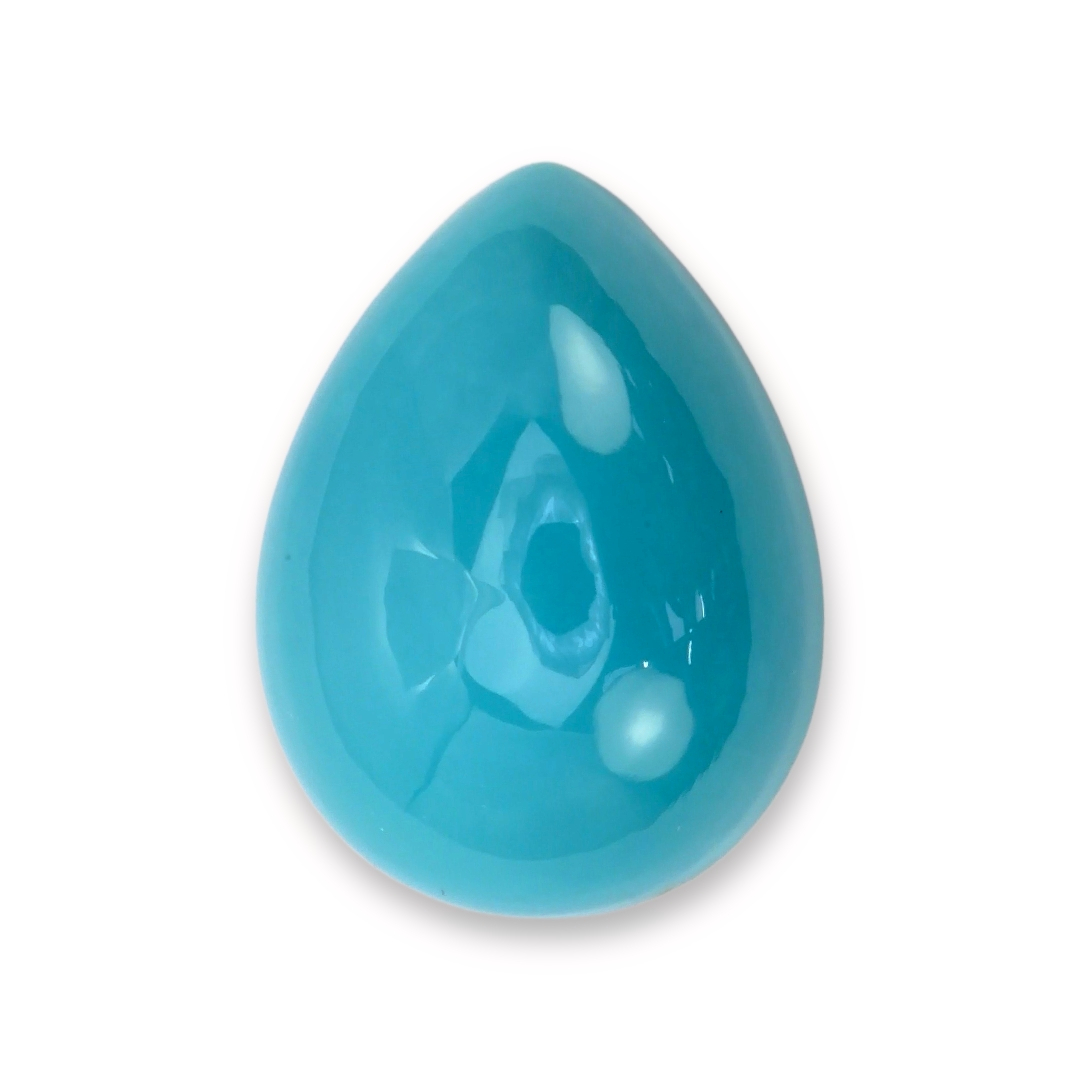
| 7.34 ct American turquoise (K21277) | 7.34 ct pear cabochon | USA | Blue, Vivid | No Enhancement | 16.13 × 12.10 × 5.75 |

Blue Zircon
| Stone | Weight and shape | Origin | Color | Clarity | Size (mm) |
|---|---|---|---|---|---|
| 50.02 ct Cambodian blue zircon (K6758) | 50.02 ct round | Cambodia | Blue, Vivid | Eye Clean | 20.13 × 19.85 × 13.50 |
| 23.74 ct Ceylon blue zircon (K3063) | 23.74 ct cushion | Ceylon (Sri Lanka) | Blue, Intense | Very Slightly Included | 14.08 × 12.37 × 11.44 |
| 19.37 ct Ceylon blue zircon (K3062) | 19.37 ct oval | Ceylon (Sri Lanka) | Blue, Intense | Very Slightly Included | 16.46 × 10.89 × 10.19 |
All three zircons are heat treated, as listed.


Which December Birthstone Is Right?
- For daily wear: zircon or blue topaz in a protective setting. Tanzanite is softer and better for occasional wear.
- For a bold statement: a large tanzanite, such as the examples above.
- For heritage and history: turquoise.
- For sparkle: blue zircon.
- For a modest budget: turquoise or blue topaz.
- For balance of size and quality: read Choosing Between Gemstone Size and Quality.
Care tip for all four: clean them with lukewarm soapy water and a soft brush. GIA advises against ultrasonic cleaners for tanzanite, turquoise, zircon and topaz.
Browse natural tanzanite, turquoise and zircon. Other birthstone stories in this series: alexandrite for June and peridot for August.
Frequently Asked Questions
What color is the December birthstone?
Blue. Tanzanite is violet-blue, turquoise is sky blue to blue-green, zircon is a bright sea blue and blue topaz ranges from pale to deep blue.
What are the December birthstones?
Tanzanite, turquoise and zircon. Blue topaz is also often named for December.
Is blue topaz a December birthstone?
It is listed as a December alternative by many modern sources. Most blue topaz is colorless topaz that has been irradiated to turn it blue.
What is the difference between tanzanite and sapphire?
Tanzanite is zoisite, about 6 to 7 on the Mohs scale and found only in northern Tanzania; sapphire is corundum, 9 on the Mohs scale and found in many countries. Sapphire suits everyday rings better.
When was tanzanite discovered?
In 1967 in the Merelani Hills of northern Tanzania. Tiffany & Co. named it tanzanite and promoted it in 1968.
Is zircon the same as cubic zirconia?
No. Zircon is a natural gemstone. Cubic zirconia is a laboratory-made simulant.
Is tanzanite heat treated?
Usually, yes. Heat treatment is standard for tanzanite and should be disclosed, and our listings do so.
Which December stone is hardest?
Blue topaz, at about 8 on the Mohs scale, though it can split along its cleavage. Of the three traditional stones, zircon is typically the hardest, but it can chip at its facet edges.
Sources: GIA: December birthstones; GIA: Tanzanite; International Gem Society: December birthstones; GIA 4Cs: Ultrasonic cleaners for gems; prices from naturalgemstones.com, checked 12 November 2026.