
Paraíba Tourmaline: The Neon Blue Gem Discovered in a Brazilian Hillside
By the gemologist team at The Natural Gemstones Company. Last reviewed: 12 November 2026.
What is paraíba tourmaline? Paraíba (often typed “paraiba”) tourmaline is a copper-bearing tourmaline famous for an electric, neon blue to blue-green glow that few other gems can match. It was first found in the state of Paraíba in northeastern Brazil, and similar stones were later found in Nigeria and Mozambique. The color comes from copper, which is why these tourmalines look so unlike the green and pink tourmalines most people know. Prices vary enormously with color and size, from several hundred dollars per carat for small, light stones to tens of thousands of dollars per carat for the finest.


How Was Paraíba Tourmaline Discovered?
The story begins with a Brazilian miner, Heitor Dimas Barbosa, who began digging in a hillside in the state of Paraíba in the early 1980s, convinced that something valuable lay beneath. According to GIA’s Gems & Gemology, mining was organised there from 1982, bright blue material was first encountered in August 1987, and the first facet-quality blue stones appeared in early 1989. The gems entered the market that year and were shown at the Tucson gem shows in the following years, where their glowing color stunned buyers.
Dates in popular accounts vary a little, but the outline is consistent: a long search, a small deposit, and a color that changed what people thought tourmaline could be. To see how the light you view a stone in alters what you see, read our guide to the best time to view gemstones.
Why Is Paraiba Tourmaline So Blue?
Tourmaline is a family of minerals found in many colors. In paraíba tourmaline, small amounts of copper give an intense blue to blue-green color, and manganese can add violet tones. Most tourmaline gets its color from iron and other elements, so the copper is what sets paraíba apart. Heat treatment is also commonly used to bring out the blue, and our product pages state the enhancement for each stone.
Is Paraíba Only From Brazil?
No. Similar copper-bearing tourmalines were found in Nigeria around the turn of the 21st century and in Mozambique in the mid-2000s. The Laboratory Manual Harmonisation Committee, whose members include the major gem labs, defines “paraíba tourmaline” as blue to green tourmaline colored mainly by copper and manganese, whatever its origin, so the name applies to stones from all three countries. A lab can give a separate opinion on origin when the client requests one: GIA origin reports confirm the Mozambique and Brazil origins of three of the stones below.
How Do I Know if Paraíba Tourmaline Is Real?
Because the name depends on copper, the reliable test is a lab report. A report from a major laboratory such as GIA confirms that the stone is tourmaline and that it contains copper and manganese. The GIA reports for the stones below carry the comment that this “copper and manganese bearing tourmaline may be called ‘paraiba tourmaline’ in the trade.”
Things to watch for:
- Blue tourmaline without copper. Ordinary blue or green tourmaline, sometimes sold loosely as “paraíba-like” or “paraíba color”, is a different and much less valuable gem.
- Other blue-green gems and glass. Apatite, treated topaz and glass can look similar at a glance.
- Missing paperwork. For any significant purchase, ask for the report and check the copper comment.
Paraíba Tourmaline From Our Inventory
This section lists stones in our inventory when this post was last reviewed. Individual stones can sell; the guidance above stays the same.
| Stone | Weight and shape | Origin | Listed color | Clarity | Enhancement | Size (mm) |
|---|---|---|---|---|---|---|
| 14.45 ct greenish blue paraíba tourmaline (K3430) | 14.45 ct cushion | Africa | Greenish Blue, Intense | Very Slightly Included | Heat Treated (as listed) | 15.01 × 14.80 × 9.78 |
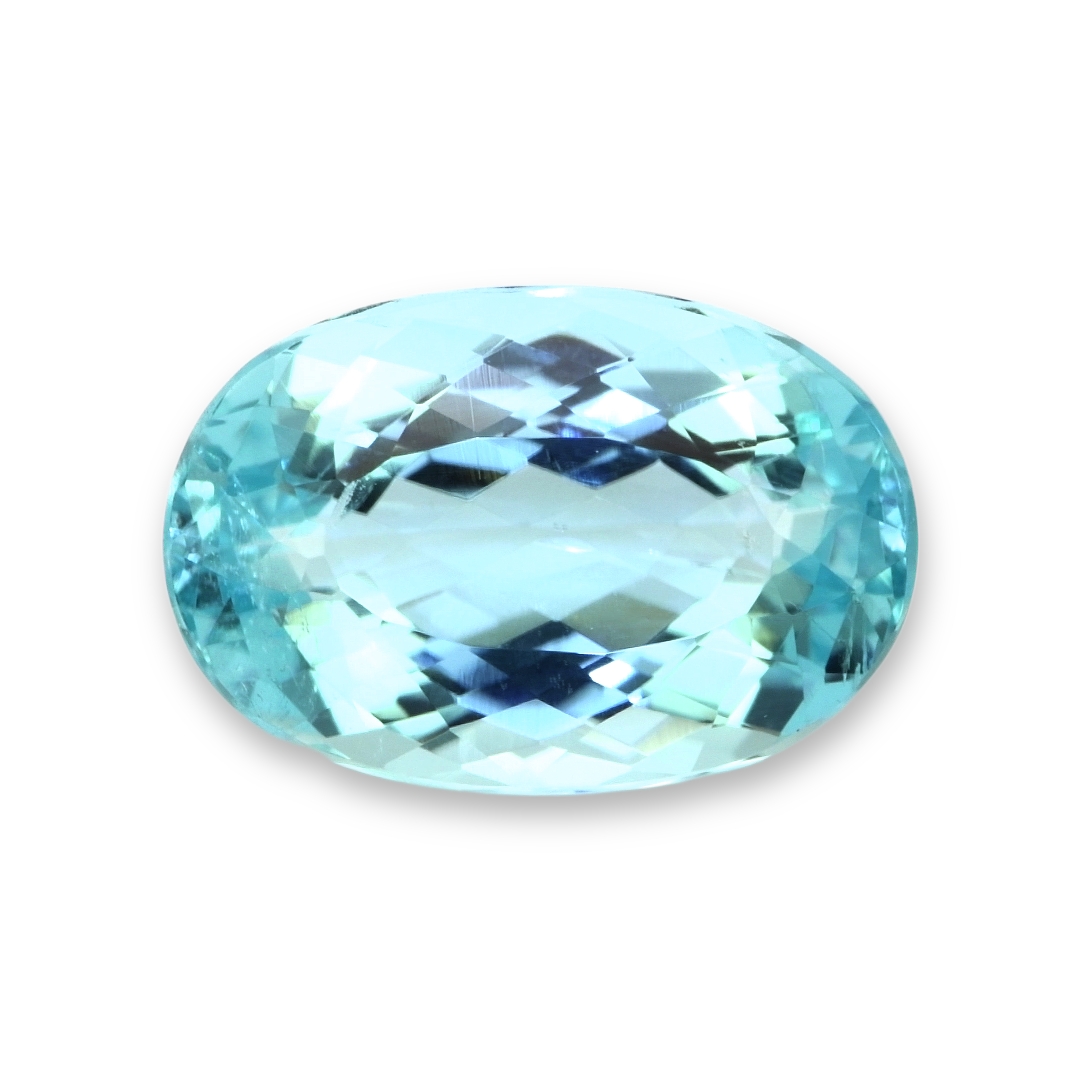
| 5.49 ct Nigerian paraíba tourmaline (K3266) | 5.49 ct oval | Nigeria | Greenish Blue, Medium | Eye Clean | No Enhancement | 14.10 × 10.10 × 6.18 |
| 4.79 ct Mozambique paraíba tourmaline (K32136) | 4.79 ct cushion | Mozambique | Greenish Blue, Intense | Very Slightly Included | Heat Treated | 10.51 × 8.76 × 7.56 |
| 4.10 ct bluish green paraíba tourmaline (K17412) | 4.10 ct oval | Mozambique | Bluish Green, Intense | Very Slightly Included | Heat Treated (as listed) | 12.25 × 9.08 × 5.94 |
| 3.71 ct Mozambique paraíba tourmaline (K16928) | 3.71 ct oval | Mozambique | Greenish Blue, Intense | Very Very Slightly Included | No Enhancement | 11.88 × 7.99 × 5.45 |
| 2.86 ct Brazilian paraíba tourmaline (K4859) | 2.86 ct oval | Brazil | Greenish Blue, Intense | Very Slightly Included | Heat Treated | 10.57 × 8.00 × 5.37 |
What Does a Large Paraiba Tourmaline Look Like?
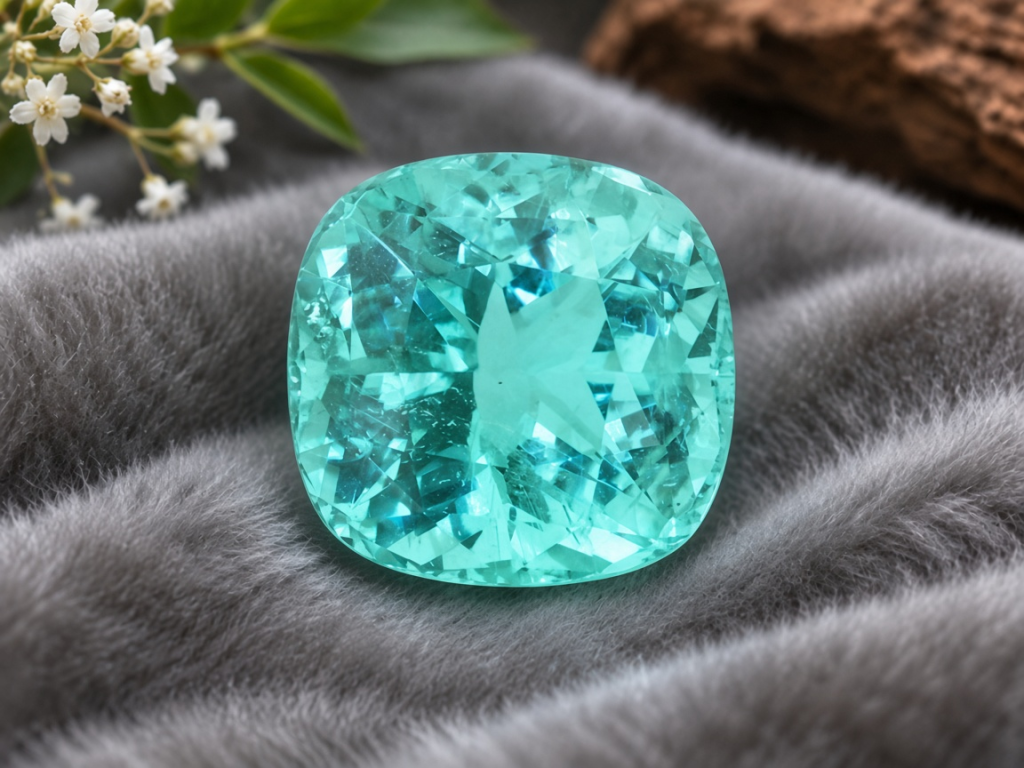
Our 14.45 ct paraíba tourmaline (K3430) is a cushion listed as Greenish Blue with Intense color. Stones of this size are uncommon in paraíba tourmaline, so it shows what the gem looks like at scale. Its origin is listed broadly as Africa rather than a single country: its GIA report confirms the copper and manganese but gives no origin opinion, because origin was not requested. Our article on choosing between gemstone size and quality helps you weigh size against color.

Three Countries, Side by Side
- Brazil: our 2.86 ct Brazilian oval (K4859).
- Nigeria: our 5.49 ct Nigerian oval (K3266), Eye Clean with no enhancement.
- Mozambique: our 4.79 ct cushion (K32136), 4.10 ct bluish green oval (K17412) and 3.71 ct oval with no enhancement (K16928).


How Do I Choose a Paraíba Tourmaline?
- Color first. Look for a vivid, saturated blue or blue-green. Compare “Greenish Blue” and “Bluish Green” side by side.
- Origin and enhancement. Read the listing: some stones are heat treated and some have no enhancement.
- Size. Large, clean paraíba tourmaline is scarce, so stones of any size carry weight.
- Setting. Pair with white metals to keep the blue clean. See how settings change gemstone appearance.
- Care. Tourmaline is 7 to 7.5 on the Mohs scale, so protect it from hard knocks.
Browse all paraíba tourmaline, or read about another rare gem with a color story in Alexandrite: The Natural Gem That Changes Color With the Light.
Frequently Asked Questions
How much is paraíba tourmaline worth per carat?
It depends mostly on color saturation, size and clarity. Across the 60 paraíba tourmalines on our site when this post was last reviewed, asking prices ran from about $700 to about $57,000 per carat, with a midpoint of about $8,500 per carat. Our 14.45 ct stone is listed at about $17,250 per carat.
How do I know if paraiba tourmaline is real?
Ask for a report from a major gem laboratory. It should identify the stone as tourmaline and confirm copper (and usually manganese); GIA reports add that such a stone “may be called paraíba tourmaline in the trade.”
Why is paraíba tourmaline so blue?
Copper in the crystal gives it an intense blue to blue-green color, which is rare in tourmaline.
Where was paraiba tourmaline first found?
In the state of Paraíba in northeastern Brazil, where Heitor Dimas Barbosa mined it from the early 1980s.
Is paraíba tourmaline only from Brazil?
No. Copper-bearing tourmaline has also been found in Nigeria and Mozambique, and the name applies whatever the origin.
Is paraíba tourmaline heat treated?
Heat treatment is common and should be disclosed. Our listings state it, and some stones have no enhancement.
How hard is tourmaline?
About 7 to 7.5 on the Mohs scale, so it suits jewelry with sensible care.
Sources: GIA Gems & Gemology: An Update on “Paraíba” Tourmaline from Brazil; LMHC Information Sheet #6: Paraíba tourmaline; GIA reports for the stones listed (images on each product page); prices from naturalgemstones.com, checked 12 November 2026.