
Home Gemstone Cleaning Guide
Gemstones are not only precious but they are also delicate. Keeping them clean enhances their beauty and ensures they last a lifetime. Whether your gemstones are part of jewelry or standalone pieces, regular cleaning is essential to maintain their sparkle and integrity. This Home Gemstone Cleaning Guide provides a comprehensive approach to cleaning your gemstones at home, using safe and easily accessible products.
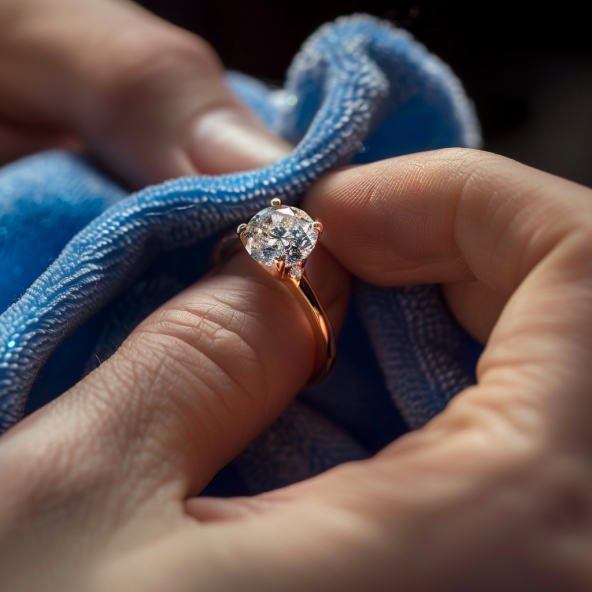
Understanding Your Gemstone
Before you begin the cleaning process, it’s crucial to know the type of gemstone you are dealing with. Different stones have different hardness and chemical properties, which can affect how they should be cleaned. For example, sapphires and diamonds, which are harder stones, can tolerate more vigorous cleaning methods than softer stones like opal or pearl.
What You’ll Need
- Mild Dish Soap: A gentle solution that works for most gemstones.
- Warm Water: Helps dissolve oils and grime.
- Soft-Bristled Brush: A baby toothbrush or an eyebrow brush is ideal for delicate scrubbing.
- Microfiber Cloth: For drying and polishing the gemstone.
- Isopropyl Alcohol: Useful for evaporating residue quickly on harder gemstones.
- Ammonia: Effective for deep cleaning very dirty diamonds, rubies, and sapphires (use sparingly).
- Baby Oil: Adds an extra shine to harder gemstones after cleaning.
Cleaning Process
- Prepare Your Solution: Mix mild dish soap with warm water in a bowl. For a deeper clean, you can add a small amount of ammonia—about one part in ten parts water—but only for the harder stones.
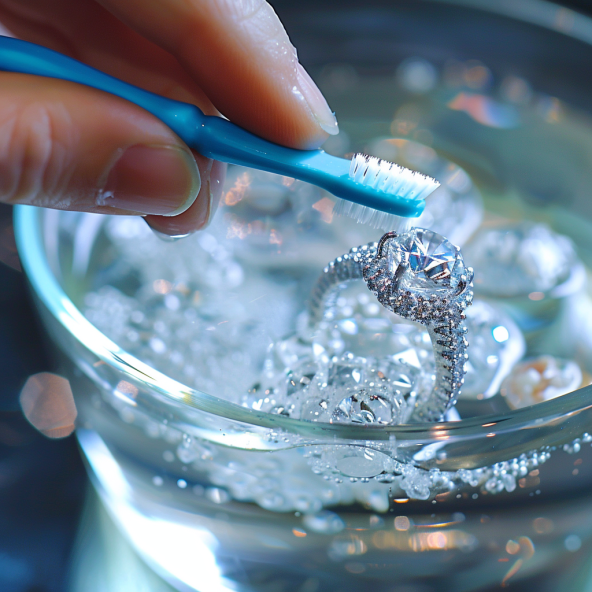
- Soak Your Gemstone: Place your gemstone in the solution and let it soak for about 20 to 30 minutes. This loosening of the dirt and grime makes the cleaning process more effective.
- Gently Scrub: Remove the gemstone from the solution and gently scrub it with a soft-bristled brush. Pay special attention to crevices and any prongs or settings where dirt can easily accumulate.
- Rinse Thoroughly: Rinse your gemstone under warm running water to remove any soapy residue. If the stone is set in a piece of jewelry, make sure the water flow is not too strong to avoid loosening any settings.
- Dry and Polish: Pat the gemstone dry with a microfiber cloth, then use the same cloth to polish the surface gently.
- Add Shine with Baby Oil: For extra sparkle, particularly on harder gemstones like diamonds, rubies, and sapphires, you can apply a small amount of baby oil with a soft cloth. This step helps to repel water and adds a lustrous sheen.
Special Considerations
- Pearls and Opals: These require special care due to their softness and porosity. Avoid any harsh chemicals and stick to mild soap and water. Do not soak pearls; instead, wipe them with a damp cloth and let them air dry.
- Ultrasonic Cleaners: While convenient, ultrasonic cleaners should be used with caution. They can sometimes shake loose stones from their settings or damage softer gemstones.
Storage Tips
Post-cleaning, storing your gemstones properly is just as important as the cleaning process itself. Keep them in a lined jewelry box or a soft pouch to prevent scratches. It’s advisable to store different types of gemstones separately to avoid potential damage from harder stones.
Cleaning your gemstones at home is a straightforward process outlined in the Home Gemstone Cleaning Guide, which can significantly enhance their appearance and longevity. By using the right materials and methods tailored to your specific type of gemstone, you can ensure that your precious stones remain dazzling and in excellent condition for years to come. Remember, when in doubt about the type of gemstone or the appropriate cleaning method, consulting a professional jeweler is always a wise choice.
Can we use baby oil to clean a gemstone?
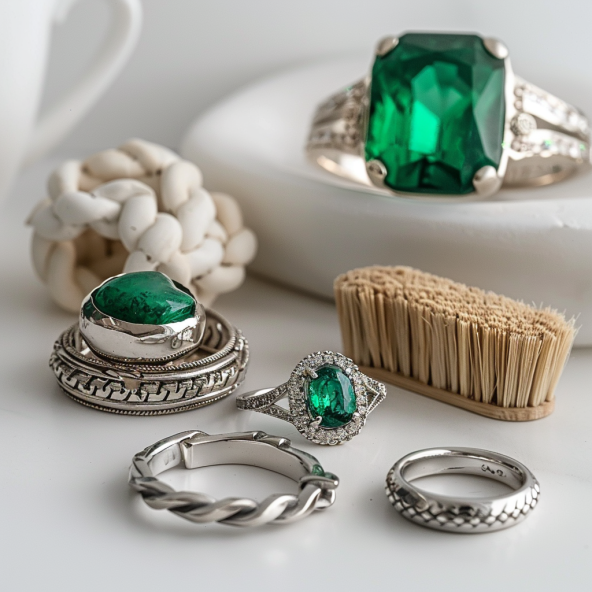
Using baby oil to clean gemstones is not commonly recommended, especially for high-value or porous stones. Baby oil can leave a residue that might be difficult to remove and could potentially alter the appearance of some gemstones by seeping into any cracks or inclusions.
However, baby oil can be used for some opaque gemstones like lapis lazuli, jade, or turquoise, which often have a porous surface that might benefit from a light oiling to enhance their color and luster after cleaning.
Here’s a general process for cleaning these types of gemstones with baby oil:
- Cleaning the Stone:
- First, clean the gemstone with mild soap and warm water to remove any dirt or debris. Use a soft brush, like a toothbrush, to gently scrub the stone.
- Rinse the stone thoroughly under warm running water to remove any soap residue.
- Drying the Stone:
- Dry the gemstone completely with a soft, lint-free cloth. Make sure the stone is completely dry before applying any oil.
- Applying Baby Oil:
- Apply a small amount of baby oil to a clean, soft cloth.
- Gently rub the oil onto the surface of the gemstone, ensuring an even coat.
- Wipe off any excess oil to avoid build-up, which could attract dirt over time.
- Final Wipe:
- After the oiling, gently wipe the stone once more with a clean, dry cloth to ensure it’s not greasy or slippery.
It’s important to note that the methods outlined in the Home Gemstone Cleaning Guide should not be used on gemstones like opal, pearl, or any others that are sensitive to oils or might be damaged by them. Always consult a professional jeweler or gemologist if you are unsure about the best cleaning methods for your specific gemstones.
Visit the link for more details about Reactions to Cleaning Processes of gemstones!